
A smashed screen can ruin a perfectly normal Tuesday, especially when your phone holds your tickets, banking app and work messages. The first question is usually whether to pay for a repair or put it through insurance.
For most single faults, phone repair vs insurance claim UK comes down to one simple comparison: the repair quote against your policy excess, plus the premiums you have already paid. A local repair often costs less for a cracked screen, tired battery or loose charging port.
We see this decision every day at Repair My Crack, so let’s look at the numbers that matter before you start a claim.
Key Takeaways
- A direct repair is often cheaper when the quote is below your insurance excess.
- Insurance can make sense for lost, stolen or heavily damaged flagship phones.
- Check existing bank account and home contents cover before buying separate insurance.
- A claim may use up a policy allowance and could affect future premiums.
- Always back up your phone before repair, replacement or sending it away.
Start With the Excess, Not the Monthly Premium
Insurance can feel like the obvious answer because you already pay for it. However, the monthly payment is only part of the cost. Most policies also charge an excess when you claim, often somewhere between £50 and £150.
If your screen repair costs £85 and your excess is £100, paying through insurance makes little financial sense. You could pay more, wait for approval, and use one of your available claims.
The same applies to common faults. At our workshop, a standard screen repair may sit around £60 to £180 depending on the model and part required. A battery replacement often falls between £40 and £80. Charging port repairs can land around £50 to £90 once we have confirmed the fault.
Here is a quick way to compare the two routes.
| Situation | Typical direct repair cost | Likely cheaper route |
|---|---|---|
| Cracked screen on an older iPhone | £60 to £180 | Direct repair |
| Worn battery | £40 to £80 | Direct repair |
| Faulty charging port | £50 to £90 | Direct repair |
| Water damage with several faults | £60 to £120+ | Depends on excess |
| Lost or stolen flagship phone | Replacement cost is high | Insurance claim |
| Premium flagship OLED screen | £200 to £350+ | Often insurance |
The figures are guides, not fixed promises. A bent frame, liquid damage or a previous poor-quality repair can change the work needed.
If the confirmed repair price is lower than your excess, paying for the repair normally leaves you better off.
Before claiming, read the small print. MoneyHelper’s guide to mobile phone insurance is a useful reminder to check exclusions, excesses, claim limits and whether your policy covers theft, loss and accidental damage.
When a Repair Usually Costs Less Than an Insurance Claim
Single, clear faults are where direct repairs tend to win. A cracked iPhone screen repair is a good example. If the phone still charges, cameras work and the frame is straight, replacing the display is usually more sensible than opening an insurance claim.
The same applies to an iPhone battery replacement UK customers book after noticing fast drain, unexpected shutdowns or a handset that struggles to last until lunchtime. Batteries wear out through ordinary use. Insurance policies may exclude gradual deterioration, so a claim may not be available anyway.
A damaged charging port is another common case. Pocket lint can stop the cable seating fully, while a drop can loosen the connector. We inspect the port before recommending replacement because a clean and test may solve it. A phone that only charges at one angle needs attention, but it doesn’t always need an insurance claim.
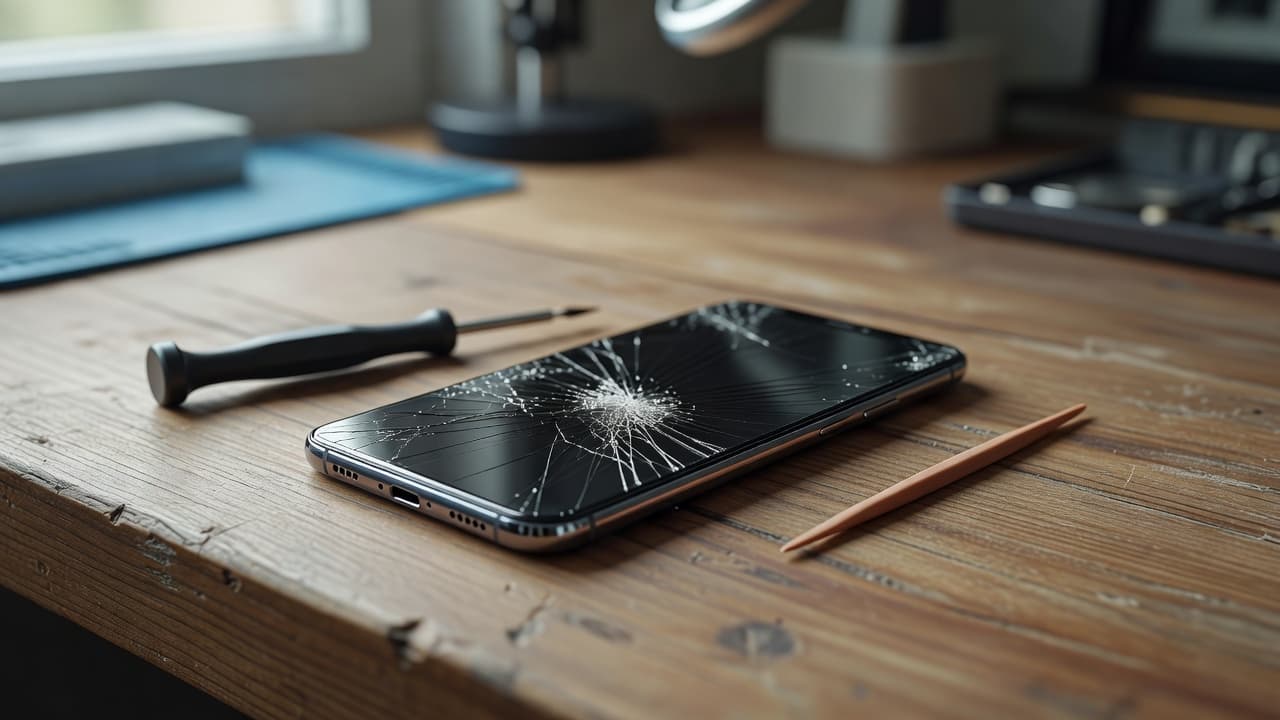
Last week, we had an iPhone 13 arrive from Essex with a shattered front screen after a pavement drop. The phone still worked normally, including Face ID and the rear cameras. The customer had a £100 insurance excess, while the screen repair cost less than making a claim. We checked the frame, fitted the replacement screen, tested the handset and returned it without turning a simple accident into an insurance case.
For many people looking for iphone screen repair UK options, the important detail is the total repair outcome. A lower quote is only good value if it includes proper fitting, adhesive, testing and clear warranty terms.
When Insurance Is the Better Financial Choice
Insurance earns its keep when the problem is expensive, wide-ranging or impossible to repair. Theft and loss are the clearest examples. A repair shop cannot fix a phone that has disappeared from the train, even if we wish we could.
It can also be the right route for a recent flagship with a costly screen assembly. OLED displays on newer iPhone Pro, Galaxy S Ultra and foldable Samsung models can cost several hundred pounds. If the repair quote is far above a £75 or £100 excess, a claim becomes more attractive.
Multiple faults can tip the balance too. A phone with a broken screen, water damage, poor battery health and a bent housing may need more work than it is worth. We would rather give an honest assessment than encourage a repair that doesn’t add up.
Insurance is also worth considering if you drop phones regularly, use an expensive handset for work, or have no spare device. Still, check what replacement means under your policy. Some insurers supply a refurbished equivalent rather than a brand-new handset.
Before adding another policy, check whether you already have protection through a packaged bank account or home insurance. Avoid paying twice for the same cover. For a wider view of policy types and costs, see this guide on whether mobile phone insurance is worth paying for.
The Costs People Forget to Include
A claim does not always end at the excess. Your monthly premium matters because it is money already spent to keep the policy active. Comprehensive cover for a high-value phone can cost several pounds each month, and some plans cost more than £10 monthly.
For example, a £10 monthly policy costs £120 across a year. Add a £100 excess to a screen claim and the real annual outlay is £220 before considering any renewal changes. That may still be worthwhile for an £1,000 handset, but it is hard to justify for a £120 battery repair.
We should also consider downtime. An insurer may need photographs, proof of ownership, a police reference number for theft, or an assessment before approving the claim. A straightforward repair can be quicker, particularly when the part is in stock.
Data is another cost that isn’t shown on a quote. A replacement phone may require you to restore a backup, re-authenticate banking apps and set up two-factor login again. Back up before either route, even if the phone still switches on.
For customers comparing mobile phone repair UK services, ask these questions before booking:
- What is the exact price once the fault is confirmed?
- Which part quality will be fitted?
- Is there a warranty on the replaced part and workmanship?
- Will the repairer contact us if testing finds additional damage?
- Can we back up the phone before handing it over?
Repair, Claim or Replace? Use the Phone’s Overall Condition
The repair decision should cover the whole device, not only the crack you can see. A newer phone with one fault and a healthy main board is usually worth fixing. An older handset with a swollen battery, bent frame, cracked rear glass and water damage may be reaching the point where replacement makes more sense.
We see this often with samsung phone repair UK enquiries. A Galaxy with a damaged screen can be a straightforward job. However, a dropped handset with a twisted frame may also have pressure on the battery or camera housing. We inspect before giving a final repair recommendation.
Phone age matters too. If the handset no longer receives security updates or struggles with the apps you need, spending heavily on it may not be sensible. On the other hand, a two-year-old iPhone or Samsung with a single broken component can often give years more use after repair.
For an independent view before choosing a policy, this UK iPhone insurance comparison is helpful for checking the cover levels available on higher-value models.
Getting a Repair Quote Without the Faff
A clear quote makes the phone repair versus insurance decision far easier. Send the exact model, photographs of the damage, and details of any other symptoms. Mention liquid exposure, charging trouble, a lifted screen or a recent drop. These clues help us avoid quoting for only half the fault.
Customers near Harlow can arrange a phone repair Essex appointment. For everyone else, our walk-in and mail-in repair options explain how postal phone repair UK works. We use tracked Royal Mail postage, and we aim to begin work as soon as the device arrives.
Before posting a phone, we recommend a few simple steps:
- Back up to iCloud, Google One or a computer if the phone still works.
- Remove the SIM card unless we need it for network testing.
- Disable Find My iPhone or Google Factory Reset Protection when required.
- Include the order number and passcode if testing needs it.
- Package the device securely, especially if broken glass is exposed.
We offer a price promise and explain the options if testing reveals more damage. That matters because the original issue may be a screen, while the underlying problem is a damaged frame or charging connector.
The Cheaper Choice Depends on the Fault
For most everyday damage, direct repair wins the phone repair vs insurance claim UK calculation. A screen, battery or charging-port fault often costs less than the excess alone, and you keep your insurance available for a serious loss or major accident.
Insurance is more useful for expensive flagship handsets, theft, loss and damage involving several costly parts. Compare the full claim cost, not only the monthly premium, before deciding.
If your phone has one clear fault, getting a proper repair quote first gives you the numbers you need. We can then help you decide whether repair is the sensible route, without the guesswork.