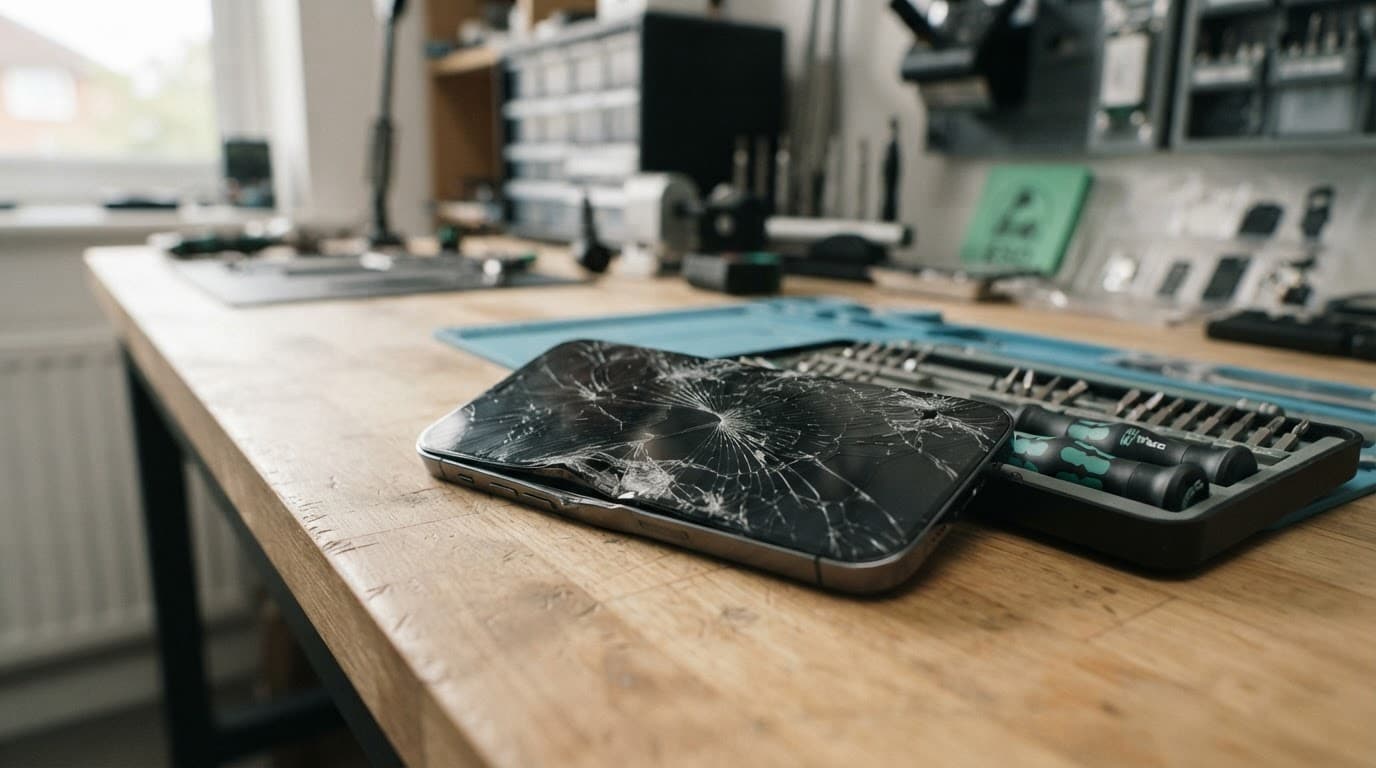
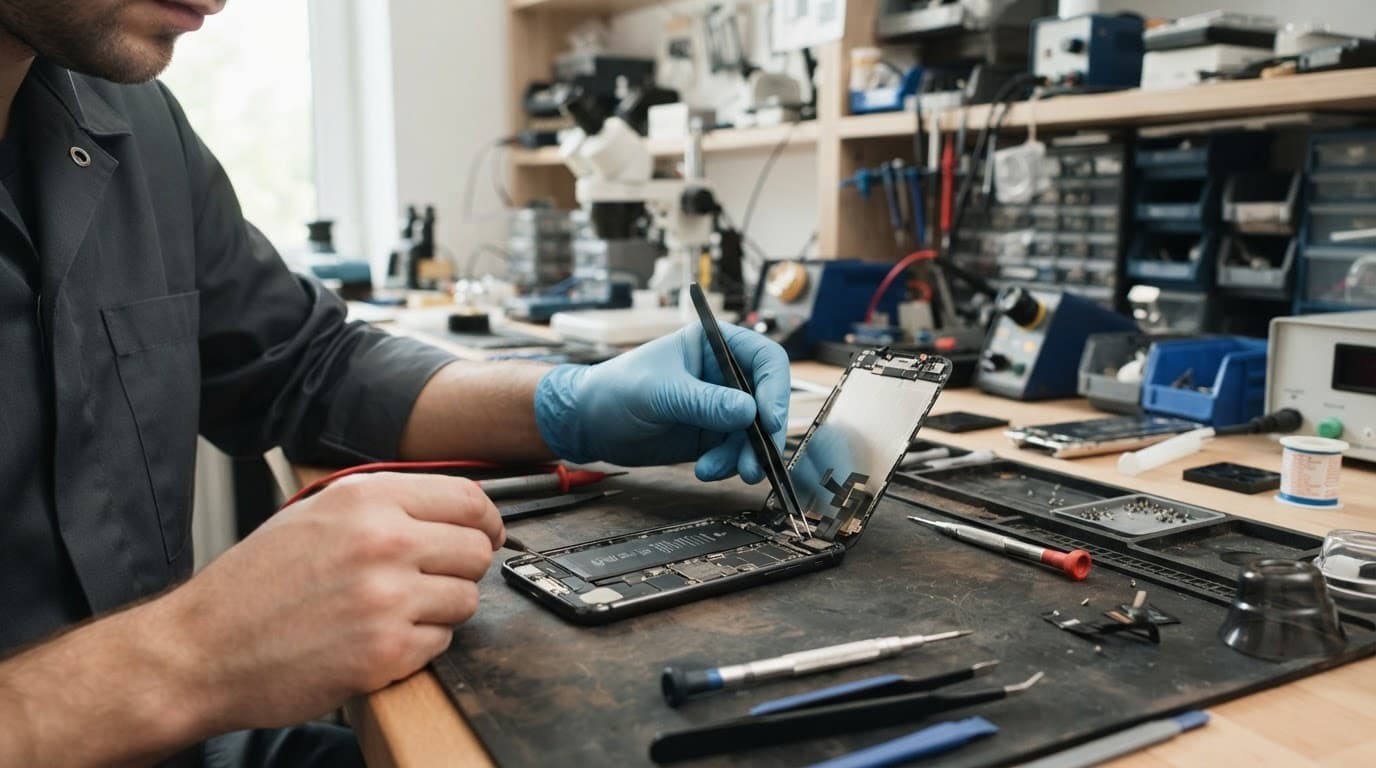
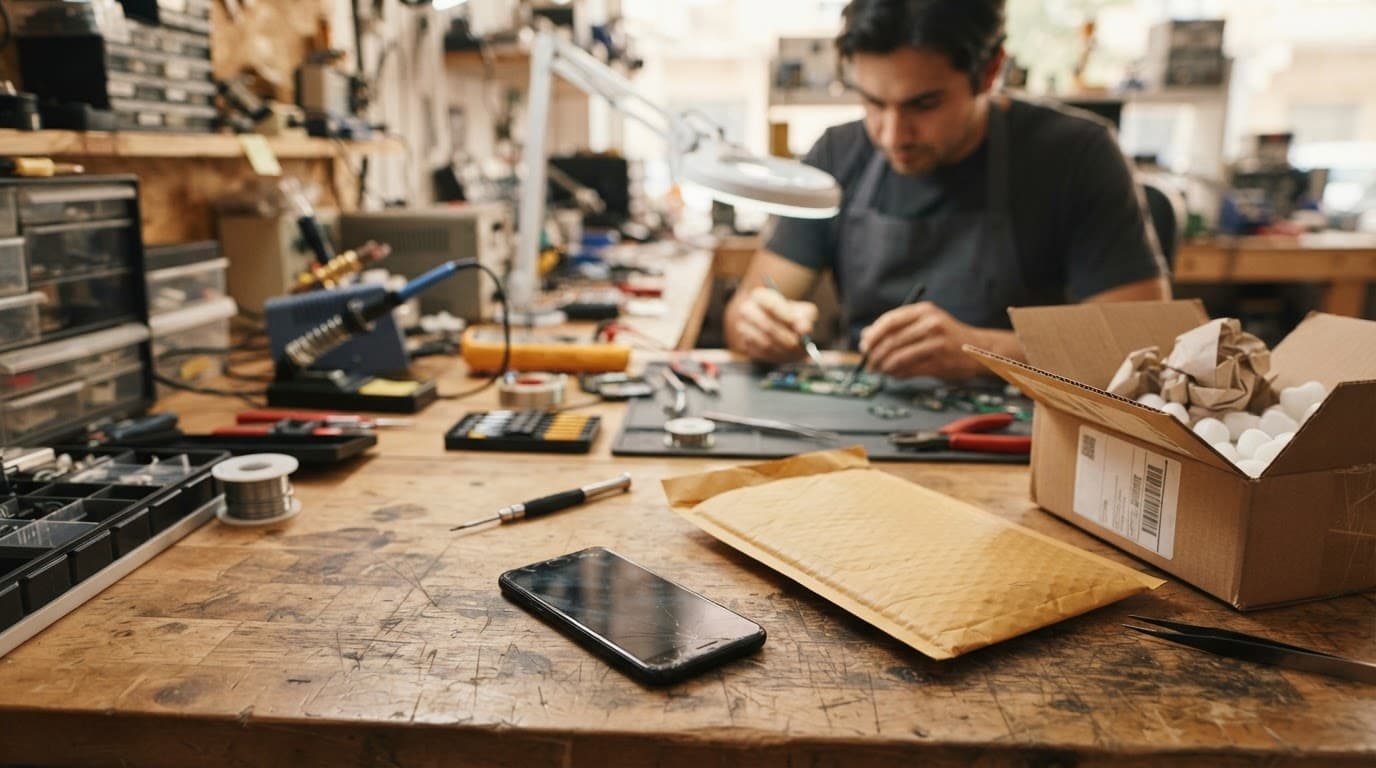
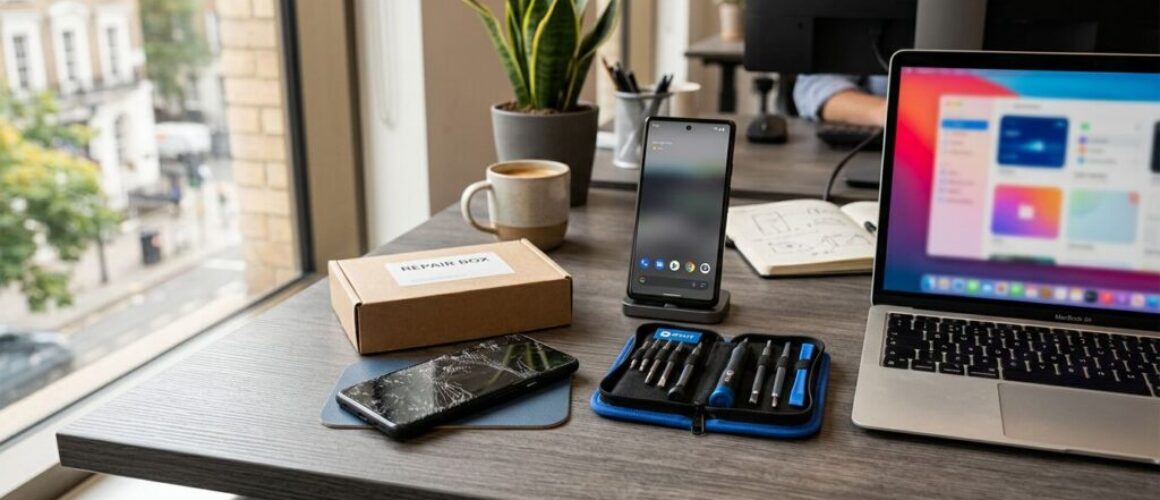
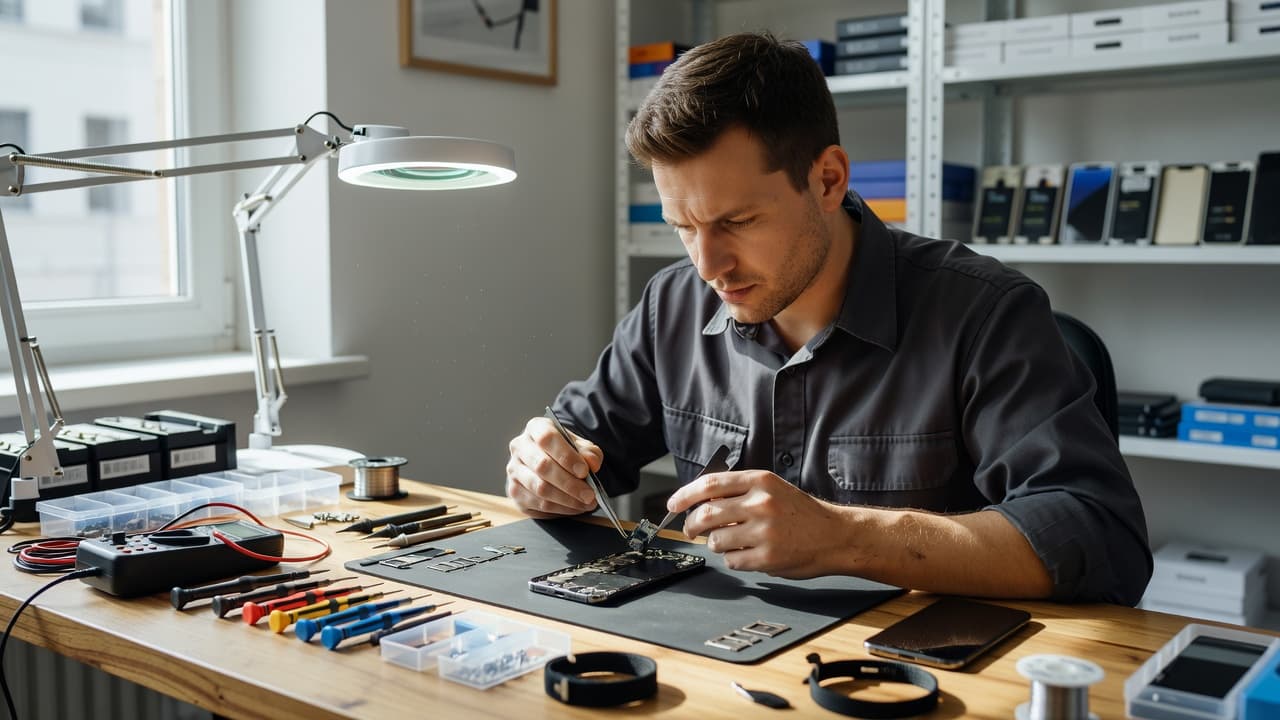
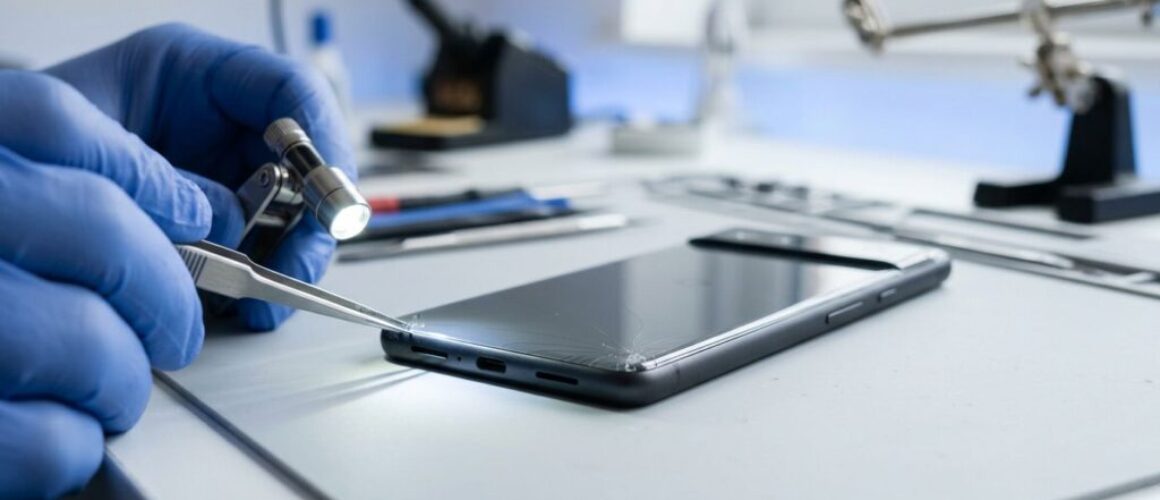
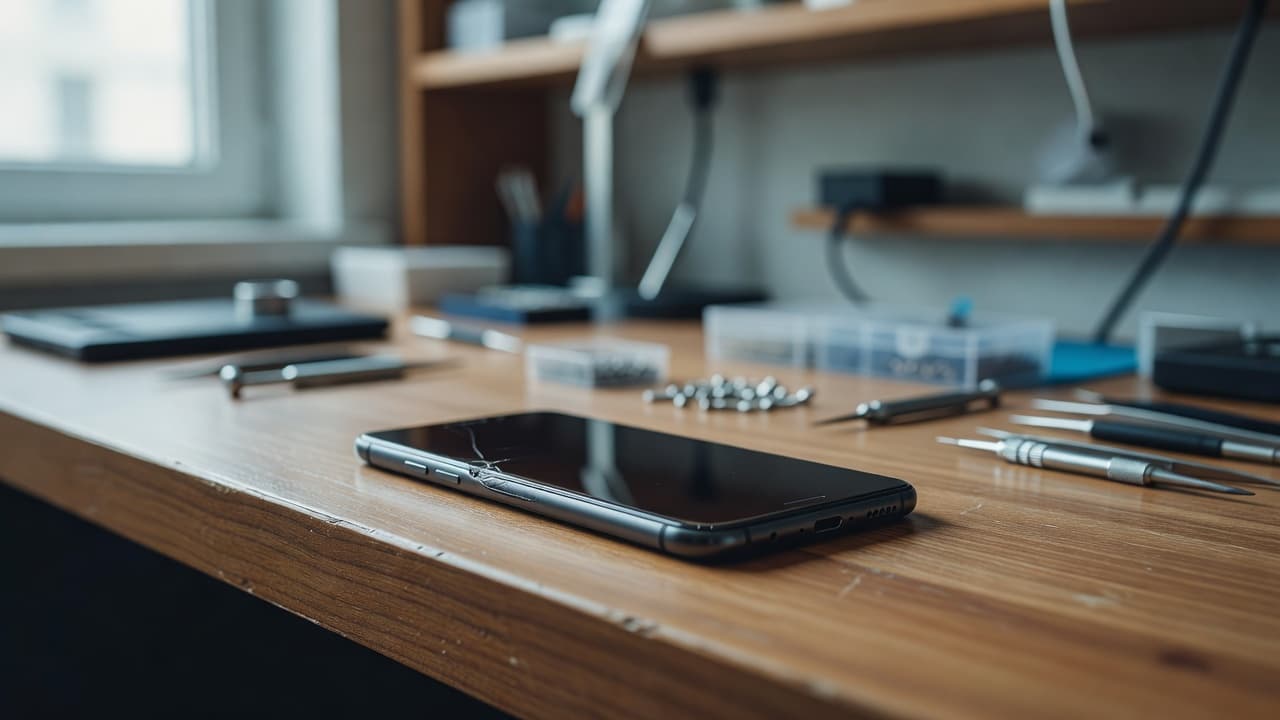
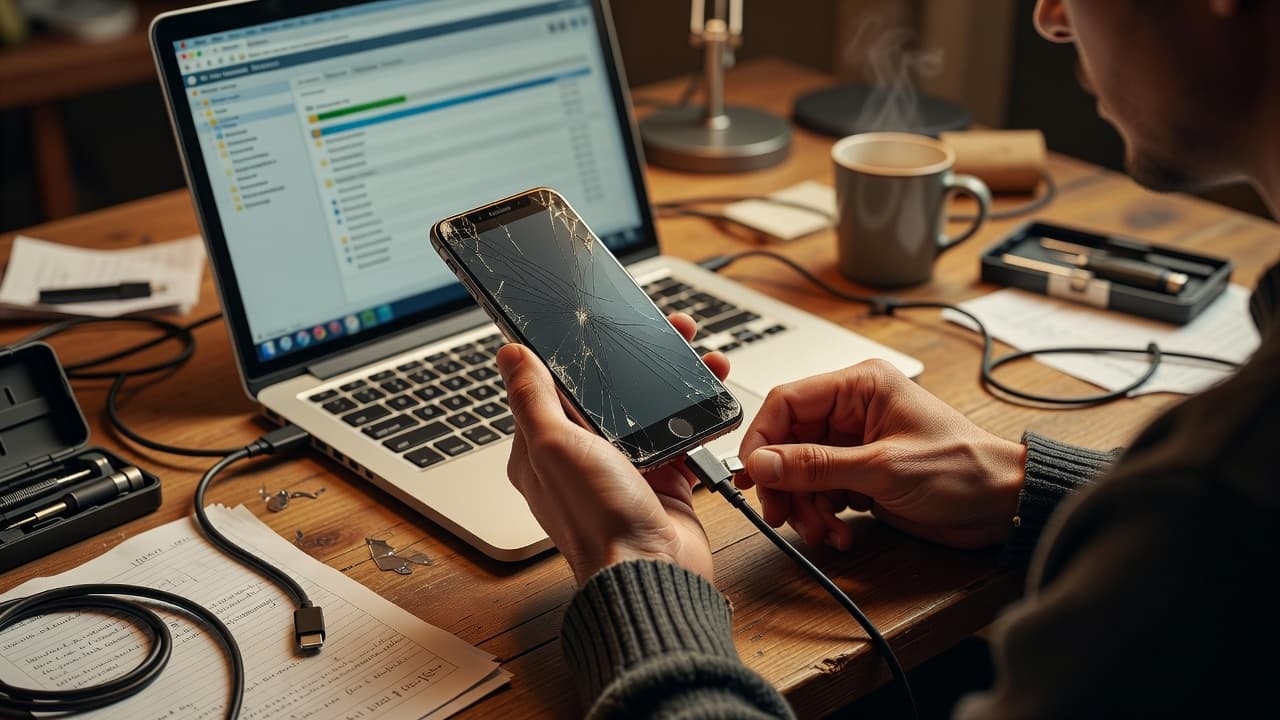
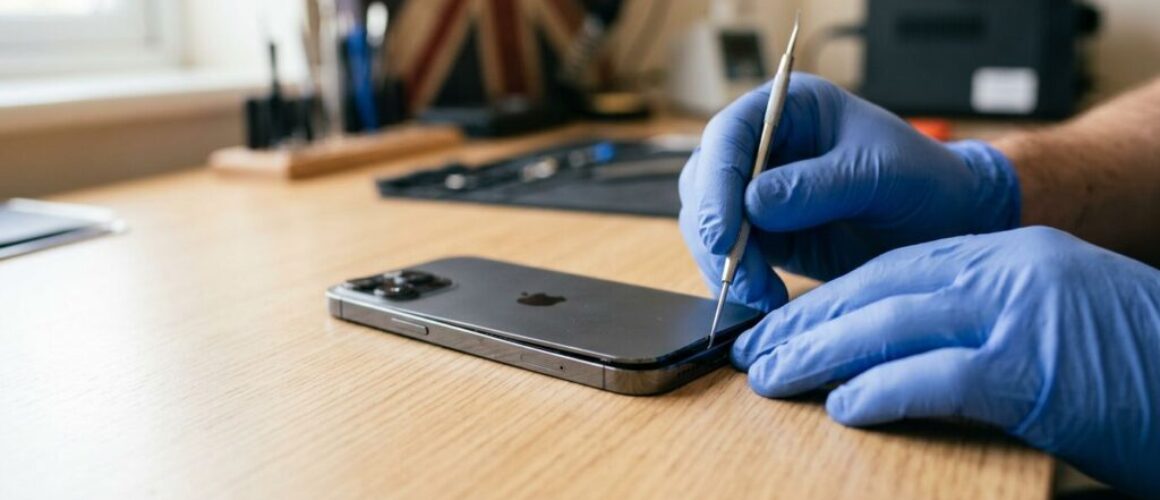
A car tyre over your mobile is enough to turn an ordinary day into a proper nightmare. The immediate question is whether the phone run over is salvageable or heading straight for the recycling bin, especially when it contains your banking apps, work messages and family photos.
Sometimes, the answer is yes. A smashed screen, damaged charging port, broken button or loose battery connection may be repairable. However, a crushed frame, swollen battery or cracked main board can make repair unsafe or poor value. We inspect the handset before recommending anything.
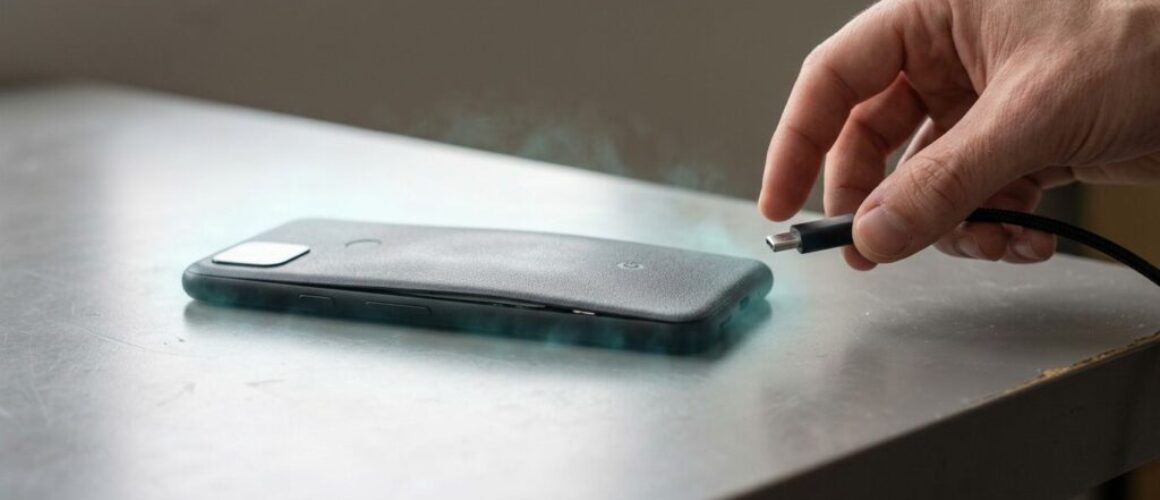
Switch it off if it feels hot, looks swollen or has a badly shattered display. Avoid charging it until the battery and internal components have been checked.
Can a phone run over be repaired?
Yes, many run-over phones can be repaired, but the result depends on where the impact landed and how far the damage travelled.
If the frame remains fairly straight, the battery is stable and the handset still boots, replacing the screen or a damaged component may restore normal use. A phone that has been flattened, twisted or crushed around the battery needs a more cautious assessment.
Modern mobiles contain several separate layers. The outer glass can break while the display still shows an image. The impact may also damage the touch sensor, camera, charging circuit, speakers or internal connectors. A handset that vibrates but shows no picture may still be running.
A working screen does not prove the phone is healthy. A hard impact can damage charging, cameras or internal connections without leaving an obvious mark.
Damage hiding behind the broken glass
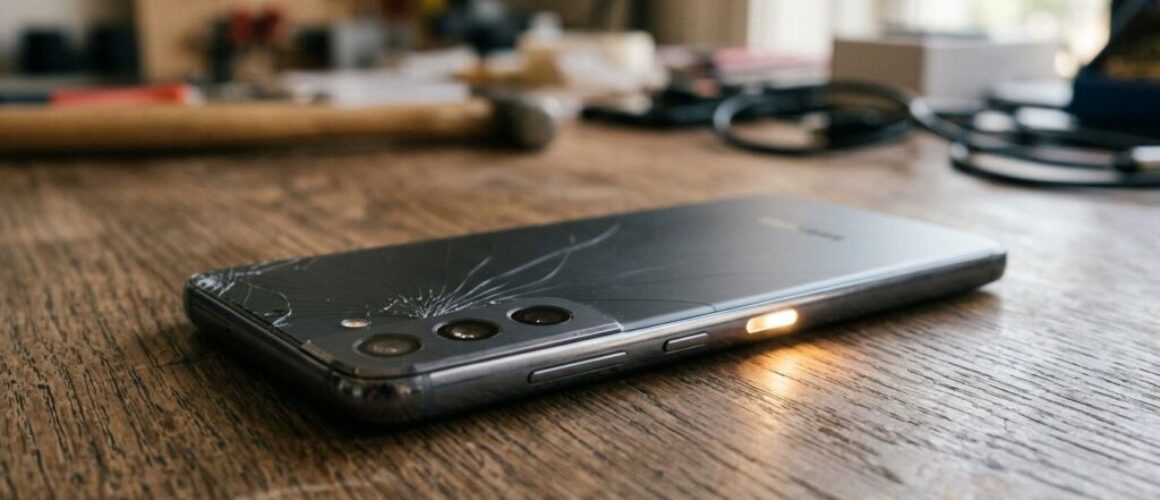
We often find faults that are not obvious during a quick visual inspection. An iPhone component fault after a drop may affect Face ID, the camera, charging or the battery connection. A Samsung component fault after a drop can involve the OLED display, side rail or USB-C port.
A Google Pixel component fault after a drop may affect the screen cable, buttons or battery connector. An iPad component fault needs a full diagnosis too, particularly when the casing has bent and the display has lifted from its frame.
These faults need more than a glass replacement. We test the whole device so you are not paying to fix one visible problem while another serious fault remains.
When the handset is unsafe to use
Stop using the phone and arrange an inspection if:
The battery looks swollen, the screen is lifting or the phone becomes hot.
You smell burning, see smoke or notice a hissing sound. Move away from it and call 999 if there is an immediate fire risk.
The frame has sharp metal edges or loose glass.
The phone repeatedly restarts, sparks near the charging port or refuses to charge after the impact.
Do not bend the frame back, clamp the phone or use a hairdryer. These actions can damage delicate cables and make battery problems worse.
How we diagnose a phone run over in the workshop
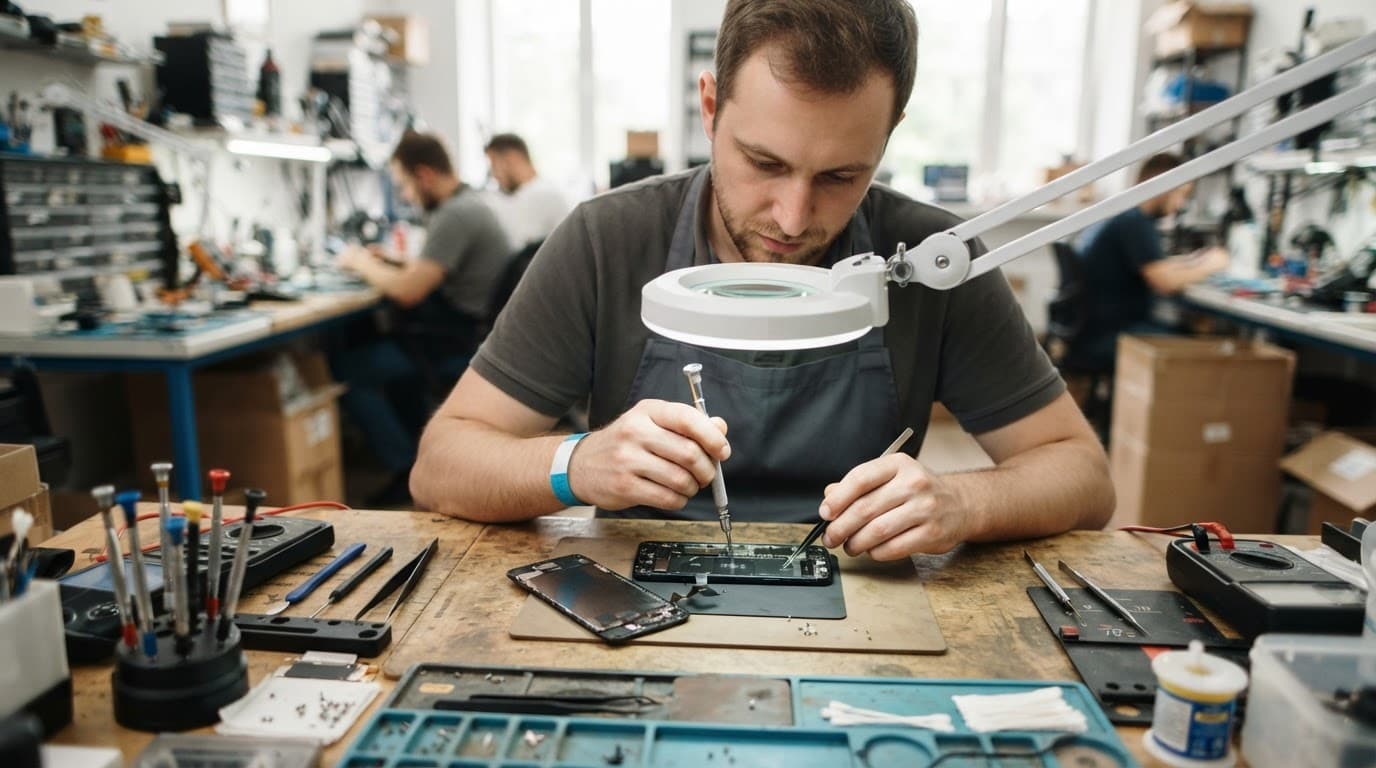
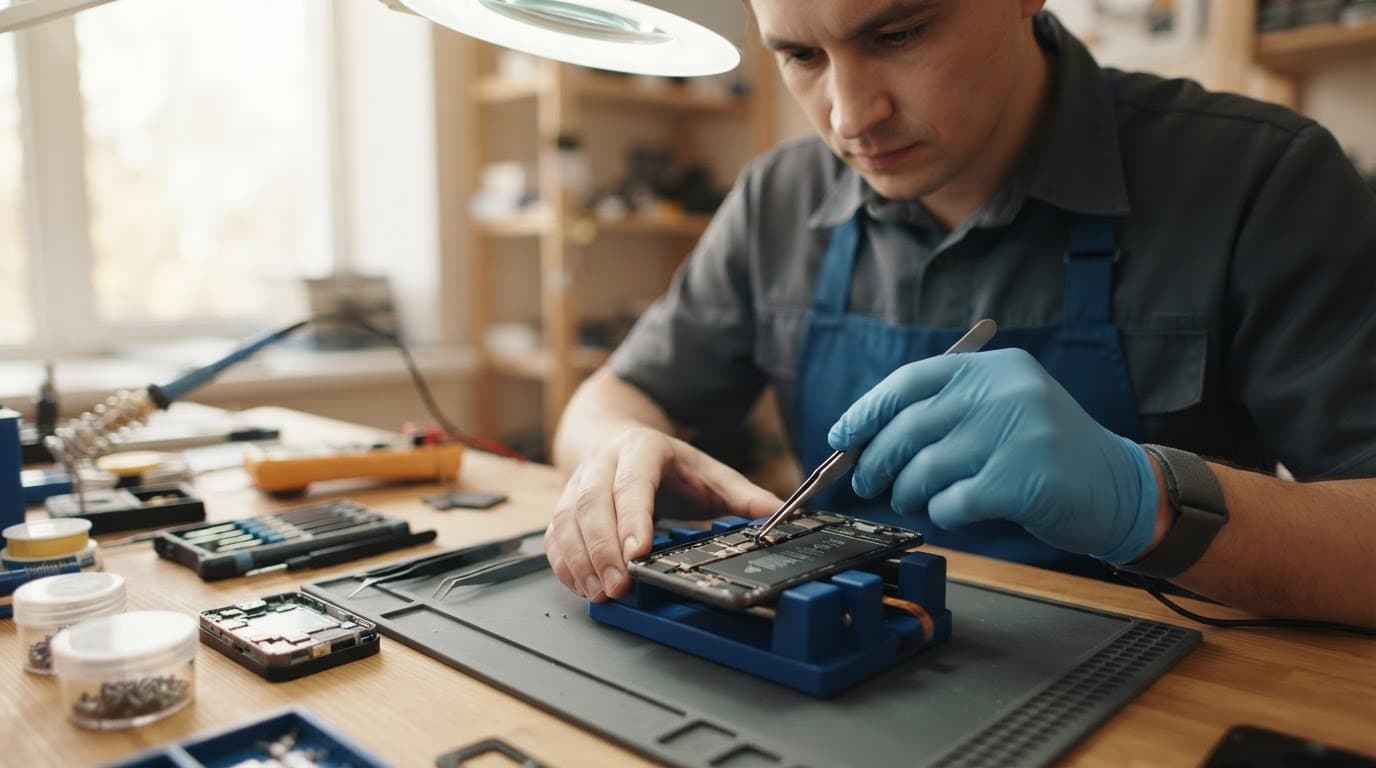
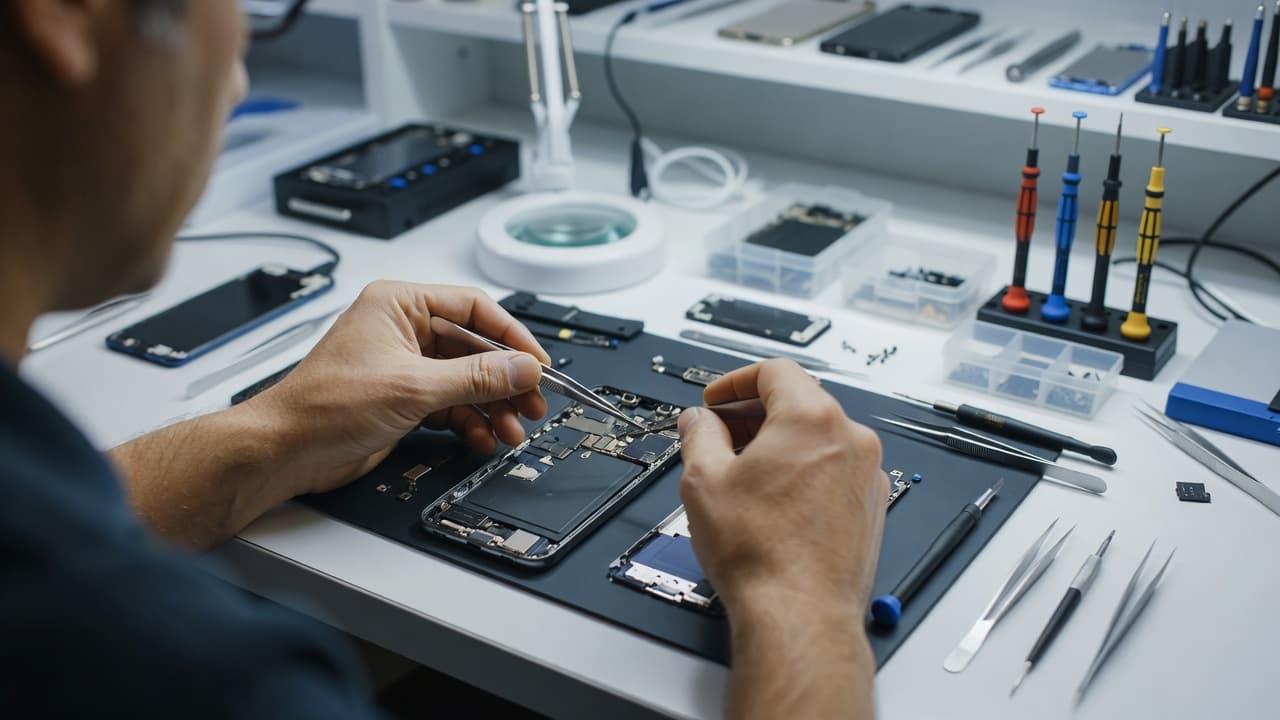
Our phone hardware troubleshooting in the UK starts with safety and a full inspection. We record the visible damage, check the frame for distortion and look for gaps around the display or rear cover.
Next, we test the handset with suitable equipment. That includes the screen, touch response, cameras, microphones, speakers, buttons, biometrics, wireless functions and charging. We also check for battery swelling, loose connectors and signs of liquid entering through the cracks.
For Pixel owners, Google’s official repair guidance covers hardware problems such as cracked screens, charging faults and phones that will not turn on. Independent diagnostics can still be useful when accidental impact has caused several faults at once.
Screen or display fault symptoms to watch
Common warning signs include black patches, coloured lines, flickering, dim areas, ghost touches and sections of the display that no longer respond. A cracked screen can look usable at first, then develop dead touch areas after further pressure.
When a device won’t turn on or won’t charge, diagnosis should come before ordering a screen. The display may be dead while the phone itself is powered, or the impact may have damaged the charging path instead.
We also check whether another phone can call the handset, whether it makes notification sounds and whether a computer recognises it. These checks help separate a display fault from a deeper power or board problem.
Protecting data before further testing
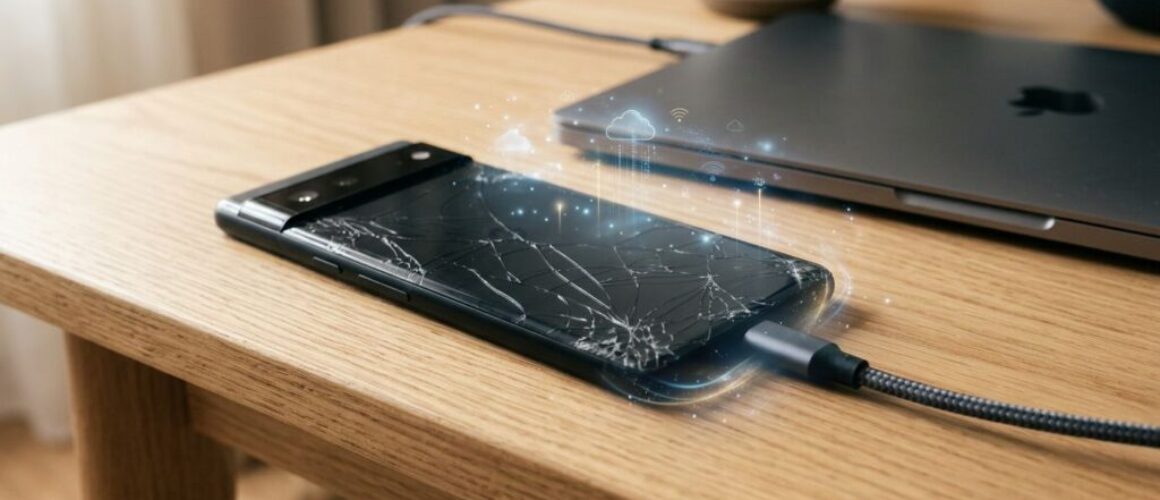
If the screen still works, back up photos, contacts and important files before sending the phone anywhere. Use iCloud, Google, Samsung Cloud or a computer, depending on the device.
Avoid factory resets when the handset has suffered physical damage. If it will not boot and the data is important, repeated charging attempts can make a battery fault worse. Specialist phone data recovery services may be an option when normal repair cannot restore access.
Repair or replacement: the UK cost check
A repair usually makes sense when the phone is reasonably recent, the frame is mostly straight and the damage is limited to one or two parts. Replacement becomes more sensible when the handset has a crushed chassis, heavy corrosion, a damaged main board and a poor battery at the same time.
Our common guide prices are:
Repair
Typical UK guide price
Screen replacement
£60 to £180
Battery replacement
£40 to £80
Charging port repair
£50 to £90
Water-damage assessment or treatment
£60 to £120
These are guide figures, not fixed quotes for a phone run over. A premium OLED screen, bent frame or extra internal damage can increase the cost. We confirm the fault and explain the options before chargeable work begins. An inspection fee may apply if no fault is found.
Warranty terms also matter. Under our terms, premium iPhone screens have a 12-month warranty, while standard iPhone screen cover can differ. Batteries and other components have their own stated warranty terms. Independent repair may also affect a remaining manufacturer’s warranty, so check that before proceeding. Our UK phone repair warranty information explains the main conditions.
What to do before sending the phone
Take these steps before booking a repair:
Back up the device if it is safe to switch on and the display responds.
Power it down, remove the case and take out the SIM card.
Note every symptom, including charging behaviour, unusual heat, missing touch response or camera problems.
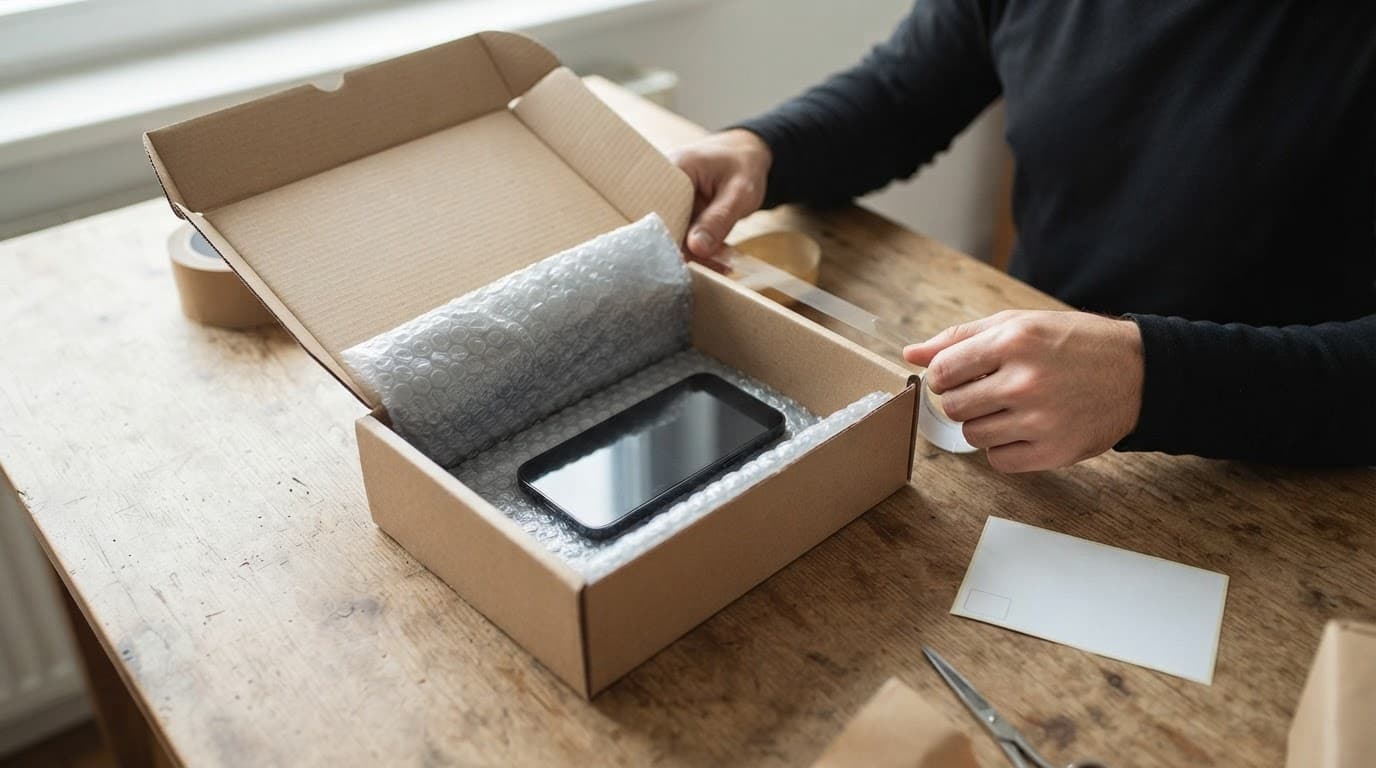
Pack the phone securely so it cannot move inside the box, then include the order details we request.
Customers in Harlow and Essex can arrange an appointment-only drop-in. For everyone else, our tracked postal phone repair service lets you book online and send the handset securely through Royal Mail. We aim to start work soon after it arrives, although timing depends on parts, workload and the damage found.
Conclusion: repair first, but do not gamble with safety
A phone run over is not automatically beyond repair. If the battery is safe, the frame is recoverable and the damage is limited, a screen or component repair may cost far less than replacing the handset.
The sensible route is a full diagnosis rather than a quick guess based on the cracked glass. Back up your data, stop using the device if it becomes hot or unstable, and ask for a clear quote before work begins.
James Waterston, Device Repair Specialist at Repair My Crack
A cracked mobile screen is annoying enough without being handed two vague choices: “original” or “compatible”. If you’re comparing original vs compatible phone screens, the cheaper option can look tempting, but the part grade affects colour, touch response, brightness, fit and long-term reliability.
The short answer is simple. An original or refurbished-original display usually gives the closest match to the screen your phone had when new. A good compatible screen can reduce the bill considerably, especially on an older model, but you need to know exactly what you’re buying. We inspect the whole device before chargeable work begins, because a smashed panel can hide frame, battery or charging damage.
Original vs compatible phone screens: the quick answer
An original screen comes from the phone manufacturer or uses the original display panel. In the independent repair market, “original” can mean a new genuine part, a screen removed from another phone, or a refurbished original panel with new glass. Those options aren’t identical, so the wording on a quote matters.
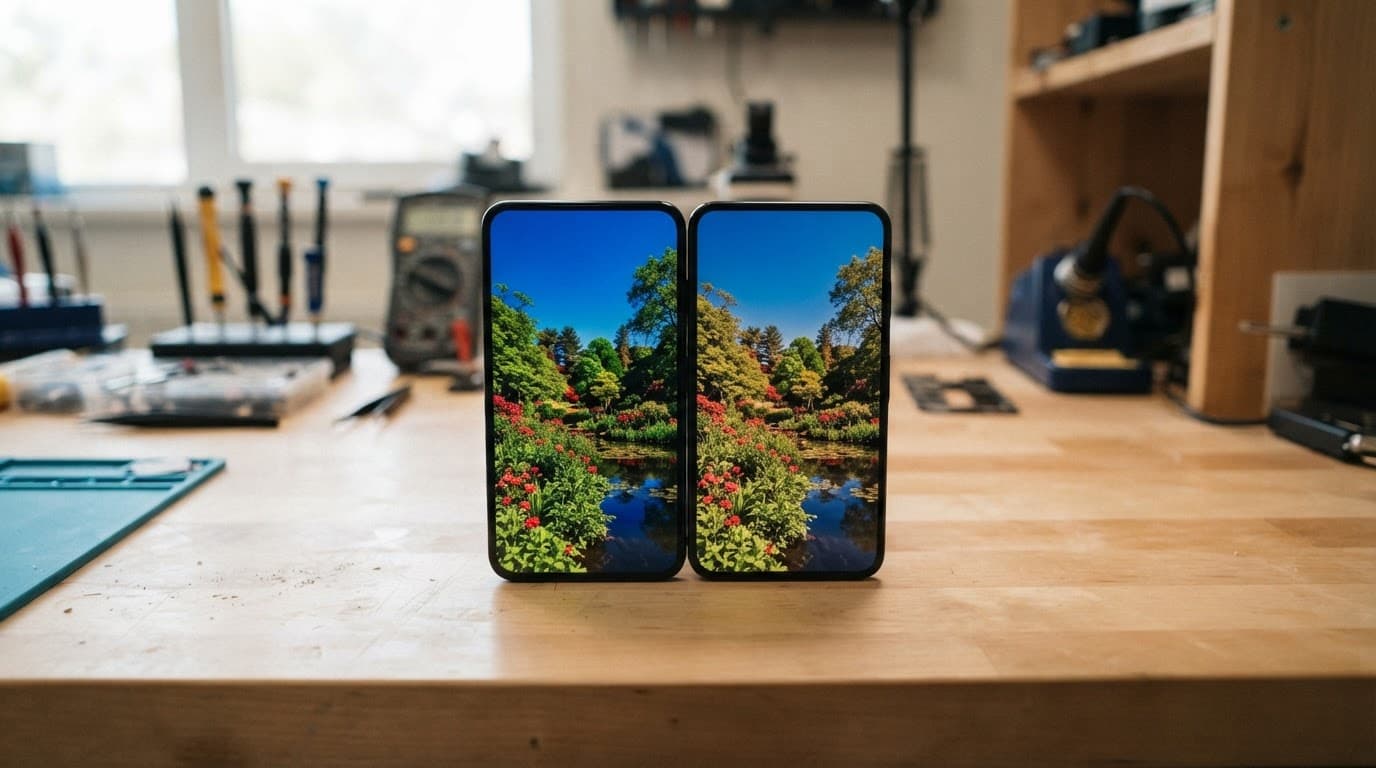
A compatible screen is made by a third-party manufacturer to fit a particular phone. Quality varies widely. Some premium compatible OLED displays look and feel close to the factory part, while basic LCD replacements can have obvious differences in black levels, brightness and touch response.
Choice
Main advantage
Main drawback
Usually suits
Genuine new screen
Closest factory match
Highest cost
New or premium phones
Refurbished original
Original panel at a lower price
Condition and availability vary
Flagship phones where quality matters
Premium compatible OLED
Good balance of price and performance
May differ in calibration or features
Recent phones on a budget
Basic compatible LCD
Lowest repair price
More visible differences on OLED phones
Older or lower-value devices
For a healthy recent phone with one damaged display, a quality compatible part often makes financial sense. However, an original panel is normally the safer choice when you rely on accurate colours, high refresh rates, strong outdoor brightness or an in-screen fingerprint reader.
Our phone screen repairs guide covers the wider repair process, including hidden damage and what to check before sending a device away.
What “original screen” really means
The word “original” sounds clear, but repairers use it in several ways. A manufacturer-authorised repair normally uses a genuine part supplied through the relevant service network. An independent repairer may fit a genuine screen removed from another handset, or a refurbished assembly built around an original display panel.
A refurbished original can be an excellent part. The display technology and panel may match the factory unit, while the outer glass has been replaced. The result can look very close to a new screen, although the part still needs proper inspection and testing.
We recommend asking these questions before accepting an “original” quote:
Is the screen a new genuine part or a refurbished original?
Is the complete display assembly included?
Will True Tone, fingerprint recognition or other model-specific features work?
Does the price include adhesive, fitting, testing and VAT?
What warranty applies to that exact part?
An original display usually offers the most predictable result. Colours tend to match the handset’s previous appearance, touch sensitivity should feel familiar, and the fit is designed around the original frame. On phones with curved glass or a laminated display, those details matter because even a small difference can affect how the screen sits.
The main downside is cost. Apple’s out-of-warranty screen prices for newer iPhones can reach roughly £389, depending on the model. Samsung and Google Pixel repairs also vary according to display size, panel type and parts availability. For an older handset, paying the full original-part price may not be sensible.
What a compatible screen includes
“Compatible” doesn’t mean automatically poor quality. It means the display was made by another manufacturer rather than the phone brand. The important question is the grade.
A basic replacement may use an LCD panel where the original phone used OLED. LCD screens need a backlight, so blacks can look grey and the assembly may be thicker. On an OLED phone, a compatible LCD can also change the viewing angles, brightness and battery behaviour.
OLED replacements usually sit closer to the original experience. Hard OLED panels use a rigid substrate and often cost less, but they can be less forgiving if the phone frame has a slight bend. Soft OLED panels use a more flexible construction and may provide a closer fit on models that originally had OLED. Neither option is automatically perfect, and the manufacturer, batch and testing process still matter.
The word “aftermarket” covers several grades rather than one standard product. A repair-community comparison of aftermarket screens shows why two repairs carrying the same label can produce different results. A separate guide comparing premium and aftermarket screens also separates the quality levels instead of treating every third-party panel as identical.
Good compatible displays can offer:
A much lower repair price.
Strong touch response and clear image quality.
OLED performance on models that need an OLED panel.
A sensible solution for an older phone.
A warranty that gives you a route back if the part develops a fault.
The risk comes when a quote only says “screen replacement” without stating the type. A very cheap price may reflect a basic LCD, limited brightness or no clear cover for later faults. We always ask which display grade is being fitted before comparing the cost.
Comparing colour, touch and everyday performance
The difference between original and compatible displays often becomes obvious during normal use rather than during a quick five-minute check.
Original panels usually provide the closest colour calibration. Whites should look natural, skin tones should remain consistent and dark areas should appear properly black on an OLED display. A compatible screen can still look excellent, but cheaper panels may appear cooler, warmer or less bright than the original.
Touch response matters just as much. A display can show a sharp image while missing taps, registering ghost touches or feeling slightly delayed. We test typing, swiping around the edges and dragging across the full panel. Edge response matters on larger phones, especially when using a case.
Brightness is another practical difference. A lower-grade compatible display may look acceptable indoors but become difficult to read outdoors. Auto-brightness and proximity sensors also need checking after a repair, because the front assembly can contain or sit beside delicate sensor components.
Samsung owners should ask about AMOLED quality and refresh rate. Many Galaxy phones use high-refresh-rate displays, and a cheaper replacement may not reproduce that smoothness. An in-screen fingerprint reader can also behave differently if the replacement panel, adhesive or calibration is unsuitable.
On iPhones, features such as True Tone and display-part messages depend on the model, the part and the repair process. Face ID components are particularly sensitive. A replacement screen cannot fix a damaged front sensor assembly, and careless handling can create a second fault.
A compatible screen is a reasonable choice when the phone has several years of use behind it, the price saving is meaningful and the repairer offers clear testing and warranty cover. An original or refurbished-original display is easier to justify on a recent Pro, Ultra or flagship handset that you plan to keep for years.
Screen or display fault symptoms that need checking
The common screen or display fault symptoms include cracked glass, dead touch areas, flickering, coloured lines, black patches and a display that stays dark even though the phone vibrates or rings.
A crack isn’t always the complete diagnosis. A drop can damage the touch layer while leaving the image intact. It can also bend the frame, loosen a connector or affect the battery and charging path. That is why we test the whole handset rather than replacing the visible panel without checking anything else.
Before booking, carry out these safe checks:
Back up photos, messages, contacts and authenticator apps while the screen still responds.
Remove the case and inspect the frame under good light.
Restart the phone, then test touch response across every corner.
Check brightness, cameras, speakers, microphones, buttons and charging.
Stop using the device if the screen is lifting, the phone becomes hot or the battery looks swollen.
Avoid pressing down on a lifting display. Don’t use a hairdryer, metal tool or clamp to remove a screen, and never try to straighten a bent phone by hand. Those actions can damage the battery or delicate flex cables.
Faults we see on different devices
An iPhone component fault after a drop may involve more than the display. A side impact can bend the rail, disturb the volume flex cable or leave Face ID unreliable. On an iPhone 12, we often see a cracked outer glass with a working image at first. Dead touch zones or black patches can appear later, which means the complete screen assembly needs replacing.
With a Samsung component fault after a drop, the curved edge, AMOLED panel and fingerprint reader need particular attention. A Galaxy may still power up while showing green lines, flickering or a dark section. A straight frame and an otherwise healthy phone usually make repair sensible, but a bent chassis can prevent a new panel from sitting safely.
A Google Pixel component fault after a drop can show up as a soft volume button, unreliable touch or a screen that works only intermittently. The phone may have no obvious crack. We check the side rail, display connector and internal components before blaming Android or a settings change. You can book a Google Pixel repair if the fault began after an impact.
For an iPad component fault or diagnosis, the larger laminated display makes the frame condition especially important. A corner impact can affect the glass, LCD, touch layer and housing together. If the iPad has a picture but ignores touch, a display assembly may be required rather than a glass-only repair. Our iPad repair service can assess the model and fault before work begins.
Good phone hardware troubleshooting in the UK starts with symptoms and testing, not guesswork. When a device won’t turn on or won’t charge, diagnosis should include the cable, port, battery, screen, connectors and power circuit. A black screen does not always mean a dead phone.
UK repair prices and the cost of each screen grade
Prices depend on the model, display technology, part grade and hidden damage. These are our general guide figures, not fixed quotes:
Repair
Typical UK guide price
Screen replacement
£60 to £180
Battery replacement
£40 to £80
Charging port repair
£50 to £90
Water-damage assessment or treatment
£60 to £120
Premium OLED screen on newer flagships
£200 to £350 or more
Older LCD phones usually sit at the lower end. Newer iPhone Pro, Samsung Ultra and other flagship models cost more because their OLED assemblies, high refresh rates and sensor arrangements are more expensive.
An original screen may cost substantially more than a compatible option. However, the cheapest compatible part isn’t always the cheapest repair in the long run if it needs replacing again or affects features you use every day. We compare the complete repair outcome, including the screen, adhesive, labour, testing and warranty.
If testing finds no fault, an inspection fee may apply under our standard charges. When we find additional damage, we contact you before carrying out chargeable work where possible. You should receive a revised choice rather than an unexpected bill.
A quote should tell you more than the word “screen”. Before booking, ask the repairer to confirm:
Whether the part is genuine, refurbished original, premium OLED, hard OLED or LCD.
How the replacement compares with the original for brightness, colour and refresh rate.
Whether touch, cameras, speakers, proximity sensors and fingerprint functions will be tested.
Whether the quoted price includes labour, adhesive, VAT and return postage.
How long the warranty lasts and whether it covers the part and fitting.
What happens if testing finds frame, battery, charging or liquid damage.
Check the phone’s overall condition as well. Repair usually makes sense when the handset has one clear fault, a healthy battery and a straight frame. Replacement may be more practical when the phone has a shattered display, heavy corrosion, poor battery life and charging problems at the same time.
Insurance can change the calculation. Compare the confirmed repair price with your policy excess and check whether using an independent repairer affects the cover. Manufacturer warranty terms can also change after an independent repair, so check those conditions before authorising work. Accidental damage is rarely covered by a normal manufacturer warranty.
How the postal repair service works
We serve customers in Essex and across the UK through our postal repair service. Customers can also arrange an appointment-only drop-off in Harlow. We provide tracked Royal Mail postage, tracked returns and aim to begin work as soon as a device arrives, although the total turnaround depends on delivery, parts and the fault found.
The usual process is straightforward:
Use the online Fix My Phone option and select the device and reported fault.
Back up your data, remove the SIM card and take off the case.
Power the device down if the screen is lifting, the phone is hot or the battery looks damaged.
Pack the handset securely so it cannot move inside the parcel.
Include the order number and any passcode requested for testing, following the booking instructions.
We inspect, quote where needed, repair and test the device before sending it back.
Our published terms distinguish between screen grades. Premium iPhone screens carry a 12-month warranty, while standard iPhone screens have a shorter warranty term. Batteries and other components are generally covered for 12 months, with separate terms for liquid damage and other specialist work. Accidental damage, liquid exposure after collection and tampered warranty seals can affect cover.
A Repair My Crack service may also affect a manufacturer’s warranty. If keeping that cover is your priority, contact the manufacturer first. The manufacturer may still exclude accidental damage, so compare the full cost and timescale before deciding.
Conclusion
The practical answer to original vs compatible phone screens depends on your phone, budget and expectations. A genuine or refurbished-original display gives the closest factory result, while a well-made compatible OLED can offer strong value when the part grade and warranty are clear.
Before accepting a cheap quote, check the display type, expected features, testing process and warranty. If the frame is bent, the battery is lifting or charging has become unreliable, ask for a full diagnosis rather than booking a screen blindly.
For a cracked screen in Essex or anywhere else in the UK, we can inspect the handset, explain the options and provide a clear price before chargeable work begins.
James Waterston, Device Repair Specialist at Repair My Crack
A dropped Pixel can look fine on the outside, then leave you unable to turn the volume up during a call. It is a proper nuisance when your phone still works, but the side controls suddenly do nothing.
If you notice Pixel volume buttons not working straight after a fall, the cause is often physical. A restart or setting change can sometimes imitate a physical fault. An app conflict or software glitch can produce the same symptom. Start with the safe checks below before assuming the phone needs parts.
Key Takeaways
Pixel volume buttons that stop working immediately after a drop are often affected by a bent side rail, damaged button mechanism or faulty flex cable.
Remove the case, inspect the rocker, restart the phone and test Safe Mode before assuming a hardware repair is needed.
A mushy, jammed or flat button should not be pressed repeatedly, especially if the screen, frame or battery also shows signs of impact damage.
Use the Accessibility Menu, Bluetooth controls or Google Assistant as temporary workarounds while arranging a professional inspection.
Back up your data before troubleshooting further, and treat a factory reset as a last resort rather than a fix for obvious physical damage.
First checks after a Pixel drop
Start by removing the case to rule out case interference. Thick or poorly fitted cases can press against the volume controls after an impact, especially if the frame has picked up a small dent.
Then inspect the side of the handset under good light. Look for a bent rail, a gap around the volume rocker, cracked rear glass, or a button sitting lower than usual. Press each side gently.
A healthy button should give clear, springy tactile feedback, showing that the external control is moving normally. If it feels normal but does not change media volume, software or the internal flex cable may be at fault. If it feels mushy, jammed or completely flat, the impact may have damaged the button mechanism.
If pressing the keys changes accessibility sliders rather than sound, check whether TalkBack, Select to Speak or Switch Access is active.
Take these steps before trying anything more involved:
Back up photos, messages and authenticator apps while the Pixel still responds.
Remove any debris around the button with a dry microfibre cloth.
Check whether the screen or back cover is lifting away from the frame.
Stop charging the phone if it feels unusually hot, the battery looks swollen, or the casing has separated.
A reboot can clear a software wobble, but it cannot repair a dented side rail or a torn button flex cable.
If the display has cracked too, do not press hard around the button to make it work. Pressure near a damaged edge can turn a straightforward button fault into a screen repair as well.
Rule out a software issue before booking a repair
Although a drop points towards hardware, it is worth spending five minutes on software checks. A system update or a downloaded app can change what the volume keys control.
Restart the Pixel once and test both directions on the volume rocker. If the touchscreen works but the power button does not bring up the menu, hold it for around 30 seconds for a forced restart. Wait for the Google logo, then test the rocker again.
If they change an accessibility feature shortcut rather than media volume, Android may have assigned the keys to another function. Open Settings > Accessibility from the settings menu, then review the accessibility menu for TalkBack, Select to Speak and Switch Access. Check Select to Speak and Switch Access key assignments, then turn off any unused Switch Access shortcut and test the buttons.
Android Accessibility Suite can also cause odd key behaviour after an update. Google community guidance for a Pixel 6a volume button problem suggests checking the Android Accessibility Suite app settings and recent update history, then selecting uninstall updates where appropriate. After you uninstall updates for Android Accessibility Suite, test the keys again, but only when the symptom resembles a settings conflict, not when the key is physically stuck.
Boot into Safe Mode, then test the volume controls there. If the rocker works in Safe Mode, third-party apps are likely causing the conflict, so uninstall any recently added launcher, accessibility tool, audio app or remapping app. If it still fails in Safe Mode, downloaded software is unlikely to be the cause.
A factory reset should be the last software step, not the first. Back up your data before considering it, and do not reset a Pixel with obvious impact damage until you have ruled out the hardware side.
Cleaning sticky residue and trapped debris safely
Pocket lint, dried coffee and sticky residue can stop the buttons travelling fully. It is tempting to poke around with pins, but they can scratch the button edge or push dirt further inside.
Power the handset off first. Use a soft, dry brush or a clean microfibre cloth around the seam. A few gentle puffs from a hand blower can lift loose dust, although compressed air can force debris deeper into the phone.
For visible sticky residue, lightly dampen a lint-free cloth with 99% isopropyl alcohol. Wipe the outside edge only. Never pour or spray isopropyl alcohol into the gap, soak the button, or apply cleaner directly to the Pixel.
Avoid hairdryers, radiators, toothpicks and paperclips. Heat can soften internal adhesive, while sharp tools can damage the button or nearby seals. Liquid or pushed-in debris can also affect the internal flex cable.
If the control still behaves intermittently after cleaning and restarting, stop trying to force it. A button that only works at a certain angle suggests that something underneath is no longer sitting correctly.
Button Still Not Working? Get It Checked
If cleaning and software checks haven’t fixed it, get a proper inspection of the button assembly.
Inside the phone, the outer rocker transfers pressure to a small dome switch or tactile switch beneath it. That switch connects to the board through a side flex cable. A drop onto the right edge can bend the frame, dislodge the outer button or damage the assembly.
We see a few repeat patterns on the repair bench:
The rocker still clicks, but neither direction registers. This can indicate damage to the flex cable or its connector.
One side works, while the other responds intermittently or stays dead. The volume switch assembly or its flex cable may have suffered a local impact.
The button has no click and sits low in the frame. A dented rail or broken internal switch is more likely, especially when normal tactile feedback has disappeared.
Volume keeps changing without being pressed. Dirt, a trapped button or liquid damage needs checking promptly.
A recent Pixel sent to us after a pavement drop had no visible screen crack, yet the volume-down key felt soft and worked only intermittently. The side rail had taken the hit and was pressing against the button assembly. A proper inspection confirmed a hardware failure, rather than an Android update or settings issue.
This is why home repairs are risky. Opening a modern Pixel means working around adhesive, delicate screen cables and a battery. Replacing the flex cable can be sensible, but lifting an OLED display without the right tools can make the job much more expensive.
A professional repairer should check the frame, display fit, battery condition, charging and camera function as well as the button. A hard drop rarely respects neat categories.
Virtual volume controls and repair choices in the UK
You can keep using the phone while arranging a repair. Go to Settings > Accessibility > Accessibility Menu, then enable the accessibility shortcut. The accessibility menu provides on-screen volume controls without relying on the physical key.
Review Select to Speak and Switch Access if either has altered a shortcut. Select to Speak and Switch Access can remain enabled or be disabled independently of the on-screen volume control.
Bluetooth headphones, a smartwatch or a car system can also provide temporary volume control. Google Assistant can adjust the sound level too, but only as a temporary workaround. TalkBack may provide an audio cue, but it can’t repair a physically damaged key. Leave the accessibility menu enabled while arranging a repair. Don’t treat these workarounds as permanent if the physical button is stuck. A jammed switch can keep sending volume commands and drain the battery.
Google offers UK walk-in and mail-in repair routes for eligible Pixels. An independent diagnosis may identify a damaged flex cable, but repair by that provider may affect any remaining manufacturer warranty. Accidental damage isn’t normally covered by a standard manufacturer warranty, so compare the likely repair cost with the phone’s age and overall condition.
For a handset with one clear fault and a healthy screen, battery and frame, button repair often makes sense. If the Pixel also has a cracked display, bent chassis, weak battery and charging issues, a replacement flex cable may be only part of the job. We’d assess the whole device before recommending you spend money on it. The earlier Safe Mode result is useful evidence for a repairer.
Customers in Essex can arrange an appointment in Harlow. If you are elsewhere, our postal phone repair service lets you send the device securely for assessment, with tracked Royal Mail delivery both ways.
We inspect the confirmed fault before carrying out chargeable work. If testing reveals extra damage from the drop, we explain the options and price before proceeding. If no fault is found, an inspection fee can apply under our standard charges.
Frequently Asked Questions
Why did my Pixel volume buttons stop working after a drop?
A drop can bend the side rail, dislodge the outer rocker or damage the internal button flex cable. If the button feels mushy, sits low or has lost its normal click, physical damage is more likely than a settings problem.
Can a restart fix Pixel volume buttons that are not working?
A restart can clear a temporary Android or app-related glitch, but it cannot repair a damaged button mechanism or flex cable. Test the phone after restarting, then try Safe Mode if the controls still do not respond.
How can I control the volume without the physical buttons?
Enable Settings > Accessibility > Accessibility Menu to use on-screen volume controls. Bluetooth headphones, a smartwatch, a car system or Google Assistant can also provide temporary control while you arrange a repair.
Should I use a pin or compressed air to clean a stuck Pixel button?
No. Pins can damage the button and compressed air can push debris further inside the phone; use a dry, soft brush or microfibre cloth around the outside seam instead.
Should I factory reset my Pixel before getting it repaired?
A factory reset should be a last software step and is unlikely to help when the fault began with impact damage. Back up your data first, and arrange an inspection if the button remains stuck, intermittent or physically changed.
Getting your Pixel back to normal
Most cases of Pixel volume buttons not working after a drop come down to software or physical damage. Check the case, restart the phone, test Safe Mode and try a forced restart. Use Switch Access as a final settings check.
Back up your phone and don’t repeatedly press a mushy volume rocker. If the fault remains, arrange an inspection so a technician can check the button assembly and flex cable.
Get an Instant Price for Your Pixel
Free tracked postage both ways, insured up to £750, with a 12-month warranty on every repair.
One awkward fall onto the pavement can leave an otherwise healthy Pixel impossible to wake. If you have a Pixel power button not working after a drop, don’t keep pressing harder and hope for the best.
In most cases, the fault can be repaired without replacing the whole phone. However, a dead button can hide a damaged screen, bent frame, or loose internal connection, so the sensible move is to check the full handset rather than the button alone.
Pixel power button not working after a drop: what it usually means
When a Pixel power button stops responding immediately after an impact, we treat it as hardware damage first. A software glitch can happen, but it rarely arrives at the exact moment the phone hits the floor.
The most common cause is damage around the side rail. A small dent can pinch the button cap, stopping it from travelling far enough to press the switch underneath. Sometimes the button still feels clicky, yet the internal power-button flex cable has shifted or torn.
These are the faults we tend to find:
A dented side rail has trapped the button, making it stiff, sunken, or completely jammed.
The power and volume flex cable has been disturbed by the impact.
A damaged display makes the phone appear dead when it is still switched on.
A harder hit has affected the battery connection, charging path, or mainboard.
A button with no click usually points towards a mechanical issue. A button that clicks normally but does nothing can point to the flex cable or, less commonly, a deeper circuit fault.
If the button stopped working straight after the drop, a restart may rule out a temporary wobble, but it won’t reconnect a damaged flex cable or straighten a dented frame.
If the display or rear cover has lifted, stop charging the phone and avoid pressing on it. A lifting screen can mean the frame has moved, or the battery needs checking.
Safe checks before arranging a repair
Start with the checks that protect your data and don’t make the damage worse. Remove any case first, because a tight case can hold a dented button in place.
Inspect the side of the phone in bright light. Look for a dent beside the button, cracked glass around the edge, a gap between the frame and screen, or a raised back cover.
Connect a known-good USB-C cable and a USB Power Delivery charger rated at 15W or more. Leave the Pixel connected for at least 20 minutes before testing it again.
If the button still moves normally, hold it down for around 30 to 35 seconds. You can try power and volume down once if nothing happens, but don’t repeatedly force the key.
Call the Pixel from another phone. If it rings, vibrates, or receives notifications, the handset may be running with a failed display rather than a failed power system.
Connect it to a computer. Detection by the computer is another clue that the phone is alive. If you can unlock it, back up photos, messages, authenticator apps, and files straight away.
Avoid factory-resetting a phone after an impact. It won’t fix a damaged button, and it can make recovering your data more difficult. Also skip hairdryers, contact-cleaner sprays, glue, and kitchen-tool repairs. Pixel handsets have adhesive, fragile cables, and batteries packed tightly together.
A Pixel 6 power and volume flex replacement video gives a fair idea of the disassembly involved. Even a small side-button repair can require careful access through the back of the handset.
What a proper post-drop diagnosis involves
At Repair My Crack, we inspect the frame, button travel, screen seating, battery condition, cameras, charging port, and wireless functions before we decide on a repair. A cracked corner can put pressure on parts nowhere near the visible damage.
This quick guide shows why the symptoms matter.
What you notice
Likely fault area
Sensible next step
Button feels stuck or has no click
Side rail, button cap, or bracket
Inspect for a dent and assess the button assembly
Button clicks but the phone stays dark
Power flex, display, or power circuit
Test charging, display response, and internal connections
Phone rings but screen remains black
Display panel or display connector
Check the display before replacing the side button
No charging, vibration, or computer detection
Battery path or board-level fault
Arrange a full diagnostic rather than a button-only repair
We recently repaired a Galaxy S23 Ultra from Essex after it slid off a car roof at a petrol station. The front screen survived, but the rear glass had shattered near the cameras. Because the frame was straight and the cameras focused properly, a rear-glass repair made sense. A twisted chassis would have changed the job completely.
The same rule applies to a Pixel. A booking that starts as a cracked iPhone screen repair, an iPhone screen repair in the UK, or a Samsung phone repair in the UK can reveal a second fault after testing. We take the same approach for phone repair in Essex and mobile phone repairs across the UK.
If battery life suddenly drops, the phone shuts down early, or the screen starts lifting, a battery may also need attention. Our phone battery replacement service is useful when testing confirms the battery is part of the problem, rather than assuming every power issue needs a new cell.
Repair costs and when a Pixel is worth saving
For a straightforward Google Pixel side-button or flex repair, UK published prices commonly sit around £45 to £90. The model matters, as does access to the damaged part. A Pixel 6 button repair can be simpler than a newer model with more tightly packed components.
Costs rise when the drop has damaged more than one area. A bent frame, failed OLED screen, damaged charging circuit, or board-level fault can turn a small repair into a larger job. Board and power-circuit repairs often start around £99, but the final figure depends on what testing finds.
Get a Clear Quote Before Any Work Starts
We check the whole handset before quoting — no surprise charges once work begins.
We give a clear repair option before chargeable work wherever possible. If testing uncovers a separate fault, we contact you with the revised choices instead of carrying on blindly. Our price promise means we will try to match or beat a like-for-like quote, while still using quality parts and carrying out proper checks.
Repair is usually sensible when the phone has one clear fault, a straight frame, reliable charging, and a healthy screen. Replacement becomes more sensible when an older handset has several expensive problems at once.
Google also offers UK Pixel repair options, including mail-in and selected partner routes. If preserving any remaining manufacturer warranty matters to you, check that position before choosing an independent repair. Accidental drop damage is a separate issue from a factory defect.
Sending a dropped Pixel for postal repair
A postal phone repair in the UK is often the easiest route when you cannot get to Harlow, Essex. We offer free tracked Royal Mail postage, and we aim to start work as soon as the handset arrives, often on the same day depending on testing and parts availability.
Before sending the Pixel, take a few minutes to prepare it properly:
Back up anything you cannot afford to lose, especially photos, banking access, and authenticator codes.
Remove the SIM card, case, and loose accessories unless we have asked for them.
Book online, include the order number in the parcel, and pack the phone in a padded box.
Provide a passcode only when it is needed for testing, then change it once the phone returns.
We send repairs back with tracking and provide a 12-month warranty on repair work, subject to our terms. The cover applies to the repaired part or original fault. It does not cover a fresh drop, liquid exposure, or later accidental damage.
Questions customers often ask after a Pixel drop
Can a Pixel turn on without a working power button?
Sometimes, if it was already switched on. Accessibility controls may offer an on-screen power menu, and a charger may wake the display. Once the phone fully powers down, though, there is no dependable substitute for a physically working power button.
Will a button repair erase my data?
A button or flex repair should not require a data wipe. Still, we always recommend a backup because impact damage can affect more than one component.
Should you keep using the phone while waiting for repair?
Only if the phone is stable, cool, and fully closed. Stop using it if the battery, screen, or rear cover is lifting, if it gets hot, or if there is any burning smell.
Conclusion
A Pixel power button not working after a drop is usually a repairable fault, but the button may not be the only part affected. Check for frame damage, confirm whether the phone is still alive, back up your data, and avoid DIY shortcuts that can turn a small repair into a bigger one.
If your Pixel is stuck in your pocket because it will not wake, we will test the whole handset, explain the realistic options, and get it sorted as quickly as we can.
Get an Instant Price for Your Pixel
Free tracked postage both ways, insured up to £750, with a 12-month warranty on every repair.
A staff phone failing at 10am can hold up sales calls, delivery updates, two-factor logins and customer messages before lunch. Business phone repair works best when it is part of a simple continuity plan, not a last-minute scramble.
You don’t need a drawer full of spare devices or an IT department to keep people working. You need clear priorities, a safe way to move essential access, and a repairer who gives you straight answers.
Key Takeaways
Keep one or two charged spare handsets ready for staff with customer-facing roles.
Back up work phones regularly, then make access to email, authenticator apps and cloud files easy to restore.
Tell the repairer every symptom after a drop, as a cracked screen can hide port, battery or button damage.
Use a clear repair authorisation process, with a spending limit and a named contact.
Postal repairs can suit UK teams when devices are packed safely, tracked and sent with the right booking details.
Build a Continuity Plan Before a Phone Breaks
The best time to plan for a broken handset is before somebody drops one on paving slabs. Start by deciding which roles cannot go without a phone for even a few hours. This often includes field staff, managers, delivery drivers, on-call engineers and anyone who handles customer calls.
Next, prepare a small pool of backup devices. They don’t have to be brand-new flagships. A reliable, unlocked handset with current software is enough for calls, email, maps and authentication. Keep chargers, compatible cables and cases with them, too. A spare phone without a charging cable is a bit like keeping a spare tyre with no jack.
Set up cloud-based work tools before an emergency. Microsoft 365, Google Workspace, Teams, Slack and business VoIP apps can all make the move to a temporary handset less painful. However, check who controls each login and recovery method. If the only authentication code goes to the damaged phone, staff can still be locked out.
For businesses with several handsets, an external supplier offering on-site business mobile repairs may also suit a larger office. Smaller teams often find a planned collection, drop-in booking or postal route more practical.
A phone repair only becomes a business stoppage when staff have no safe way to communicate or sign into the systems they need.
We recommend writing a one-page process that covers who approves repairs, where spare phones live, and who receives repair updates. Keep it simple enough that a manager can follow it on a busy Monday morning.
Business Phone Repair Starts With a Fast Triage
When a member of staff reports a fault, get the important details before booking business phone repair. Ask when the problem started, whether the device was dropped or wet, and whether it still charges, calls and receives messages.
A shattered display may be the obvious issue, yet the impact can also damage a charging port, microphone, camera or side-button flex. We see this often with iPhones that have landed on a bottom corner. The glass is cracked, but the handset also only charges at one angle.
At Repair My Crack, we check the full device rather than replacing the most visible broken part and sending it straight back. That means testing touch response, cameras, charging, buttons and the frame condition where the fault suggests impact damage.
For example, a Galaxy S23 sent to us from Essex had a working display but a dead volume-down key after a fall. The side frame had taken the force, and the internal button flex had split. Replacing that part and checking the rest of the handset kept the employee working without the cost and faff of replacing a perfectly good phone.
If several employees are affected, log each device separately. Include the model, IMEI or serial number, fault, staff member, urgency and approval status. This avoids a pile of lookalike phones arriving back with nobody sure whose is whose.
Teams based locally can use our phone repairs in Essex for iPhone and Samsung faults, including appointment-based drop-ins in Harlow where suitable.
Keep Data and Accounts Under Control During Repairs
A repair can fix the hardware, but it cannot replace documents that only existed on one phone. Before handing over any business device, back up what you can. Photos of site work, WhatsApp conversations, contacts and files may all matter.
Use this short handover routine:
Confirm that photos and files have synced to the approved cloud account.
Check that the employee can sign into email and authenticator apps on a spare device.
Remove payment cards and personal accounts if company policy requires it.
Record the handset’s condition with a few photos before posting or dropping it in.
Tell the repairer if testing needs a passcode, and change it after the device returns if your policy calls for it.
Don’t send a phone with a swollen battery, lifting screen or signs of liquid damage while it is powered on. Switch it off, avoid charging it, and tell us what happened. Water-damage diagnostics need a different approach from a straightforward screen replacement.
Independent repair can affect a manufacturer’s warranty, so weigh that up before proceeding. Manufacturer cover usually does not include accidental damage, but the choice should still be clear. We explain the likely work and cost before chargeable repairs where possible. Our repair warranty depends on the part and service, with many replacement components covered for 12 months.
This is also why price alone should not decide a mobile phone repair UK booking. Ask what part will be fitted, what testing happens afterwards, and what warranty applies to that exact repair.
Match the Repair to the Work the Phone Does
A company director’s iPhone and a warehouse handset don’t always need the same repair choice. The right option depends on the device’s condition, its age, and how much downtime costs your team.
An iPhone screen repair UK job is often sensible when the phone is otherwise sound. A cracked display can make signing documents, using maps or taking payment details difficult. For many models, a cracked iPhone screen repair costs far less than moving an employee onto a new handset and setting everything up again.
Likewise, an iPhone battery replacement UK service can restore a phone that dies halfway through a shift but remains fast and reliable when charged. We would check charging behaviour and battery condition first, because a worn port or liquid exposure can mimic a tired battery.
Here are typical UK guide ranges for common work phone faults:
Repair type
Typical guide range
When it often makes sense
Screen replacement
£60 to £180
Touch, display or glass damage on an otherwise healthy phone
Battery replacement
£40 to £80
Fast drain, unexpected shutdowns or poor all-day use
Charging port repair
£50 to £90
Loose connection, no charging or repeated disconnects
Water-damage diagnostics and treatment
£60 to £120
The device was exposed to rain, spills or moisture
These figures are guides, not fixed promises. The model, damage level and required parts set the final quote.
For Samsung phone repair UK work, modern OLED screens can cost more than older LCD panels. A bent frame or damaged back glass can also affect whether the new screen will sit correctly. We would rather flag that early than fit a part under pressure and hope for the best.
Use Postal Repairs Without Losing Track of Devices
A postal phone repair UK service is useful when staff work across the country or cannot get to Essex. The key is keeping control of the device from desk to return delivery.
Book the repair first, then include the order number in the package. Remove the case, SIM card and accessories unless they are needed to demonstrate the fault. Wrap the handset in protective material and use a sturdy box rather than a flimsy padded envelope.
Our mail-in phone repair service includes tracked Royal Mail postage for eligible bookings, and we aim to start repairs when the device arrives, often on the same day. We return repaired devices securely, with tracking, so the business contact can plan the handover.
If the handset supports company calling through a VoIP app, move that account to the temporary device before posting the damaged one. For businesses using desk phones or hosted systems, regular maintenance also reduces avoidable disruption. Business phone system maintenance can help organisations keep their wider calling setup dependable while mobile devices are being repaired.
Keep the Repair Request Easy for Staff
Staff should never have to guess whether they are allowed to repair a company phone. Give them one contact point and a clear approval limit. For a basic screen or battery fault, a manager may approve the repair immediately. Larger damage, such as a bent housing or water exposure, may need a quote first.
We also suggest asking employees to report faults early. A phone that charges only at a certain angle or has a stiff power button often gets worse with daily use. Poking a charging port with a pin, forcing a button or pressing down a lifting screen can turn a manageable job into a bigger one.
Good business phone repair is not only about speed. It is about returning a tested device that staff can trust for calls, customer updates and daily work.
Keep Downtime Short and Decisions Clear
A broken staff phone is frustrating, but it doesn’t have to stall the business. A spare handset, a secure backup and quick fault reporting give you room to make the right repair decision.
When the device is worth saving, quality parts, proper testing and a clear warranty matter more than the cheapest headline price. If you’re dealing with a damaged work phone now, book the repair online, send it securely or arrange an Essex appointment, and we’ll help get it back into service as quickly as we can.
James Waterston, Device Repair Specialist at Repair My Crack
A dropped Pixel can look perfectly fine, yet callers suddenly can’t hear you. Voice notes may record silence, Google Assistant might stop responding, or videos can sound muffled and distant.
When a Google Pixel microphone isn’t working after a drop, the cause is often physical. A knock can loosen an internal connection, damage a microphone module, or push debris into one of the tiny microphone openings. However, a few safe checks can rule out a settings problem before you book a repair.
Key Takeaways
A microphone that fails straight after a drop often has a hardware fault, even if the screen is intact.
Test calls, video recordings and the Pixel Recorder app to identify whether one microphone or the whole audio system has failed.
Remove the case, disconnect accessories, turn Bluetooth off and check microphone permissions before assuming the worst.
Don’t poke a pin into the microphone holes or press hard on the screen to force parts back into place.
If the fault remains across apps, we recommend a professional inspection and a full function test.
Why a Drop Can Stop a Pixel Microphone Working
Modern Google Pixels have more than one microphone. There is usually one near the USB-C charging port and another around the top edge. They work together for calls, video, voice commands and noise reduction.
That setup helps with clear audio, but it also means a drop can cause different symptoms depending on which part took the impact. If the lower microphone is damaged, people may not hear you on ordinary calls. If the upper microphone has failed, video recordings can sound thin or noisy. In some cases, both seem affected because the impact has damaged an internal connection.
A cracked screen isn’t the only sign of a hard fall. The force can flex the frame slightly, lift a screen edge, or shift a small connector beneath the display. We see similar hidden damage after a customer searches for cracked iPhone screen repair, only to find that charging, cameras or call audio have also become unreliable.
The main causes we find after a Pixel drop include:
A microphone flex cable or connector has come loose.
The microphone module itself has been damaged.
Dust, pocket fluff or a misaligned case blocks the opening.
A bent frame puts pressure on internal parts.
Moisture entered through a crack after the fall.
Bluetooth or an app setting is sending audio somewhere else.
If your Pixel recorded normally before the drop and fails in every app afterwards, treat it as a likely hardware issue.
A fall into a puddle adds another layer of trouble. Even if the phone still powers on, moisture can reach the microphone contacts and leave corrosion behind. Switch the device off if it is wet, do not charge it, and avoid using a hairdryer or placing it on a radiator. Heat can move moisture further inside and soften internal adhesive.
Safe Checks When Your Google Pixel Microphone Stops Working
Before opening the phone or spending money, run a few quick tests. These checks won’t repair a broken component, but they can save you from booking a repair for a simple settings issue.
First, take the case off. A rugged case that has shifted after impact can partly cover the bottom microphone hole. Then inspect the openings with good light. Use a clean, dry soft brush around them, but don’t insert a needle, paperclip or SIM tool. Those tiny holes lead to delicate mesh and components.
Next, work through these steps in order:
Restart the Pixel. A restart clears temporary app and audio-routing glitches.
Turn Bluetooth off. Wireless earbuds, a car kit or a smart speaker can take over microphone audio.
Disconnect USB-C accessories. Remove chargers, hubs, headphones and external microphones.
Record a voice note in Pixel Recorder. Speak normally, save the clip, then play it back through the phone speaker.
Try a video recording. Test both the front and rear camera, as they may use different microphones.
Check app permissions. Go to Settings, Apps, choose the affected app, then check Microphone permissions.
Check system microphone access. In Settings, Security and privacy, look for Privacy controls and confirm Microphone access is on.
Install updates. Check Android system updates and update affected apps through Google Play.
Clean Calling can also affect call audio on compatible models. Toggle it off, make one test call, then try it on again. If the microphone works in Recorder but not WhatsApp, Teams or the Phone app, the fault is more likely linked to permissions, an app update or call settings.
Google provides its own Pixel repair options for customers who prefer the manufacturer route. That may be a sensible choice for a newer device still covered by its original warranty or protection plan.
What We Check During a Pixel Audio Repair
When a Pixel comes in after a drop, we don’t jump straight to replacing a microphone. We first test call audio, speakerphone, voice recording, video recording, Bluetooth and USB-C audio. That shows whether the failure affects one microphone, several microphones or the wider audio circuit.
We also inspect the frame, screen seating, charging port and camera area. A microphone fault can arrive alongside other impact damage. A phone that charges only at an angle, has a lifting display, or shows a bent corner needs a wider assessment.
Last month, we inspected a Pixel 7 that had slipped from a kitchen worktop onto tiled flooring. The owner could make calls, but every voice note came out almost silent. The screen had no major crack, although one lower corner sat fractionally proud of the frame.
Testing showed the main microphone signal was weak across Recorder, video and calls. The case had not caused it, and permissions were correct. After inspection, the internal microphone connection needed attention. We tested the device again before return, including call audio and video capture, because a clear voice note alone doesn’t prove every microphone is behaving properly.
This is why pressing hard on the back or display is risky. Online fixes sometimes suggest forcing a loose connector back into place. That can crack an OLED screen, damage the battery, or make a minor fault more expensive. We would rather inspect the fitting properly than gamble with a phone’s internals.
Repair, Replacement or Manufacturer Support?
A microphone repair usually makes sense when the Pixel still has a healthy board, stable battery life and no severe frame damage. It is a focused repair when the rest of the phone is in decent condition. See our Google Phone Repairs page to check current pricing for your model.
The decision changes if the handset has several faults. A badly bent chassis, rear glass damage, a weak battery and charging issues can make replacement the more sensible choice. We give a clear assessment before chargeable work, rather than pretending every phone is worth saving.
Independent work can affect a manufacturer’s warranty. If keeping Google cover matters most, check the Pixel repair charges and approval process before booking. Google may also identify additional damage during inspection, so it is worth understanding the options first.
For customers comparing repair quotes, ask what testing is included and whether the repairer checks call quality, recording and video sound. A cheaper quote that only replaces one part without proper testing can be false economy.
We handle mobile phone repair UK customers with the same approach, whether the fault is a Pixel microphone or an iPhone port. Our work also includes iphone screen repair UK, iphone battery replacement UK, and samsung phone repair UK jobs, where one drop often creates more than one symptom.
Parts and repairs should come with clear warranty terms. At Repair My Crack, many replacement components are covered by a 12-month warranty, while liquid-damage work has different conditions because corrosion can reveal further faults later.
Getting a Pixel Repaired From Essex or by Post
Customers close to us can arrange an appointment-only repair in Harlow. For everyone else, postal phone repair UK is often the easier route. We serve customers locally through our phone repair Essex service and nationwide by tracked post.
Before sending your Pixel, back it up if it still works. Remove your SIM card, take off the case, and include the order number. We may need the passcode for testing, although customers should only share it through the agreed repair process.
Our phone repair options in the UK explain the difference between arranging a local visit and posting the device. Once a phone arrives, we aim to begin diagnostics as soon as possible and contact you if testing uncovers a different fault.
Conclusion
A Google Pixel microphone fault after a drop rarely fixes itself if it fails in calls, Recorder and video recordings. Check the simple settings first, but stop if the phone is wet, bent or showing a lifted screen.
A proper inspection can separate a blocked microphone hole from a damaged module or internal connection. If your Pixel is otherwise in good shape, we can help get its call audio and voice recording sorted without the faff of replacing the whole phone.
James Waterston, Device Repair Specialist at Repair My Crack
A raised screen or bulging back on a Google Pixel can look like a simple case problem. It may actually mean the battery is swelling, and continuing to charge the phone can make the situation worse.
Google Pixel battery swelling needs careful handling. Switch the phone off if it stays cool, stop charging it, and arrange a proper inspection. Don’t press the screen back into place, puncture the battery, or post the device through an ordinary service.
Key Takeaways
A lifting screen, bulging rear panel, heat, or unusual battery drain can point to a swollen Pixel battery.
Stop charging and switch the phone off if it remains cool enough to handle safely.
Don’t use, squeeze, dismantle, refrigerate, or post a swollen phone without checking the carrier’s dangerous-goods rules.
A battery replacement may be sensible when the phone has no other serious damage, but the final price depends on the model and inspection.
If the device is hot, smoking, hissing, or giving off a strong chemical smell, move away and call 999 if there is an immediate fire risk.
How to Recognise Google Pixel Battery Swelling
Lithium-ion batteries can expand when their internal materials break down. Age, heat, physical damage, manufacturing faults, and charging problems can all play a part. Swelling doesn’t always appear suddenly. A small gap around the screen may grow over several days.
Look closely for changes that weren’t there before. Common signs include:
The display lifting away from the frame at one edge
A rear cover that looks bowed or no longer sits flat
A case becoming unusually tight
The phone rocking when placed on a table
Sudden battery drain or unexpected shutdowns
Heat during light use or charging
Touch problems caused by pressure beneath the screen
A chemical smell, hissing, or visible damage
A cracked display doesn’t automatically mean the battery has swollen. Drops can loosen a screen, bend the frame, or break adhesive. However, a screen that slowly rises without a recent impact deserves attention.
We also check whether the phone has suffered liquid exposure. Moisture can corrode battery connections and other components, while a damaged frame can place pressure on the battery. The outside condition rarely tells the whole story.
A screen lifting from the middle or corner is a safety warning, not an invitation to push it down.
Google may offer model-specific support or repair programmes at different times. The available options can depend on the Pixel model, purchase location, warranty status, and IMEI. Google’s Pixel repair guidance is a useful place to check official routes before choosing a repairer.
What to Do When a Pixel Battery Starts Swelling
Act calmly and avoid handling the phone more than necessary. If the device feels normal in temperature, follow these steps:
Stop charging it immediately. Remove the cable from the wall and phone. Don’t reconnect it to test whether the problem has gone away.
Switch it off. Do this only if the phone remains cool and responds normally. If it’s hot, smoking, hissing, or producing a strong smell, leave it alone.
Remove the case. A tight case can add pressure, but don’t force it off. If it catches on the raised screen or back, leave it in place.
Put it somewhere safe. If you can move it without squeezing the phone, use a cool, dry, well-ventilated place away from beds, sofas, paper, curtains, and other flammable items.
Arrange an inspection. Tell the repair centre that you suspect a swollen lithium-ion battery before taking the device in.
Don’t press the display down, even if the gap looks untidy. Don’t pierce the battery with a tool, open the back cover, or try to remove it with a knife. A damaged pouch can release heat and ignite when punctured.
The fridge and freezer are also poor ideas. Rapid temperature changes can create condensation inside the phone, while cold conditions don’t repair the battery. Rice won’t solve swelling either.
If the phone becomes very hot, starts smoking, makes a hissing sound, or catches fire, move away and keep others clear. Call 999 if there is an immediate fire risk. Don’t pick up a burning device or attempt a complicated DIY battery removal.
Backing up your photos is sensible, but only if the phone remains cool and safe. Don’t turn a swollen Pixel back on simply to copy files. Google Photos, Google One, and existing cloud backups may already hold much of your data.
Can You Charge or Post a Swollen Pixel?
No. A swollen battery shouldn’t be used as a normal phone while you decide what to do. Charging adds heat and electrical stress, and a damaged battery can fail without much warning.
Posting needs extra care as well. Royal Mail and courier companies have restrictions for lithium batteries, particularly batteries that are damaged, defective, leaking, or swollen. A Pixel with a raised screen should not go into a normal parcel without first checking the carrier’s rules. The Royal Mail prohibited and restricted items guidance explains why damaged batteries need different handling.
Tell the repair company exactly what you have noticed. Mention the lifted screen, bulging rear cover, heat, smell, or any liquid or impact damage. This allows the team to decide whether the phone can travel safely and how it should be handled on arrival.
A local appointment may be more suitable when the battery is visibly swollen. For customers near Harlow, we can discuss a drop-in inspection by appointment. If a postal route is appropriate, we provide packaging instructions before the phone travels. Never hide a swollen battery under clothing, bubble wrap, or a case to make it look normal.
The same safety rule applies across repair searches. Whether someone is comparing iphone screen repair UK with iphone battery replacement UK, or looking for samsung phone repair UK, a visibly swollen battery needs isolation before any routine repair. A cracked screen and a swollen battery are separate faults, although a hard drop can cause both.
Repair or Replace? UK Costs and Warranty Points
Battery swelling doesn’t automatically mean the Pixel belongs in the bin. Repair often makes sense when the main board, cameras, screen, frame, and charging port remain healthy. Replacing one battery can cost far less than buying another phone, especially when the Pixel is otherwise in good condition.
Our guide price for a standard mobile battery replacement is commonly around £40 to £80, although Pixel pricing can vary by model and part availability. A swollen battery may also have damaged the screen adhesive, display, back cover, or frame. That extra work changes the quote.
Possible work
Guide price or outcome
Battery replacement
Around £40 to £80
Screen replacement after battery pressure
Often £60 to £180, depending on the part
Charging or corrosion checks
Quote after inspection
Severe frame or board damage
Repair may not be economical
These are guide figures, not a fixed Pixel price. We confirm the model and inspect the fault before chargeable work begins. If no fault is found, an inspection fee may apply under the repair centre’s standard charges.
A repair becomes less attractive when the phone has several serious faults at once. For example, a badly bent frame, water corrosion, damaged display, weak charging port, and swollen battery can push the total close to the value of a replacement handset. We check the complete device rather than replacing the battery and ignoring everything around it.
Repair My Crack’s stated warranty terms include 12-month cover for batteries and other components, subject to the applicable terms. The cover relates to the repaired fault or replaced part. Accidental damage, liquid damage, and later physical damage aren’t normally included. A third-party repair can also affect the original manufacturer’s warranty, so check Google’s position before authorising work.
Choosing a Safe Repair Route in Essex or Across the UK
A local inspection gives us the chance to see the swelling, check the frame, and discuss the safest next step in person. That’s useful when the screen has lifted or the phone feels warm. Our phone repair Essex service is available by appointment in Harlow.
Customers farther away can compare a mobile phone repair UK provider with an official Google route. Ask who will handle the battery, whether the replacement part is suitable for your exact Pixel model, how the phone will be tested, and what warranty applies. The cheapest headline price isn’t helpful if the repair leaves the screen loose or the charging system untested.
A postal phone repair UK service can work well for ordinary faults, but swollen batteries need a safety check before dispatch. We ask customers to book online, provide the order details, and follow the packaging instructions. We aim to begin work when the device arrives, although no repair time should be promised before we know the fault and shipping conditions.
The same team may also handle other common device problems. Someone searching for cracked iphone screen repair might need a screen replacement, while a business customer may need several phones assessed without sending all staff home with dead devices. We also support repairs involving screens, batteries, charging ports, buttons, and water-damage diagnostics.
For official disposal advice after a repair is declined, check your council’s battery recycling arrangements through the UK government’s household recycling guidance. Never put a loose lithium-ion battery in your general rubbish or household recycling bin.
Conclusion
Google Pixel battery swelling needs a safety-first response. Stop charging, switch the phone off only when it stays cool, keep it away from flammable materials, and don’t squeeze or dismantle it.
A replacement battery can be a sensible fix when the rest of the Pixel is sound. If the device is hot, smoking, badly damaged, or affected by corrosion, a professional inspection should come before any repair decision. Treat that raised screen as a warning, not a minor cosmetic nuisance.
– James Waterston, Device Repair Specialist at Repair My Crack
A Samsung torch that dies after a drop is usually telling us something useful. The phone may still switch on, but the impact has disturbed the camera area, loosened a connector, or upset a setting that now needs checking.
Most of the time, Samsung flashlight not working after a fall is repairable. If the phone also has a cracked screen, bent frame, or charging trouble, we need to look at the whole device rather than chase the torch on its own.
If the fault started the moment the phone hit the floor, we treat it as hardware first and software second. That saves a lot of faffing about.
Key Takeaways
A dropped Samsung with a dead torch often has a camera module, flex cable, or frame-pressure issue.
Simple checks still matter, especially if another app is holding the camera open.
If the phone also has screen, battery, or charging faults, repair value can change fast.
We often fix these faults through diagnostics, part replacement, or connector work.
Postal repair is a solid option if you’re not local to Harlow or Essex.
Samsung flashlight not working after a drop
A torch issue after a fall is often tied to the camera assembly, because Samsung usually keeps the flashlight close to the rear camera hardware. A hard knock can shift that area by a fraction, and that is enough to stop the light working properly.
We also see dropped phones where the frame bends slightly. That tiny twist can pinch a connector or put pressure on the board. The phone may look fine from the outside, yet the flash circuit is no longer behaving.
Sometimes the problem is simpler. A camera app may still be open in the background, or One UI may have glitched after the impact. Samsung Members suggests running a diagnostic check when the fault is unclear, which is a decent starting point for a non-destructive test. You can see the sort of approach Samsung recommends in the Samsung Members diagnostic thread.
If the torch failed straight after the drop, we always suspect hardware first.
A useful clue is whether the camera itself is also acting oddly. If the rear camera won’t focus, the preview is black, or video recording behaves strangely, the fault often sits in the same area as the flash.
Quick checks before we open the phone
We never start by guessing. A few safe checks tell us a lot before any screwdriver comes out.
First, restart the phone. It sounds basic, but a clean reboot clears camera routing glitches more often than people expect. Next, close every app that might use the camera, including social media apps and the main camera app itself. The flashlight can stay greyed out if another app is sitting on the camera feed.
Then check whether the torch works in a different mode. If it fails in the quick settings panel but not inside the camera app, or the other way round, that’s useful evidence. It helps separate software trouble from a physical fault.
If the problem started after a hot day, a long video call, or gaming, let the phone cool down for a few minutes. Heat can make Samsung phones throttle features to protect the hardware. A torch may refuse to behave properly until the temperature drops.
For a simple software comparison, this Galaxy flashlight troubleshooting guide explains the app-conflict side well. It’s handy when the torch is blocked, but it won’t help much if the phone took a hard knock and the hardware is damaged.
These are the checks we’d run in order:
Restart the phone and retest the torch.
Close recent apps and test again.
Open the camera and check whether the rear camera behaves normally.
Let the phone cool if it feels warm.
Run Samsung diagnostics if the fault is still unclear.
If the torch still fails after a drop, get the phone inspected.
What the drop usually damaged
Once we open the phone, the pattern normally becomes clearer. A drop rarely damages only one tiny thing. It often affects the surrounding hardware as well.
Symptom
Likely cause
Usual next step
Torch won’t turn on at all
Flash module or camera flex fault
Diagnose the rear camera assembly
Torch works sometimes
Loose connector or frame pressure
Reseat or replace the affected part
Camera also acts up
Shared camera and flash hardware issue
Test the full rear camera unit
Phone gets warm and the torch fails
Heat protection or board issue
Cool test, then deeper diagnostics
Torch failed after water exposure too
Corrosion or board damage
Inspect for moisture and corrosion
A cracked back, bent corner, or scuffed camera ring often gives the game away. Even when the glass looks only lightly marked, the inside can be a mess.
The same logic applies across choosing between official Samsung support and independent repair shops. If the phone is new and still under warranty, the official route can make sense. Once the handset is out of warranty, a clean independent repair is often quicker and easier on the wallet.
When repair makes sense, and when it doesn’t
A torch fault on its own is usually worth fixing. We can often replace or reconnect the damaged part without touching the rest of the phone. That’s especially true if the handset still powers on, charges properly, and the frame is straight.
The numbers change when the drop caused several faults at once. A flashlight issue plus a smashed screen, poor battery life, and a bent frame starts to look like a much bigger job. At that point, we stop looking at the torch alone and look at the whole phone.
For a rough idea, these are the kind of guide prices we usually discuss for related faults once testing confirms them:
Repair type
Typical UK guide price
Screen replacement
£60 to £180
Battery replacement
£40 to £80
Charging port repair
£50 to £90
Water damage treatment
£60 to £120
Those are guide figures, not fixed quotes. The exact cost depends on the model and the fault we confirm during inspection.
Last week we had a Galaxy in from Essex where the owner said the torch had died after a fall onto a tiled floor. The phone still charged, the screen looked fine, and the camera app opened as normal, so the owner assumed it was a software glitch.
Once we tested it properly, the rear camera module was the problem. The phone had taken the impact right on the corner near the camera housing, and the connector had stopped behaving properly. After a careful repair and full function check, the torch and camera both came back.
That kind of job is common. People often think the flashlight is a small, separate fault, but it usually sits inside a wider impact story. If the frame has shifted even slightly, we need to correct that before the new part can sit properly.
Booking a repair without the faff
If you’re local, our Samsung phone repair services in Harlow give us a chance to inspect the phone in person. That helps when the fault is mixed, because we can check the camera, torch, frame, battery, and charging port in one go.
If you’re further away, our mail-in Samsung repair service with free postage keeps things simple. We aim to start work as soon as the device arrives, often the same day if the fault is clear and the parts are ready.
Before you post it, do a quick backup if you can. Then package the phone securely, include your order number, and make a note of any passcode requirements if we need to test the device fully. A torch fault after a drop can look minor, but we often need to check the whole handset to give a proper answer.
We also see a lot of customers coming to us for broader phone repair Essex help, or booking postal phone repair UK repairs when they can’t get to Harlow. That suits people who want a straight diagnosis without a day trip.
A few things worth checking before you give up on the phone
If the torch still doesn’t work, look at the bigger picture. A dead flashlight with no other symptoms can still be a simple repair. A dead flashlight with a cracked screen, bent housing, or corroded port is a different story.
The following signs push us towards a closer inspection:
The rear camera has started misbehaving as well.
The phone gets hot quickly after the drop.
The frame is bent near the camera corner.
The torch worked briefly, then failed again.
The phone has had liquid exposure at the same time.
If those sound familiar, the fault is probably bigger than a setting change. A proper check saves time and stops you replacing the wrong part.
Conclusion
A dropped Samsung with a dead torch usually has a hardware problem hiding behind the symptom. Sometimes it’s the flash unit itself, sometimes it’s the rear camera assembly, and sometimes the frame has shifted enough to cause trouble.
The good news is that Samsung flashlight not working after impact does not automatically mean the phone is finished. If the rest of the handset is healthy, repair often makes far more sense than replacement.
If your torch has packed up after a fall, we can inspect it properly, give you a clear quote, and sort the fault without guesswork.
A cracked Pixel screen is annoying. A dead Pixel screen is worse, because the phone may still hold photos, contacts, chats, and work files you cannot get to.
The good news is that we can often back up a broken Pixel if the phone still powers on, vibrates, or accepts input in another way. If the handset is completely unresponsive, the options narrow fast, so timing matters.
We usually tell people to act before they book the repair, because a few minutes of the right steps can save months of photos. If the screen is only half-working, that window is worth using.
Wake the Pixel first, then move straight to backup
Before we worry about cables, we need to find out whether the phone still has life in it. Google’s own Pixel troubleshooting guide covers the basic restart steps, and it is the right place to start if the handset has gone dark.
We normally begin with charge, then a forced restart, then a quick check of Google backup services. If the Pixel wakes up, even for a moment, we can usually save a lot.
Here is the order we would use at the counter:
Plug the Pixel into a charger for at least 10 minutes.
Force restart it, using the right button combo for the model.
Watch for any vibration, logo, charge symbol, or sound.
If the screen lights up at all, go straight to Google Photos, Google Drive, contacts, and device backup.
If the phone responds only part of the time, use that short window to copy the most important files first.
If the phone still vibrates or restarts, we usually have a route in. If it stays completely dead, cloud backups are the only easy path.
A black screen does not always mean the board has failed. The display may be the only dead part. The same sort of symptom appears in iFixit’s Pixel black-screen guide, which is useful when you are trying to tell a display fault from a full power fault.
Use a mouse or dock when touch has gone
If the screen shows an image but touch no longer works, we still have options. A USB-C adapter, a mouse, or a dock can give us control back long enough to unlock the phone and run a backup.
That sounds clunky, but it works more often than people expect. We see similar workarounds in community threads, including this Android backup discussion on Reddit, where people use a mouse or dock to get around a broken touch panel.
The simplest setup is usually this:
Tool
Best for
What we need
USB-C to USB-A adapter
Touch is dead, display still works
Adapter and mouse
USB-C dock with HDMI
Screen works poorly or is awkward to use
Dock, HDMI lead, monitor or TV
USB keyboard
Typing PINs or passwords
Keyboard and adapter
Trusted PC with ADB or scrcpy
The phone was already set up for USB debugging
Computer and USB cable
If the Pixel supports video-out through the USB-C port, a dock can make the job much easier. We can plug the phone into a monitor, use a mouse to unlock it, and then open Google Photos or Google Drive without fighting the cracked panel.
When the touchscreen is gone but the image is still visible, we would normally do three things in order:
Unlock the phone with a mouse or keyboard.
Back up photos, videos, contacts, and documents.
Check Google One backup settings before switching anything off.
Google Photos is often the biggest win because it protects the pictures people care about most. Contacts and calendar data are usually tied to the Google account, which helps too. If WhatsApp matters, we would back that up separately, because it is easy to forget in a rush.
When the Pixel looks dead, backup becomes a rescue job
A phone that will not light up at all is harder work. If it shows no sign of life after charging and a forced restart, we have to assume the backup route is limited.
At that point, two things matter most. First, whether the phone had cloud backup turned on before the fault. Second, whether the phone had ever trusted a PC for ADB or scrcpy access. If both answers are no, there may be no quick data route left.
That is where people often start weighing repair against replacement. We use the same common-sense approach across mobile phone repair UK jobs, whether it is iphone screen repair UK, cracked iphone screen repair, iphone battery replacement UK, or samsung phone repair UK work. The same logic applies to phone repair Essex customers and to anyone using our postal phone repair UK service. If one part has failed and the rest of the handset is healthy, repair usually makes sense. If several faults have piled up, replacement starts to look more sensible.
We link that judgement to the whole device, not just the screen. If you are trying to work out whether repair is worth it, our expert advice on fixing broken screens covers the same thinking we use on the bench. For a broader look at repair choices, our understanding phone repair options guide is helpful too.
A quick check list helps here:
If the Pixel still powers on, keep pushing backup first.
If only the screen is broken, use a mouse, keyboard, or dock.
If the phone has charge but no display, try cloud services before giving up.
If nothing responds, look for an existing Google backup.
If the phone trusted a PC before, ADB may still help.
A workshop example that saves time and panic
Last month we had a Pixel 6a from Essex with a smashed display and no touch response. The customer thought the phone was gone for good, but the handset still vibrated when it charged.
We connected a USB-C adapter, plugged in a mouse, and got the phone unlocked on a monitor. That gave us enough control to back up photos, contacts, and WhatsApp data before the screen repair started.
That is the best-case version of this problem. The customer kept the data, we repaired the handset, and there was no messy guesswork later. If the phone had been dropped into water or refused to boot, the story would have been very different.
The same approach applies to most repair work we see in the workshop. A bent frame, a weak battery, or a loose port can all make a phone look worse than it is. We also ask for the passcode when we need to test a repaired device properly, because we want to check everything before handing it back. Your data stays untouched during testing.
Back up first, repair second
A broken Pixel screen is stressful, but it is not always the end of the road. If the phone still wakes, we can usually get the data off with a charger, a mouse, a dock, or cloud backup. If it does not, we move quickly to the limited recovery options that are left.
Once the data is safe, the next decision is easier. If the screen, battery, or charging port needs work, our professional phone screen repair services are a straightforward next step, and we can also help with postal repairs across the UK.
If your Pixel has stopped cooperating, we would back it up first and worry about the rest later. That is the bit that saves people from losing photos they cannot replace.
A bent iPhone frame can start as a small wobble and end up as a proper headache. The screen may lift, the buttons may feel tight, or the back glass may stop sitting flat.
In many cases, bent iPhone frame repair is possible in the UK. The catch is that “possible” does not always mean “simple”, and it does not always mean the frame should be straightened back by hand.
If the bend is mild and the phone is otherwise healthy, a repair is often worth it. Once the twist has stressed the screen, battery, cameras, or charging parts, we start looking at housing replacement or, in some cases, replacement of the phone itself.
Bent iPhone frame repair in the UK: what is actually possible?
The frame is the phone’s skeleton. If it bends, every part that depends on a clean, flat fit starts to suffer.
We usually see this after a phone has been sat on, squeezed in a back pocket, or dropped onto a corner. It can also happen after a hard knock in a bag or on a car seat. The bend might look minor, but it can change how the whole phone lines up.
That is where people often search for iPhone repair services in Harlow or look up mobile phone repair UK advice, because the damage is more structural than cosmetic. A cracked panel is one thing. A twisted frame affects the whole assembly.
If the frame is bent enough to pinch the screen or battery, forcing it back at home usually makes the bill bigger.
The same warning shows up in this bent iPhone frame diagnosis guide, which points towards housing replacement when the metal has moved too far.
What a bent frame does to the rest of the phone
People often search for iphone screen repair UK or cracked iphone screen repair when the glass starts to separate, but the frame is often the real problem. A bent chassis puts pressure on the display, the battery, and the back housing.
That pressure can show up in all sorts of annoying ways. Touch may feel uneven. The screen may lift at one corner. Buttons may stick. The camera ring may sit slightly off.
Here is the sort of thing we check on the bench:
What we see
What it usually means
What we check next
Screen lifting at the edge
Frame twist or adhesive stress
Housing shape and display fit
Stiff volume or power buttons
Side rail movement
Button flex and frame pinch
Battery bulge or heat
Internal pressure on the cell
Battery condition and swelling
Back glass not sitting flush
Rear housing distortion
Camera area and rear frame alignment
A bent frame can also stress the battery. If the cell has started to swell, we may need an iphone battery replacement UK job as part of the fix. That is one reason we never treat a bent phone as a single-fault repair until we have checked the whole thing.
We see the same pattern on Galaxy devices too, which is why samsung phone repair UK jobs often start with the same inspection. A frame problem can hide under screen damage, back glass damage, or charging faults.
Straightening the frame vs replacing the housing
This is the bit most people want answered quickly. Can we bend it back? Sometimes, yes. Should we? Not always.
A mild bend on a recent iPhone can sometimes be corrected by a skilled repairer, especially if the screen, battery, and camera module are still healthy. We remove the sensitive parts first, then assess whether the frame can be brought back into shape safely.
A badly twisted frame is a different story. If the metal has creased, the phone has been sat on hard, or the bend sits near a corner, the safer route is usually a full housing replacement. That gives us a flatter, cleaner fit, and it reduces the chance of the new parts sitting under tension.
Last week we had an iPhone 13 from Essex with a slight bend after a fall from a sofa arm. The display still worked, the battery was fine, and the cameras were clear. The housing needed replacing, but the rest of the phone was worth saving. That is the sort of job where a proper repair makes good sense.
Sometimes the answer is less tidy. If the handset already has weak battery life, charging issues, cracked rear glass, and a bent frame, the cost starts to stack up. In those cases, we would rather be honest than sell a repair that does not make sense.
How we decide in the workshop
We do not guess from a photo alone. A proper inspection tells us more than the bend itself.
We start by checking whether the screen still sits flush, whether the battery looks stressed, and whether the cameras line up properly. Then we test the ports, buttons, and back glass fit. If the frame has moved far enough to affect more than one part, the repair gets more complicated.
The same mindset applies across phone repair Essex work and wider mobile phone repair UK jobs. We look at the whole handset, not just the obvious dent.
A few signs usually push us towards repair:
The bend is slight and the frame has not cracked.
The screen still sits properly and touch is reliable.
The battery is healthy and not swollen.
The camera lenses and charging port still line up.
The phone is a newer model and the rest of it is in good shape.
A few signs usually push us towards replacement or a different repair plan:
The frame is creased or twisted at a corner.
The screen is lifting or already damaged.
The battery has started to swell.
The back glass has broken as well.
The phone has several faults at once.
That is also why older handsets can become awkward. If the phone already needs a battery, screen, and frame work, the repair may cost more than it is worth.
What to do before you bring it in or post it
If the phone still works, we always recommend backing it up first. A bent frame can get worse without much warning, especially if the screen starts lifting or the battery begins to swell.
For local customers, our postal phone repair UK service is handy, and it comes into its own when you are not near Essex. For those nearby, a drop-in appointment in Harlow is often the easiest route. We aim to start work quickly once the device arrives, often the same day.
Before you send it in, do these things:
Power the phone down if the screen is lifting or the battery looks odd.
Remove the case, SIM tray, and any accessories.
Back up photos, messages, and anything else you need.
Do not try to bend the frame straight with your hands, a clamp, or a vice.
Tell us what happened, especially if the phone was sat on, dropped, or caught in a bag.
If the bend has also cracked the display, we can look at the frame and the screen together. That is often better than booking a separate repair later. It also applies when the fault starts with the glass and ends with a bent chassis.
For anyone comparing options, the short version is simple. A bent frame is often fixable, but the right fix depends on the rest of the phone. A recent model with one clear fault is usually a good candidate. An older handset with several problems may not be.
Conclusion
So, can a bent iPhone frame be repaired in the UK? Yes, often it can. The real question is whether the frame should be straightened, whether the housing should be replaced, or whether the phone has reached the point where repair no longer makes financial sense.
We always check the whole device before we give an answer. That includes the screen, battery, cameras, buttons, and charging parts, because a bent frame rarely travels alone.
If your iPhone has picked up a bend and you want a straight answer, we can take a proper look and tell you what is worth fixing. James Waterston, Device Repair Specialist at Repair My Crack
This website uses cookies to improve your experience while you navigate through the website. Out of these, the cookies that are categorized as necessary are stored on your browser as they are essential for the working of basic functionalities of the website. We also use third-party cookies that help us analyze and understand how you use this website. These cookies will be stored in your browser only with your consent. You also have the option to opt-out of these cookies. But opting out of some of these cookies may affect your browsing experience.
Necessary cookies are absolutely essential for the website to function properly. These cookies ensure basic functionalities and security features of the website, anonymously.
Cookie
Duration
Description
cookielawinfo-checkbox-analytics
11 months
This cookie is set by GDPR Cookie Consent plugin. The cookie is used to store the user consent for the cookies in the category "Analytics".
cookielawinfo-checkbox-functional
11 months
The cookie is set by GDPR cookie consent to record the user consent for the cookies in the category "Functional".
cookielawinfo-checkbox-necessary
11 months
This cookie is set by GDPR Cookie Consent plugin. The cookies is used to store the user consent for the cookies in the category "Necessary".
cookielawinfo-checkbox-others
11 months
This cookie is set by GDPR Cookie Consent plugin. The cookie is used to store the user consent for the cookies in the category "Other.
cookielawinfo-checkbox-performance
11 months
This cookie is set by GDPR Cookie Consent plugin. The cookie is used to store the user consent for the cookies in the category "Performance".
viewed_cookie_policy
11 months
The cookie is set by the GDPR Cookie Consent plugin and is used to store whether or not user has consented to the use of cookies. It does not store any personal data.
Functional cookies help to perform certain functionalities like sharing the content of the website on social media platforms, collect feedbacks, and other third-party features.
Performance cookies are used to understand and analyze the key performance indexes of the website which helps in delivering a better user experience for the visitors.
Analytical cookies are used to understand how visitors interact with the website. These cookies help provide information on metrics the number of visitors, bounce rate, traffic source, etc.
Advertisement cookies are used to provide visitors with relevant ads and marketing campaigns. These cookies track visitors across websites and collect information to provide customized ads.