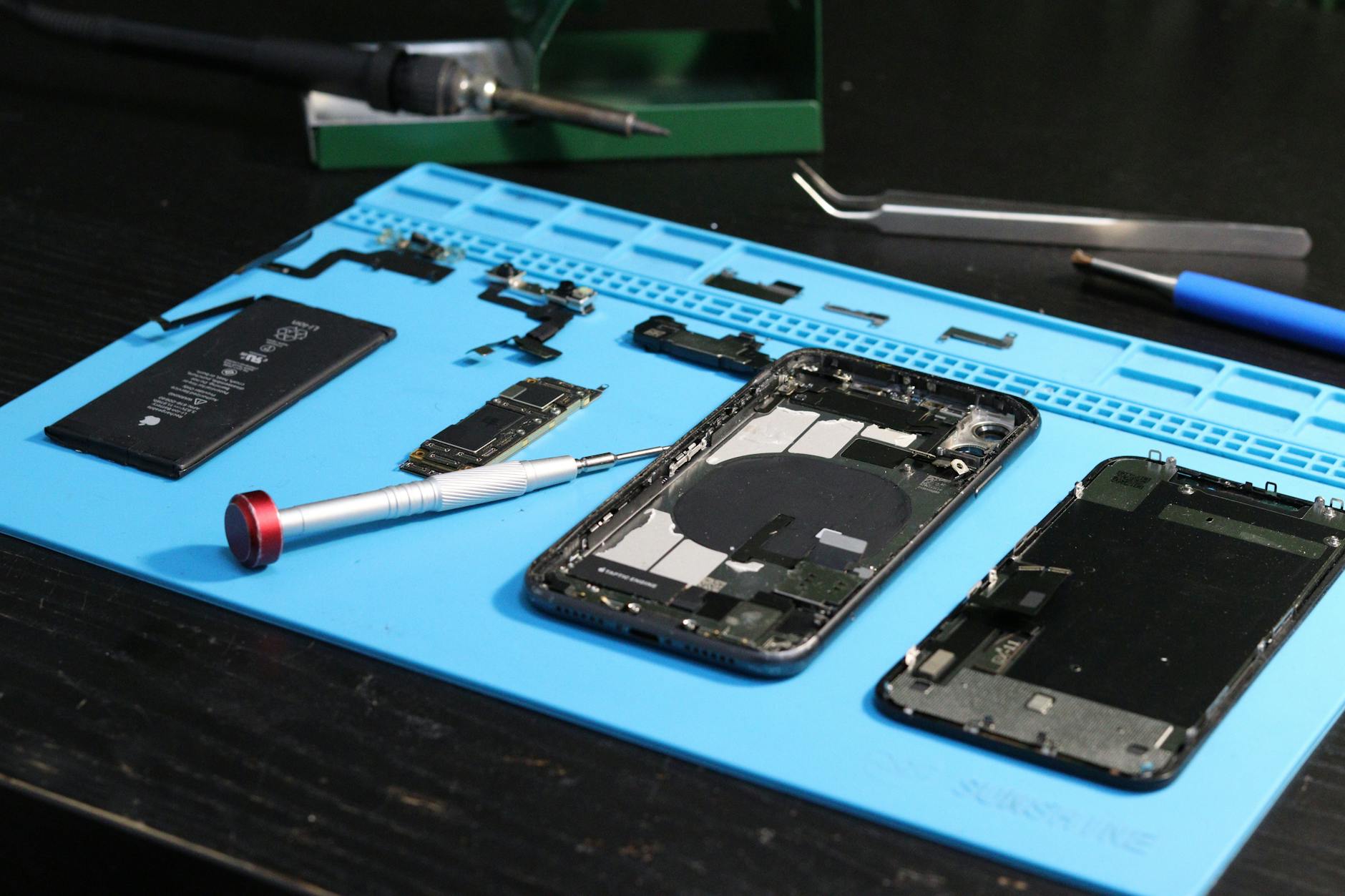
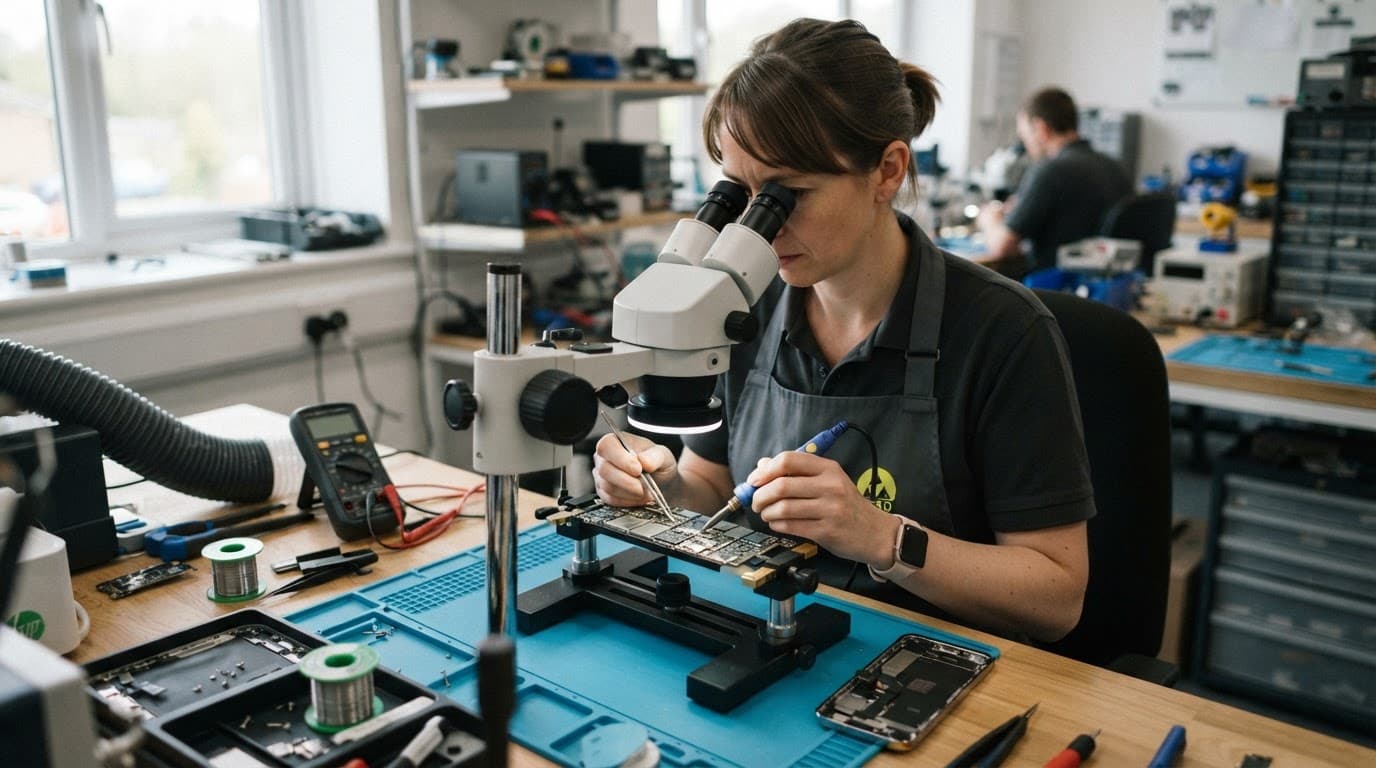
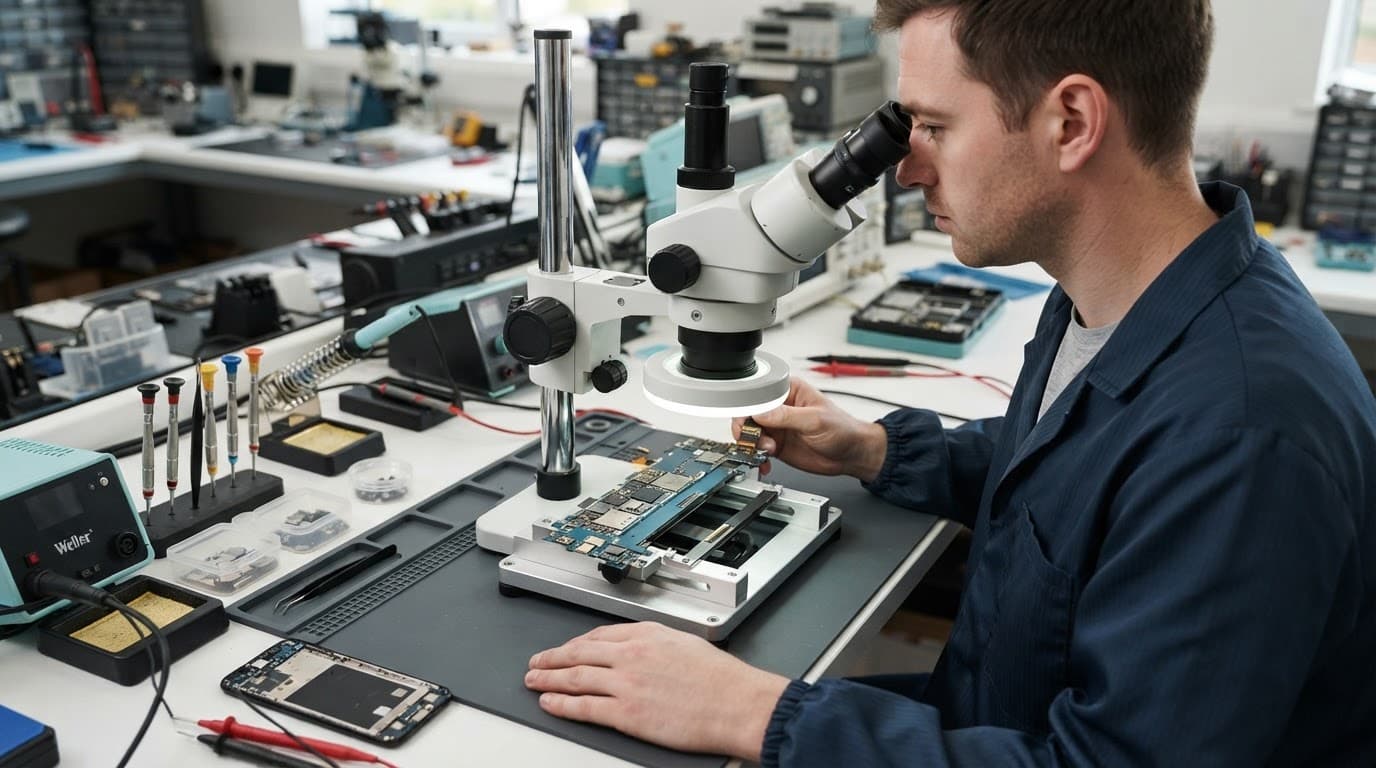
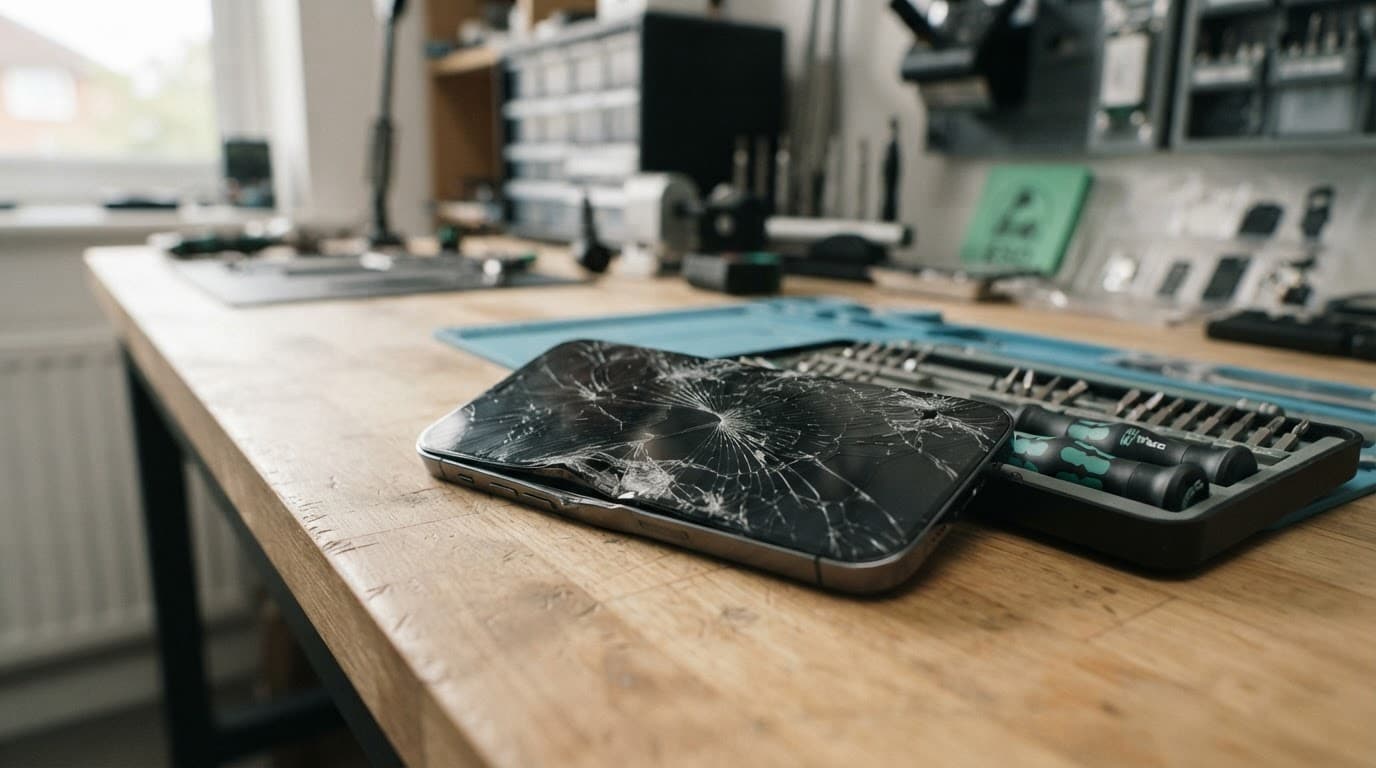
A cracked phone can look like a straightforward screen job, then behave like something much more complicated. That’s why phone repair quotes can change once a technician has opened the device and tested its internal parts.
The first estimate usually comes from the model, the fault you report and the damage visible from the outside. After inspection, we may find a bent frame, damaged connector, weak battery or liquid corrosion. We explain any difference before starting chargeable work, so you aren’t left with an unexpected bill.
The short answer is simple: phone repair quotes change when testing reveals more than the original symptom suggested. Here’s what we check and how to judge the revised price.
Why phone repair quotes change after inspection
A website estimate can identify a likely repair, but it cannot test how the rest of the phone has responded to an impact. A cracked display may be the obvious problem, yet the drop can also affect components underneath.
The outside damage is only the first clue
An iPhone component fault after a drop may affect the screen, Face ID sensors, battery connection or charging circuit. On a Samsung, a Samsung component fault after a drop can involve the display connector, frame, button flex or charging port.
A Google Pixel component fault after a drop may appear as intermittent charging, repeated restarts or a black screen while the phone still vibrates. For iPad component faults, diagnosis often includes checking whether the screen, battery and housing have moved together.
A small bend matters because replacement parts need a sound surface. If a new screen sits against a distorted frame, it can develop pressure marks, touch problems or lifting around the edge.
The replacement part may not be the same
“Screen replacement” covers different parts and grades. Older phones often use LCD panels, whilst many newer iPhone and Samsung models use OLED screens. OLED panels usually cost more because they are thinner, brighter and more complex.
The quote may also change if the repair needs extra adhesive, a complete display assembly instead of glass-only work, or a replacement connector. A low headline price can leave out testing, fitting, the correct part grade or warranty cover.
What we test before confirming the price
Our workshop checks the handset as a whole rather than quoting from the crack pattern alone. That approach gives you a more useful answer, even when the result is a higher figure.
We test touch response across the panel, brightness, colour, lines, dark patches and unexpected flickering. Common screen or display fault symptoms include:
A black display while the phone still rings or vibrates.
Green lines, black patches or unusual colours.
Touch working in some areas but failing in others.
Brightness that fades in and out.
Ghost touches or taps registering by themselves.
These signs can point to a damaged panel, loose cable or frame pressure. If the display is completely dead, we test with known-good parts to separate a screen fault from a power or board problem.
Power and charging checks
A diagnosis for a device that won’t turn on or won’t charge starts with the battery, charging port, cable and power path. We check whether the phone draws power, whether the port holds the cable securely and whether corrosion is present.
A port clean may solve a phone that only charges at an angle because of compacted pocket lint. It won’t fix a damaged connector or liquid corrosion. When a fault reaches the circuit board, our guide to advanced phone fault diagnosis explains why the repair can require more specialist work.
A workshop example: one drop, several faults
We recently inspected an iPhone 12 with shattered front glass. The image still appeared and most touch functions worked, so the customer expected a basic screen replacement.
Testing found dead touch areas near the impact point, along with a slightly disturbed display connection. The job needed a complete screen assembly, not a cosmetic glass fix. We also checked the frame before fitting the replacement, because a new panel would not sit correctly if the housing had bent.
When an iPhone stays completely dark after a fall, our guide to iPhone drop damage diagnosis covers safe checks before sending it in.
Typical UK repair costs and fair comparisons
These are our usual guide prices for common jobs. They are not fixed quotes, because the model and inspection result still matter.
Repair type
Typical guide price
What may change it
Screen replacement
£60 to £180
OLED type, model and frame damage
Battery replacement
£40 to £80
Swelling, connector damage and model
Charging port repair
£50 to £90
Corrosion, port design and board faults
Water-damage treatment
£60 to £120
Corrosion and failed internal parts
Premium OLED displays, bent housings and liquid damage can push the cost above these ranges. We confirm the fault and explain the revised options before proceeding.
Compare what each quote includes
When comparing phone repair quotes, check whether the price includes:
The exact part grade and model-specific assembly.
Labour, adhesive and post-repair testing.
Warranty terms for both the part and fitting.
Return postage and any inspection fee.
What happens if the repair is declined.
At Repair My Crack, many eligible repairs include 12-month warranty cover, although terms vary by part. Premium and standard iPhone screens can have different cover, so we explain the applicable warranty before work begins.
Google’s official UK Pixel repair guidance also asks customers to select all known issues, since additional damage can affect the final repair charge.
When repair may not be sensible
Repair usually makes financial sense when the phone has one clear fault, a straight frame and a healthy battery. A screen replacement on a recent iPhone, Samsung or Pixel is often cheaper than replacing the handset.
We look at the phone’s age, current value, battery condition, cameras and other existing problems. An older device with a damaged screen, weak battery and charging fault may cost more to restore than it is worth. If insurance is involved, compare the confirmed price with your excess using our advice on phone repair versus insurance claims.
How to reduce surprises before repair
You can make the first quote more accurate by providing:
The exact model, storage size if known and a clear photo of every damaged side.
Details of when the fault started, especially after a drop or liquid exposure.
Information about charging, cameras, buttons, touch and battery behaviour.
A recent backup, if the phone still allows access to your data.
Don’t press down a lifting screen, straighten a bent frame or heat a wet phone. If it becomes hot, smells unusual or the battery area starts swelling, stop charging it and arrange an inspection.
For postal repairs across the UK, we ask you to book online, package the device securely and include the order number. We aim to begin testing soon after it arrives, whilst appointment-only drop-ins are available at our Harlow, Essex workshop.
If testing finds no fault, an inspection fee may apply under our standard charges. If we find a different repairable fault, we contact you with the new choices rather than carrying on without approval.
Why an inspection protects your repair decision
A first estimate is useful, but it is based on limited information. The confirmed phone repair quote should reflect the actual model, part, damage and testing required.
A clear inspection helps you choose between repairing, claiming on insurance or replacing the handset. The strongest value usually comes from a repairer that explains what changed, uses suitable parts and provides clear warranty terms.
Use our Fix My Phone service when you’re ready to send a device in. We’ll assess the fault, explain the options and get it sorted as quickly as the condition and parts allow.
James Waterston, Device Repair Specialist at Repair My Crack
A phone can look fine after a fall and still hide a fault on its main board. When people search for board level phone repair, they usually want to know two things: can their data be saved, and will repair cost less than replacing the phone?
In many cases, the answer is yes. Board-level work can repair a damaged component or connection without replacing the whole logic board. However, the fault needs proper testing first. We see why when we inspect common post-drop problems in our workshop.
What board level phone repair actually involves
Board-level repair means working on the phone’s logic board, also called the mainboard or motherboard. This is the small circuit board that controls power, charging, display output, cameras, signal and many other functions.
A standard repair might involve replacing a screen, battery or charging port. Board work goes further. A technician uses magnification and specialist equipment to test circuits, locate a failed component and complete a precise micro-soldering repair.
Component repair instead of a whole board swap
A drop can damage a charging line, power-management component, connector or small filter on the board. Replacing the entire board may solve the fault, but it can be expensive and may leave the data on the original board inaccessible.
Component-level work keeps the original board in place whenever the damage allows it. That makes it particularly useful when the phone contains important photographs, business files, messages or authenticator details.
A successful repair isn’t guaranteed. Severe impact, corrosion, multiple failed components or a badly twisted frame can make the job uneconomical. We inspect the device before recommending a repair route.
Faults that may need board-level diagnosis after a drop
Impact damage doesn’t always announce itself with a shattered screen. A phone may still light up while losing charging, sound, signal or button functions. The location of the impact matters, as does the age and design of the handset.
A device won’t turn on or won’t charge diagnosis starts with simple checks, then moves towards internal testing if the obvious causes have been ruled out.
Power, charging and restart problems
A phone that stays completely dead after a drop may have a damaged battery connector, charging circuit or power-management component. Other warning signs include:
The phone boots for a few seconds, then switches off.
Charging works only at one angle or cuts in and out.
The handset becomes unusually warm while connected.
The phone restarts repeatedly or remains stuck on its logo.
A computer detects the device, but the screen stays black.
A charging port replacement won’t fix a damaged charging IC or board connection. Likewise, a new battery won’t solve a fractured power line. That is why repeated parts swapping can become expensive without a proper diagnosis.
A charging symbol doesn’t prove that the board is healthy. A damaged charging line can still allow intermittent power.
Before sending an iPhone, you can follow Apple’s official charging checks, including testing a known-good cable and adapter. If the phone remains unreliable after those checks, stop repeatedly connecting it.
For more detail on common causes, our guide to iPhone charging fault repairs covers port, battery and board-related problems.
Display faults that aren’t caused by the screen
Black patches, flickering, missing touch response and backlight failure can all look like a straightforward screen fault. Sometimes they are. A damaged display assembly is often the most sensible repair.
However, a drop can also disturb the display connector or damage the board’s image or backlight circuit. Common screen or display fault symptoms include:
The phone vibrates or rings, but the display stays black.
Touch works in one area and fails elsewhere.
The picture appears briefly during startup, then disappears.
Brightness changes cause flickering or a completely dark image.
A replacement screen shows the same fault as the original.
We test the phone before fitting a new display where possible. That prevents a customer paying for a screen when the real issue sits underneath it.
iPhone, Samsung, Pixel and iPad faults
Different manufacturers use different board layouts, connectors and repair methods. The symptoms can look similar, but the likely repair differs between models.
iPhone and Samsung impact damage
An iPhone component fault after a drop may affect the charging circuit, display connection, camera, Face ID-related hardware or a small connector. A side impact can also bend the frame and put pressure on internal parts without cracking the front glass.
A Samsung component fault after a drop can involve the mainboard, side-button flex, charging path or display connector. Samsung Galaxy phones with curved or OLED screens can also suffer hidden damage around the frame. A new screen may not sit correctly if the chassis has bent.
We recently saw a Galaxy S23 from Essex that charged only when the cable sat at a particular angle. The port contained compacted lint, but testing also showed damage around the connection. Cleaning alone would not have been a lasting fix, so we repaired the charging area and tested data transfer, charging stability and heat levels.
Samsung also offers an official UK route through its authorised repair centres. That option may suit a newer device where manufacturer handling and remaining cover matter most.
Google Pixel and iPad diagnosis
A Google Pixel component fault after a drop can appear as intermittent charging, a dead screen, repeated restarts or a faulty volume button. A bent side rail may press against the button assembly, while an internal flex cable or connector can lose contact.
Google’s repair guidance includes hardware problems where a Pixel won’t charge or turn on. You can check the available options through its Google Store repair information. Independent repair may provide another route, especially for an older or out-of-warranty phone, although you should compare warranty implications.
An iPad component fault or diagnosis needs extra care because the large laminated display, battery connector, charging port and logic board sit within a relatively thin body. A corner impact can bend the frame and stress more than one assembly. Sometimes the tablet is working, but the screen has failed. Other times the display is fine and the power or charging circuit has taken the damage.
Good phone hardware troubleshooting in the UK begins with checks that protect the device rather than create more damage. Start with the following:
Remove the case, SIM tray accessories and any magnetic attachments.
Inspect the frame, buttons, rear glass and screen under bright light.
Try one known-good cable and charger, but don’t keep forcing the connection.
Check whether the phone vibrates, rings or appears on a computer.
Back up your data if the device still works.
Photograph the handset, including corners, ports and any existing cracks.
Don’t straighten a bent frame by hand or press down on a lifting screen. Avoid pins, metal tools, hairdryers and compressed air around ports or buttons. Heat can affect adhesive and batteries, while sharp tools can damage contacts.
Our phone repair checklist includes useful photos to take before posting a device. Tell us exactly what happened, including whether the phone was dropped, sat on, exposed to liquid or repaired previously.
What we test in the workshop
We begin with the outside condition, button feel, charging response and signs of heat or corrosion. Then we check power draw, screen output, battery behaviour, connector condition and communication with diagnostic equipment.
If a part replacement is likely to solve the problem, we explain that option. If the results point to the board, we provide the clearest available choices before chargeable work starts. A factory reset won’t repair a broken connector or damaged circuit, so we treat it as a last resort when the fault began with physical damage.
Repair costs and when replacement makes more sense
Board repair prices vary widely because the model and failed component make a large difference. A straightforward component repair may cost around £70 to £150, while newer flagship phones, liquid damage and complex power faults can reach £300 or more. These are broad UK guide figures, not fixed quotes.
For comparison, common Repair My Crack guide ranges look like this:
Repair type
Typical guide range
What can change the price
Screen replacement
£60 to £180
Model, display type and frame damage
Battery replacement
£40 to £80
Battery condition and connector damage
Charging port repair
£50 to £90
Port design, corrosion and board faults
Water-damage treatment
£60 to £120
Corrosion and failed components
Board-level repair
About £70 to £300+
Model, circuit fault and repair complexity
Repair usually makes sense when the phone has one clear fault, a straight frame and a healthy screen, battery and camera. It can also be worthwhile when the data matters more than the handset’s resale value.
Replacement may be more sensible when the device has several existing problems, severe liquid damage, a badly twisted chassis or a repair cost close to the price of a dependable replacement phone. We would rather explain that clearly than recommend work that doesn’t add up.
Many of our repairs include a 12-month warranty on parts and workmanship. Screen warranty terms can vary by part grade, while liquid-damage treatment has separate conditions. Accidental damage after collection and further liquid exposure aren’t normally covered.
How the UK postal repair service works
Customers in Essex can arrange an appointment-only drop-in at Harlow. We also support customers across the UK by post, with tracked Royal Mail postage and tracked returns.
After booking online, package the device securely. Include the order number and any passcode needed for testing, but don’t send loose accessories unless we request them. If the phone still works, back up photographs, messages and important files before handing it over.
Once the device arrives, we aim to begin testing quickly, often on the same day when the fault is clear and the required part is available. Board-level diagnosis can take longer because the board needs detailed inspection. We contact you if testing changes the likely repair or price.
You can also get in touch if you aren’t sure whether the problem is a screen, port, battery or mainboard fault. A few details about the model and symptoms usually help us point you in the right direction.
Conclusion
Board level phone repair can save a device that appears dead, keeps restarting or refuses to charge after a drop. It may also protect access to the original data because the existing logic board stays in place, although no repair can promise recovery in every case.
Back up the phone, avoid risky home fixes and arrange a proper diagnosis before buying replacement parts. We check the whole device, explain the options and use quality parts with a clear price promise where the repair makes financial sense.
James Waterston, Device Repair Specialist at Repair My Crack
A car tyre over your mobile is enough to turn an ordinary day into a proper nightmare. The immediate question is whether the phone run over is salvageable or heading straight for the recycling bin, especially when it contains your banking apps, work messages and family photos.
Sometimes, the answer is yes. A smashed screen, damaged charging port, broken button or loose battery connection may be repairable. However, a crushed frame, swollen battery or cracked main board can make repair unsafe or poor value. We inspect the handset before recommending anything.
Switch it off if it feels hot, looks swollen or has a badly shattered display. Avoid charging it until the battery and internal components have been checked.
Can a phone run over be repaired?
Yes, many run-over phones can be repaired, but the result depends on where the impact landed and how far the damage travelled.
If the frame remains fairly straight, the battery is stable and the handset still boots, replacing the screen or a damaged component may restore normal use. A phone that has been flattened, twisted or crushed around the battery needs a more cautious assessment.
Modern mobiles contain several separate layers. The outer glass can break while the display still shows an image. The impact may also damage the touch sensor, camera, charging circuit, speakers or internal connectors. A handset that vibrates but shows no picture may still be running.
A working screen does not prove the phone is healthy. A hard impact can damage charging, cameras or internal connections without leaving an obvious mark.
Damage hiding behind the broken glass
We often find faults that are not obvious during a quick visual inspection. An iPhone component fault after a drop may affect Face ID, the camera, charging or the battery connection. A Samsung component fault after a drop can involve the OLED display, side rail or USB-C port.
A Google Pixel component fault after a drop may affect the screen cable, buttons or battery connector. An iPad component fault needs a full diagnosis too, particularly when the casing has bent and the display has lifted from its frame.
These faults need more than a glass replacement. We test the whole device so you are not paying to fix one visible problem while another serious fault remains.
When the handset is unsafe to use
Stop using the phone and arrange an inspection if:
The battery looks swollen, the screen is lifting or the phone becomes hot.
You smell burning, see smoke or notice a hissing sound. Move away from it and call 999 if there is an immediate fire risk.
The frame has sharp metal edges or loose glass.
The phone repeatedly restarts, sparks near the charging port or refuses to charge after the impact.
Do not bend the frame back, clamp the phone or use a hairdryer. These actions can damage delicate cables and make battery problems worse.
How we diagnose a phone run over in the workshop
Our phone hardware troubleshooting in the UK starts with safety and a full inspection. We record the visible damage, check the frame for distortion and look for gaps around the display or rear cover.
Next, we test the handset with suitable equipment. That includes the screen, touch response, cameras, microphones, speakers, buttons, biometrics, wireless functions and charging. We also check for battery swelling, loose connectors and signs of liquid entering through the cracks.
For Pixel owners, Google’s official repair guidance covers hardware problems such as cracked screens, charging faults and phones that will not turn on. Independent diagnostics can still be useful when accidental impact has caused several faults at once.
Screen or display fault symptoms to watch
Common warning signs include black patches, coloured lines, flickering, dim areas, ghost touches and sections of the display that no longer respond. A cracked screen can look usable at first, then develop dead touch areas after further pressure.
When a device won’t turn on or won’t charge, diagnosis should come before ordering a screen. The display may be dead while the phone itself is powered, or the impact may have damaged the charging path instead.
We also check whether another phone can call the handset, whether it makes notification sounds and whether a computer recognises it. These checks help separate a display fault from a deeper power or board problem.
Protecting data before further testing
If the screen still works, back up photos, contacts and important files before sending the phone anywhere. Use iCloud, Google, Samsung Cloud or a computer, depending on the device.
Avoid factory resets when the handset has suffered physical damage. If it will not boot and the data is important, repeated charging attempts can make a battery fault worse. Specialist phone data recovery services may be an option when normal repair cannot restore access.
Repair or replacement: the UK cost check
A repair usually makes sense when the phone is reasonably recent, the frame is mostly straight and the damage is limited to one or two parts. Replacement becomes more sensible when the handset has a crushed chassis, heavy corrosion, a damaged main board and a poor battery at the same time.
Our common guide prices are:
Repair
Typical UK guide price
Screen replacement
£60 to £180
Battery replacement
£40 to £80
Charging port repair
£50 to £90
Water-damage assessment or treatment
£60 to £120
These are guide figures, not fixed quotes for a phone run over. A premium OLED screen, bent frame or extra internal damage can increase the cost. We confirm the fault and explain the options before chargeable work begins. An inspection fee may apply if no fault is found.
Warranty terms also matter. Under our terms, premium iPhone screens have a 12-month warranty, while standard iPhone screen cover can differ. Batteries and other components have their own stated warranty terms. Independent repair may also affect a remaining manufacturer’s warranty, so check that before proceeding. Our UK phone repair warranty information explains the main conditions.
What to do before sending the phone
Take these steps before booking a repair:
Back up the device if it is safe to switch on and the display responds.
Power it down, remove the case and take out the SIM card.
Note every symptom, including charging behaviour, unusual heat, missing touch response or camera problems.
Pack the phone securely so it cannot move inside the box, then include the order details we request.
Customers in Harlow and Essex can arrange an appointment-only drop-in. For everyone else, our tracked postal phone repair service lets you book online and send the handset securely through Royal Mail. We aim to start work soon after it arrives, although timing depends on parts, workload and the damage found.
Conclusion: repair first, but do not gamble with safety
A phone run over is not automatically beyond repair. If the battery is safe, the frame is recoverable and the damage is limited, a screen or component repair may cost far less than replacing the handset.
The sensible route is a full diagnosis rather than a quick guess based on the cracked glass. Back up your data, stop using the device if it becomes hot or unstable, and ask for a clear quote before work begins.
James Waterston, Device Repair Specialist at Repair My Crack
Apple's official UK iPhone screen repair prices range from £159 to £389, while independent repairs typically cost roughly £80 to £350+, depending on the model and screen quality. If both the screen and back glass are damaged, Apple lists a separate £469 charge.
You've probably found this page after one awkward drop onto a pavement, a phone slipping from a pocket, or a hairline crack spreading across the display while you were deciding whether to repair it. The phone may still turn on, but every tap now feels like a reminder that the final bill could vary dramatically.
That variation isn't a mistake. An older iPhone with a simpler display sits in a different pricing tier from a large Pro Max model with a premium OLED assembly. The repair route matters too. Apple's official out-of-warranty service, an independent workshop, a mail-in repair and a DIY kit can all produce very different totals.
This guide focuses on the decision behind the quote, not just the headline number. You'll see how Apple's prices work, what independent repairers typically charge across model bands, why screen grade can change the experience, and how to compare DIY, walk-in and mail-in options. You'll also get a practical way to weigh AppleCare+, extra damage, warranty, resale value and the length of time you plan to keep the phone.
Introduction What a Cracked Screen Really Costs in the UK
The first thing to establish is a realistic range. Apple's official UK iPhone screen replacement pricing currently runs from £159 to £389, depending on the model. Higher-end Pro and larger devices sit at the top of that range, and Apple lists £469 when both the screen and back glass are damaged.
Independent pricing is broader in a different way. UK repair-market guides place many third-party iPhone screen repairs at roughly £80 to £350+, with older phones often nearer the lower end and newer premium models moving much higher, as shown by UK independent repair pricing.
The useful question isn't “How much is an iPhone screen repair?” It's “Which repair gives this particular phone the lowest total ownership cost?”
That distinction matters if your phone is covered by AppleCare+, if the frame is bent, or if the crack is only one part of the damage. Paying the cheapest advertised fee can leave you with a poorer display, a shorter warranty or a repair that doesn't suit a phone you plan to keep for years.
The model creates the first pricing tier. An iPhone SE-class repair is positioned near the lower end of Apple's range, while Pro Max models sit much higher. Independent repairers then add another layer by offering different display grades, service formats and warranty terms.
A sensible comparison therefore starts with four details:
Exact model: An iPhone 15 and iPhone 15 Pro don't use the same display assembly.
Damage type: Screen-only damage isn't priced like screen and back-glass damage.
Coverage: AppleCare+ can change the economics substantially.
Repair standard: The cheapest compatible display may not provide the same brightness, colour or touch feel as a premium assembly.
The sections ahead use Apple's published figures and UK independent price bands to build a decision you can apply to your own phone.
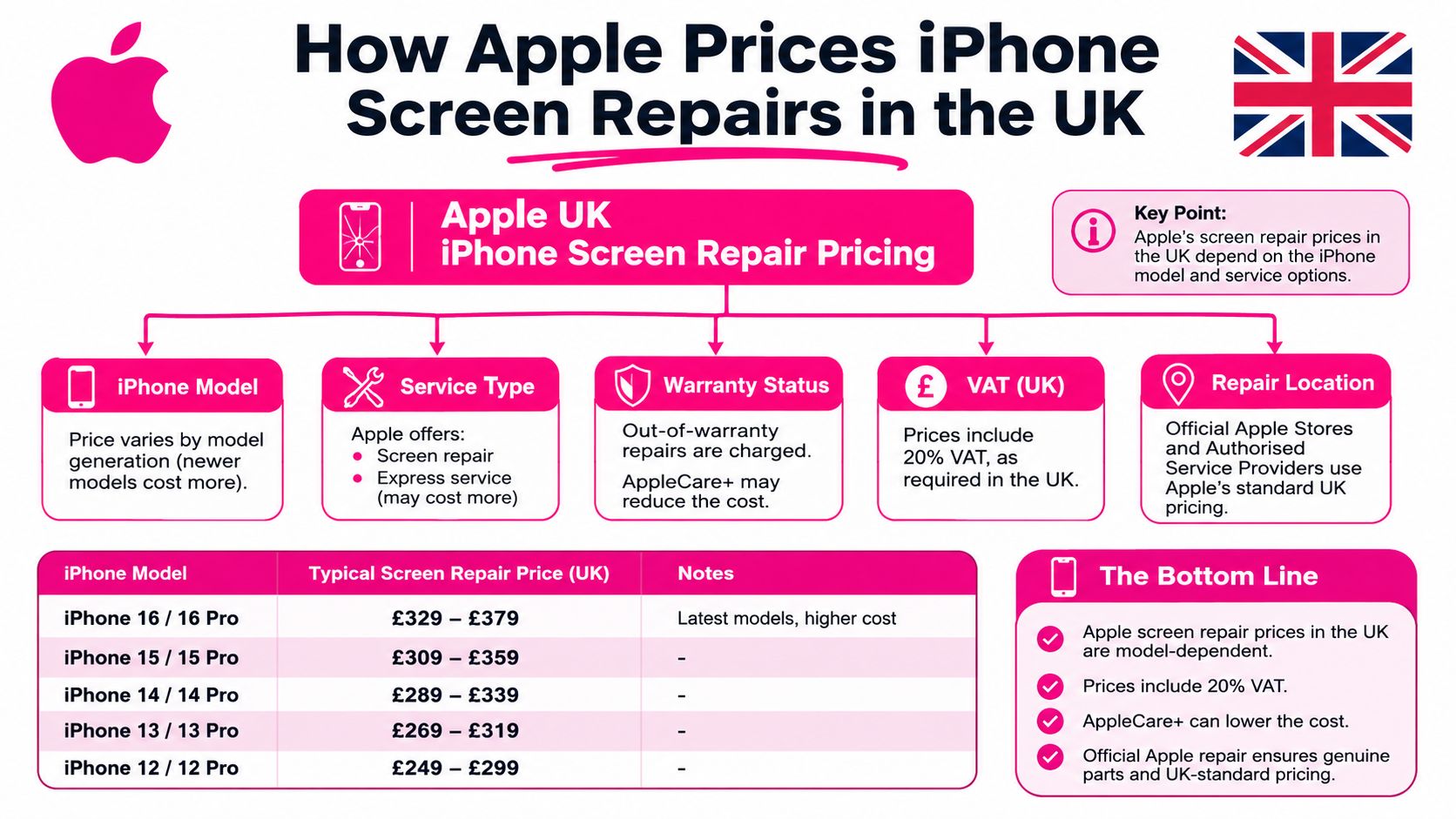
How Apple Prices iPhone Screen Repairs in the UK
Apple doesn't use one flat screen-repair fee for every iPhone. Its UK pricing is model-tiered, so the device generation, screen size and display technology all influence the official out-of-warranty cost.
An older or smaller iPhone sits near the lower part of the scale. Newer OLED devices, particularly Pro and larger Pro Max models, require more expensive display assemblies. That's why Apple's official range stretches from £159 to £389, rather than clustering around one typical fee.
The spread is commercially important. The gap between the least expensive and most expensive screen-only prices is more than £230, so the same type of accident has very different economics depending on the iPhone generation. Apple's published pricing also shows £389 for screen damage and £469 when screen and back glass damage are combined, as outlined in this UK iPhone screen replacement cost guide.
Why display type changes the official fee
A screen assembly isn't a sheet of glass. It combines the visible glass, touch layer and display panel, with the assembly designed for a particular phone. A larger premium OLED panel costs more than a smaller or simpler display, and the fitting process must accommodate the phone's sensors, frame and internal connectors.
That explains why a Pro Max quote can feel disproportionate when the visible problem is “just a crack”. The damaged component may be part of a much more expensive assembly, not a universal piece that can be swapped between models.
AppleCare+ changes the calculation
Coverage should be checked before comparing an independent quote with Apple's standard fee. Apple's UK support information lists £25 for screen damage under AppleCare+, which is a very different decision from paying the full out-of-warranty amount.
The practical order is straightforward:
Confirm your cover: Check whether AppleCare+ applies to the phone and the damage.
Identify the damage: Establish whether the back glass or frame is also affected.
Compare like for like: Put Apple's fee beside an independent quote for the same repair scope.
Consider ownership: A premium official repair may make more sense if you're keeping a newer phone or protecting resale value.
Apple's pricing is therefore a reference point, not automatically the right answer for every owner. It establishes what an official out-of-warranty route can cost, while the independent market gives you more choice over price, part grade and service format.
What Independent Repairers Typically Charge Across iPhone Models
If an iPhone 11 needs a screen and an iPhone 15 Pro Max needs one, the crack may look similar, but the bill usually will not. Independent UK pricing works in bands. Older iPhones sit toward the lower end, standard newer models occupy the middle, and Pro or Pro Max devices reach the premium range.
Market summaries place typical third-party screen repairs at roughly £80 to £350+. Older devices often fall around £80 to £150, while newer Pro models are often above £260, according to this UK iPhone repair price guide.
The final quote also reflects how the repair is supplied. A local workshop and a national mail-in service may charge differently because labour, postage, inspection and warranty are grouped into the service in different ways. The price is therefore partly about the phone and partly about the route used to repair it.
Model bands that help with budgeting
These bands provide a practical starting point for several common UK models. The independent ranges come from model-by-model UK repair pricing. Apple figures appear only where the supplied market information provides an official reference.
Model band
Typical independent price range
Apple official screen repair for reference
iPhone 11 and 12 series
£80 to £150
Model dependent, with Apple's wider official range starting at £159
iPhone 13 series
£110 to £300
Model dependent
iPhone 14 series
£130 to £300
Model dependent
iPhone 15 Pro and Pro Max
£260 to £350+
Higher-end official fees can reach £389
The bands are not interchangeable. A lower-end iPhone 11 quote cannot be used as a guide to an iPhone 15 Pro Max, because the newer premium phone uses a more expensive display assembly and has more costly parts to source.
A separate UK guide places an iPhone 11 repair at about £219 through Apple and an iPhone 15 Pro Max repair at about £389. That comparison shows how widely official pricing can vary between models, as outlined in this UK screen repair comparison.
Why independent prices can undercut Apple
Independent repairers can source compatible or premium replacement assemblies, run local workshops, or offer postal services. These arrangements may reduce the upfront fee compared with Apple's official out-of-warranty route, particularly for older phones.
Sourcing is part of the economics. A repairer buying parts for a common older model may have more supply options, while a newer Pro display can cost more before any fitting work begins. Service format matters too. A walk-in repair includes the shop's premises and staff time, while a mail-in option also has postage and handling built into its price.
For an older iPhone, a lower-cost repair can extend useful ownership without placing too much money into the device. A newer Pro model may justify a larger repair budget because replacing it would involve a much higher overall cost. AppleCare+ coverage, where applicable, can also change the calculation by reducing the amount paid for screen damage.
The independent market gives owners more routes to a working phone. Model, parts supply and service format explain much of the price spread, so a budget estimate should begin with the exact iPhone rather than the size of the crack.
Why the Same Repair Can Cost So Much More Depending on Your Screen
Two repairers can quote different prices for the same iPhone model because they may be offering different screen grades. The model number identifies the phone, but it doesn't always identify the quality of the replacement display.
Some independent repairers offer a standard compatible screen, while others offer a premium assembly intended to reproduce more closely the original display experience. On newer iPhone 15 and 16 models, UK pricing pages show independent ranges of roughly £80 to £180 for standard iPhone 15 work and up to £240 to £379 for premium or Pro/Pro Max versions. Apple's own service is shown at around £289 to £429, depending on the model, in this 2026 UK screen repair pricing guide.
What the part grade affects
The display is the part you interact with every time you start the phone, read a message or use the camera. A lower-cost option may restore basic functionality, but the visible and tactile result can differ from a premium assembly.
Ask specifically about:
Brightness: Whether the replacement provides the brightness you expect outdoors.
Colour: Whether whites, skin tones and darker shades appear natural.
Touch response: Whether typing, scrolling and edge gestures feel accurate.
Longevity: Whether the repairer has tested the part and will support it under warranty.
Fit: Whether the screen sits flush with the frame and adhesive is applied correctly.
The difference can be more noticeable on phones that originally used OLED technology. OLED screens can provide deeper blacks and strong contrast, but compatible replacements vary in construction and quality. A quote that looks £100 lower may be buying a different experience rather than the same repair at a better rate.
Service format creates another price layer
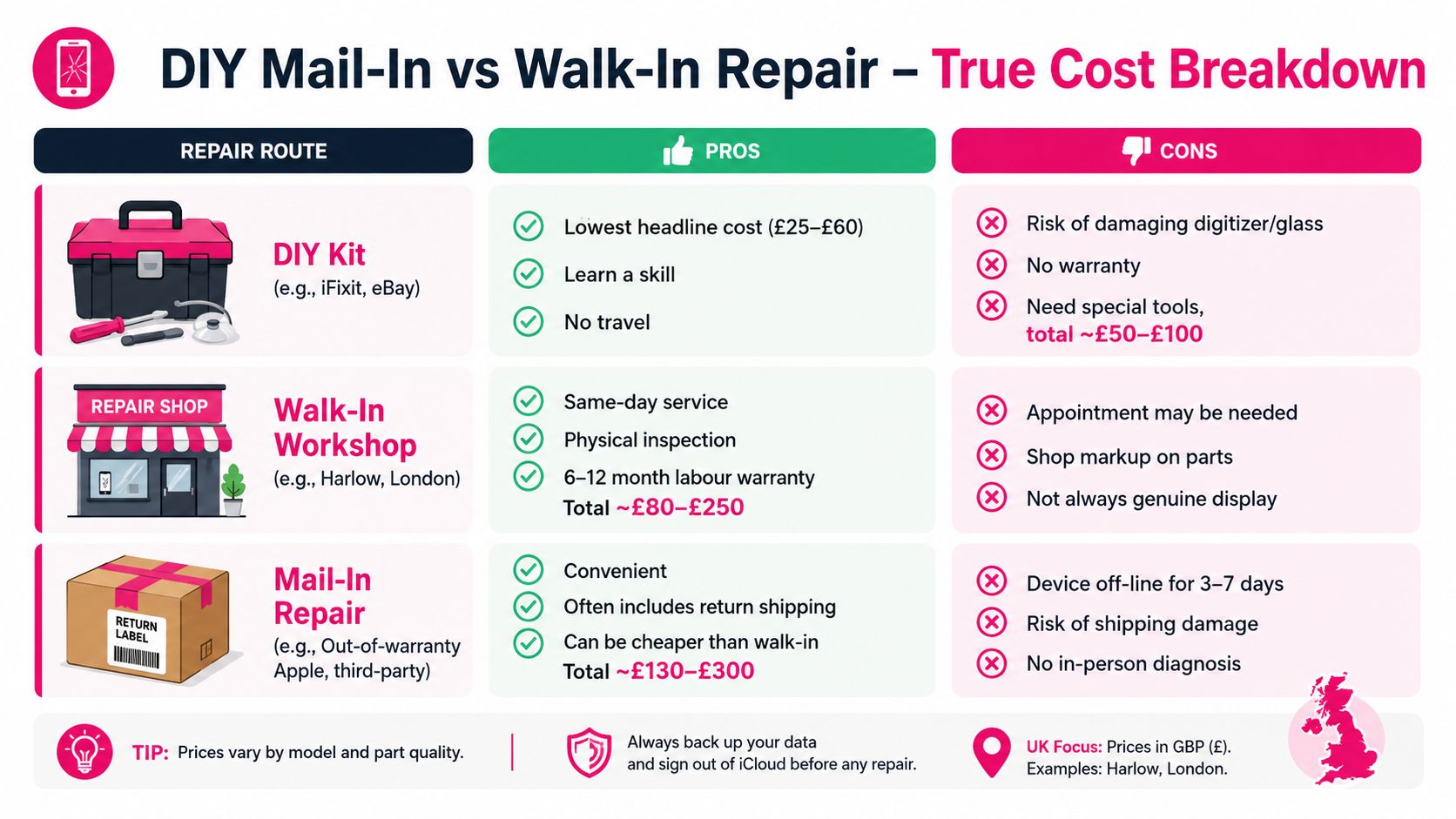
Part grade isn't the only hidden variable. A walk-in repair may include an in-person inspection, while a mail-in service may include tracked delivery and packaging. A DIY kit removes labour from the headline price but transfers the risk to the owner.
That makes the right question more precise: What total result do I need?
If you're repairing an older phone for occasional use, a standard compatible display may be adequate. If the iPhone is a daily work device, a newer flagship or something you plan to sell later, a premium screen with documented testing may be the better value.
Before booking, ask the repairer to name the screen grade in writing. “Screen replacement” is too vague on its own. You should know whether the quote covers a standard compatible part, a premium assembly or an official route.
Choosing Between DIY Mail-In and Walk-In Repair in the UK
The cheapest headline price often belongs to a DIY kit, but the headline price isn't the complete cost. You'll need tools, a clean workspace, time and enough confidence to handle delicate cables and adhesive without causing additional damage.
A walk-in workshop costs more than doing the repair yourself, but you can have the phone inspected in person and ask questions before work begins. A mail-in service trades physical convenience for packaging and transit time, while giving people outside a workshop's local area access to a specialist repair route.
DIY suits capable owners, not every damaged phone
DIY is most suitable when you understand the risks and the device isn't your only essential communication tool. Modern iPhones contain small connectors, bonded components and sensitive sensors. A slip with a tool can turn a screen replacement into a wider repair.
The cost comparison should include:
Tools: Specialist screwdrivers, opening tools and adhesive may be needed.
Risk: A damaged connector or sensor can increase the eventual repair bill.
Testing: You're responsible for checking touch, brightness, cameras, speakers and charging.
Warranty: A kit doesn't provide the same repair support as a completed professional service.
Walk-in repair prioritises inspection and speed
An appointment-based workshop in Harlow, Essex can inspect the phone before accepting the job and identify damage that photographs may not show. This route makes sense if you want to discuss screen grade, frame condition and turnaround face to face.
You should still ask whether the part is tested, whether the repair carries a warranty and whether the quote can change after inspection. A nearby workshop isn't automatically better, but direct communication makes it easier to understand the decision.
Mail-in repair trades travel for convenience
Mail-in repair can suit customers across the UK who don't live near a suitable workshop. Repair My Crack's UK mail-in phone repair service uses tracked Royal Mail postage both ways and transit insurance up to £750, according to the publisher's service information.
The trade-off is that you'll be without the phone while it travels and is assessed. Back up your data first, follow the packaging instructions and use tracking so you can see the parcel's progress.
A repair quote should also state whether return delivery, testing and warranty support are included. Those details affect the true cost more than a low starting price.
Here's a short video that demonstrates the sort of practical checks involved in judging a repair route:
Choose DIY when you have the skill and can accept the risk. Choose walk-in when you value physical inspection and direct conversation. Choose mail-in when tracked convenience matters more than visiting a workshop.
How to Judge a Quote and Decide Whether Repair Is Worth It
A useful repair quote should let you compare the whole job, not just the part. If the wording only says “iPhone screen repair” with no model, grade, warranty or damage assumptions, you don't yet have enough information to make a fair decision.
Start with the exact device. Check Settings, General, About, Model Name, then tell the repairer whether the screen still displays properly, whether touch works across the panel and whether the frame or back glass is damaged.
Six checks before you book
Read the part description: The quote should identify the screen grade or repair type, not just say “replacement”.
Confirm the damage scope: Ask whether the price assumes screen-only damage or includes related work.
Check testing: Make sure touch, brightness, cameras, microphones, speakers, Face ID and charging are checked where relevant.
Read the warranty: Look for the covered component, exclusions and what happens if the replacement develops a fault.
Compare like for like: A written quote for a premium display should be compared with another premium-display quote.
Consider ownership: A higher-quality repair may make more sense if you'll keep the iPhone or sell it later.
Apple's UK figures show why damage scope matters. The official support information lists £389 for screen damage, £469 for screen plus back-glass damage and £25 for screen damage under AppleCare+, as summarised in this UK Apple screen repair cost guide.
Use a simple decision tree
If AppleCare+ applies, check that route first. The excess may be more economical than an independent repair, particularly for a newer phone or a device with multiple covered damage types.
If you're out of warranty, compare Apple's official fee with an independent quote that specifies the part grade and warranty. For an older phone, keeping the upfront cost controlled may be sensible. For a newer Pro or Pro Max, the cheapest display can represent poor value if brightness, colour or touch response disappoints you every day.
If the phone has screen, back-glass, frame, battery or charging problems, ask for a complete diagnosis before approving one component. A repair that fixes only the visible crack may not restore dependable use.
You can request a written comparison through Repair My Crack's UK phone repair quote service. Keep the quote, check the booking details and use the repairer's tracking process if the phone is sent by post.
Making a Confident Choice and Getting Your iPhone Fixed
The right iPhone screen repair cost UK decision depends on more than the number at the bottom of a quote. Apple's official screen-only range is £159 to £389, independent repairs commonly sit around £80 to £350+, and the model, display grade, damage type and service route determine where your phone belongs within those bands.
AppleCare+ should be checked before paying an out-of-warranty fee. If you're comparing independent repairers, ask for the exact screen grade, testing process, warranty and total delivery cost. A premium repair can be sensible for a newer phone you rely on every day, while a basic compatible display may be adequate for an older handset with limited remaining use.
Back up the phone before sending it anywhere, photograph its condition, remove personal accessories and keep your written quote. Those small steps make a mail-in or workshop repair easier to manage.
A good repair doesn't just remove the crack. It restores dependable use while keeping the phone's remaining value in proportion to what you spend.
– James Waterston, Device Repair Specialist at Repair My Crack
Repair My Crack offers UK-wide mail-in iPhone repairs with tracked postage, as well as appointment-based drop-in service at its Harlow workshop. Check your exact model, compare the available screen options and book through Repair My Crack when you're ready to turn the quote into a practical repair.
By continuing to browse our site, you agree to the use of our cookies.
This website uses cookies to improve your experience while you navigate through the website. Out of these, the cookies that are categorized as necessary are stored on your browser as they are essential for the working of basic functionalities of the website. We also use third-party cookies that help us analyze and understand how you use this website. These cookies will be stored in your browser only with your consent. You also have the option to opt-out of these cookies. But opting out of some of these cookies may affect your browsing experience.
Necessary cookies are absolutely essential for the website to function properly. These cookies ensure basic functionalities and security features of the website, anonymously.
Cookie
Duration
Description
cookielawinfo-checkbox-analytics
11 months
This cookie is set by GDPR Cookie Consent plugin. The cookie is used to store the user consent for the cookies in the category "Analytics".
cookielawinfo-checkbox-functional
11 months
The cookie is set by GDPR cookie consent to record the user consent for the cookies in the category "Functional".
cookielawinfo-checkbox-necessary
11 months
This cookie is set by GDPR Cookie Consent plugin. The cookies is used to store the user consent for the cookies in the category "Necessary".
cookielawinfo-checkbox-others
11 months
This cookie is set by GDPR Cookie Consent plugin. The cookie is used to store the user consent for the cookies in the category "Other.
cookielawinfo-checkbox-performance
11 months
This cookie is set by GDPR Cookie Consent plugin. The cookie is used to store the user consent for the cookies in the category "Performance".
viewed_cookie_policy
11 months
The cookie is set by the GDPR Cookie Consent plugin and is used to store whether or not user has consented to the use of cookies. It does not store any personal data.
Functional cookies help to perform certain functionalities like sharing the content of the website on social media platforms, collect feedbacks, and other third-party features.
Performance cookies are used to understand and analyze the key performance indexes of the website which helps in delivering a better user experience for the visitors.
Analytical cookies are used to understand how visitors interact with the website. These cookies help provide information on metrics the number of visitors, bounce rate, traffic source, etc.
Advertisement cookies are used to provide visitors with relevant ads and marketing campaigns. These cookies track visitors across websites and collect information to provide customized ads.