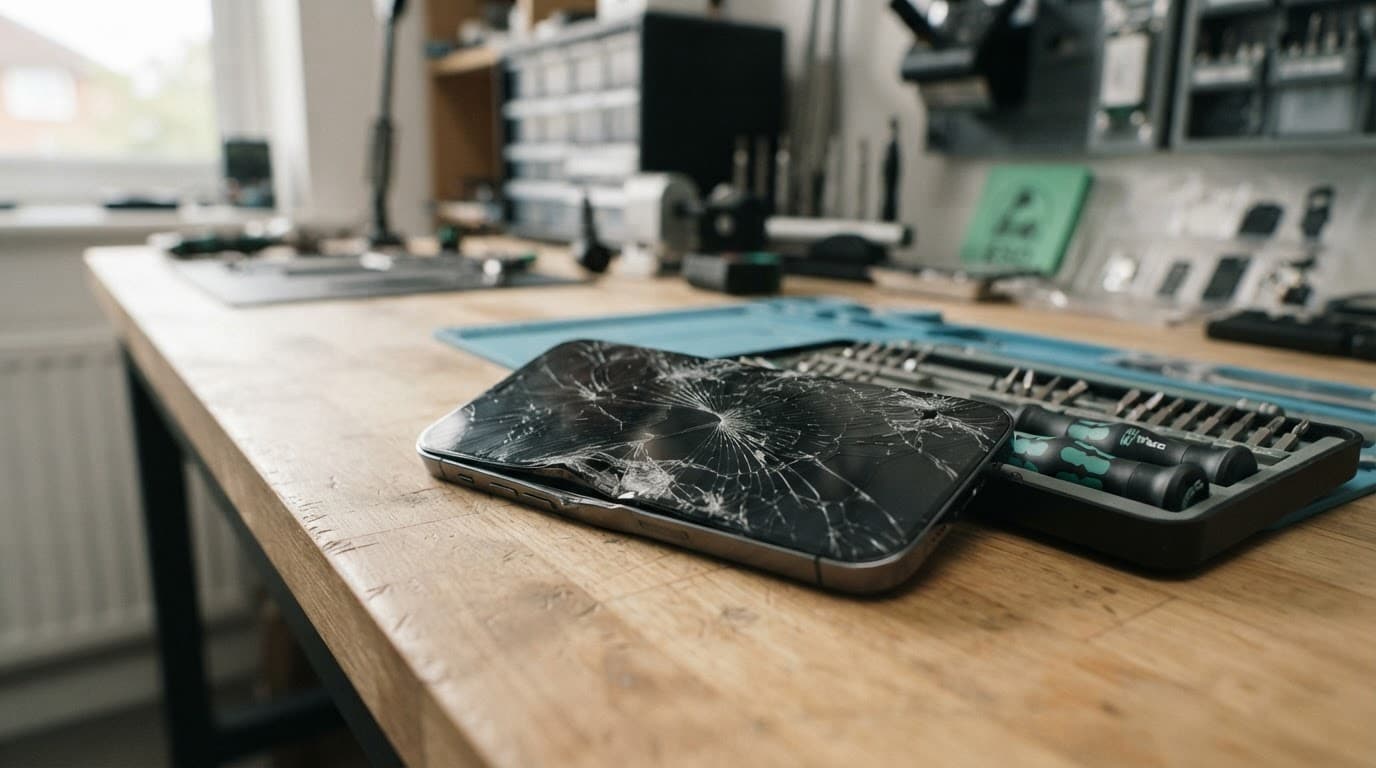
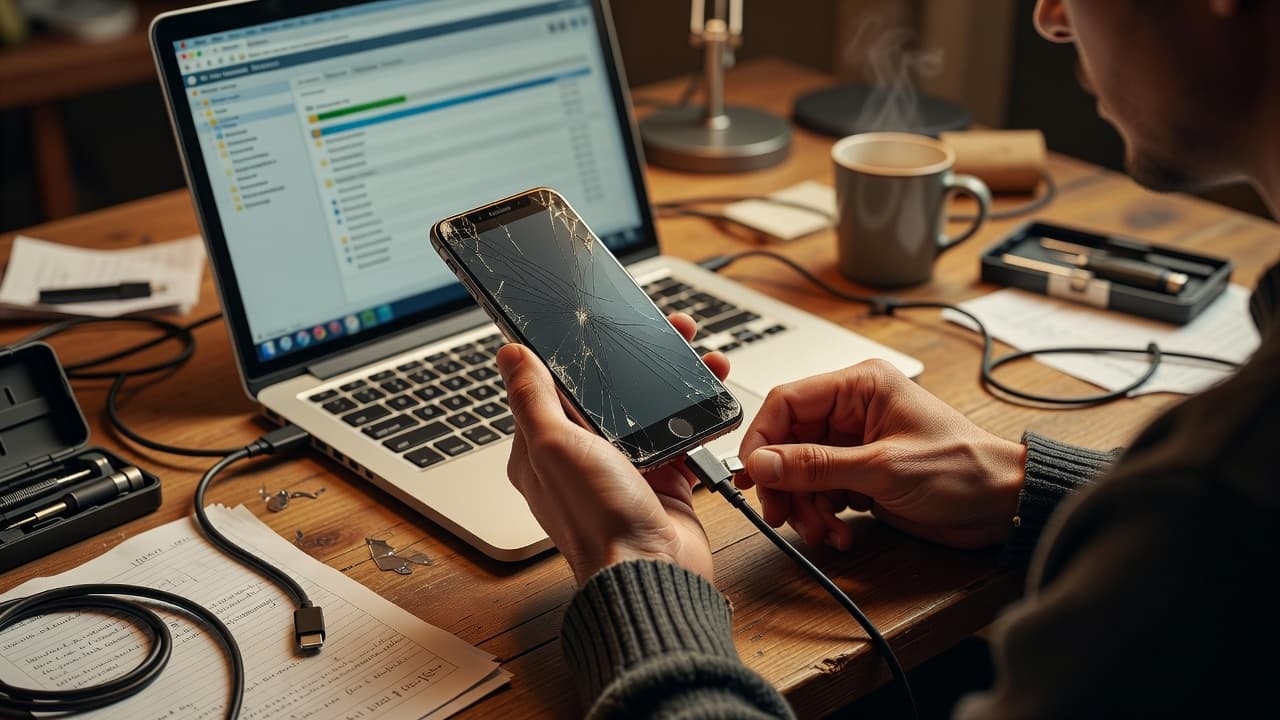
A car tyre over your mobile is enough to turn an ordinary day into a proper nightmare. The immediate question is whether the phone run over is salvageable or heading straight for the recycling bin, especially when it contains your banking apps, work messages and family photos.
Sometimes, the answer is yes. A smashed screen, damaged charging port, broken button or loose battery connection may be repairable. However, a crushed frame, swollen battery or cracked main board can make repair unsafe or poor value. We inspect the handset before recommending anything.
Switch it off if it feels hot, looks swollen or has a badly shattered display. Avoid charging it until the battery and internal components have been checked.
Can a phone run over be repaired?
Yes, many run-over phones can be repaired, but the result depends on where the impact landed and how far the damage travelled.
If the frame remains fairly straight, the battery is stable and the handset still boots, replacing the screen or a damaged component may restore normal use. A phone that has been flattened, twisted or crushed around the battery needs a more cautious assessment.
Modern mobiles contain several separate layers. The outer glass can break while the display still shows an image. The impact may also damage the touch sensor, camera, charging circuit, speakers or internal connectors. A handset that vibrates but shows no picture may still be running.
A working screen does not prove the phone is healthy. A hard impact can damage charging, cameras or internal connections without leaving an obvious mark.
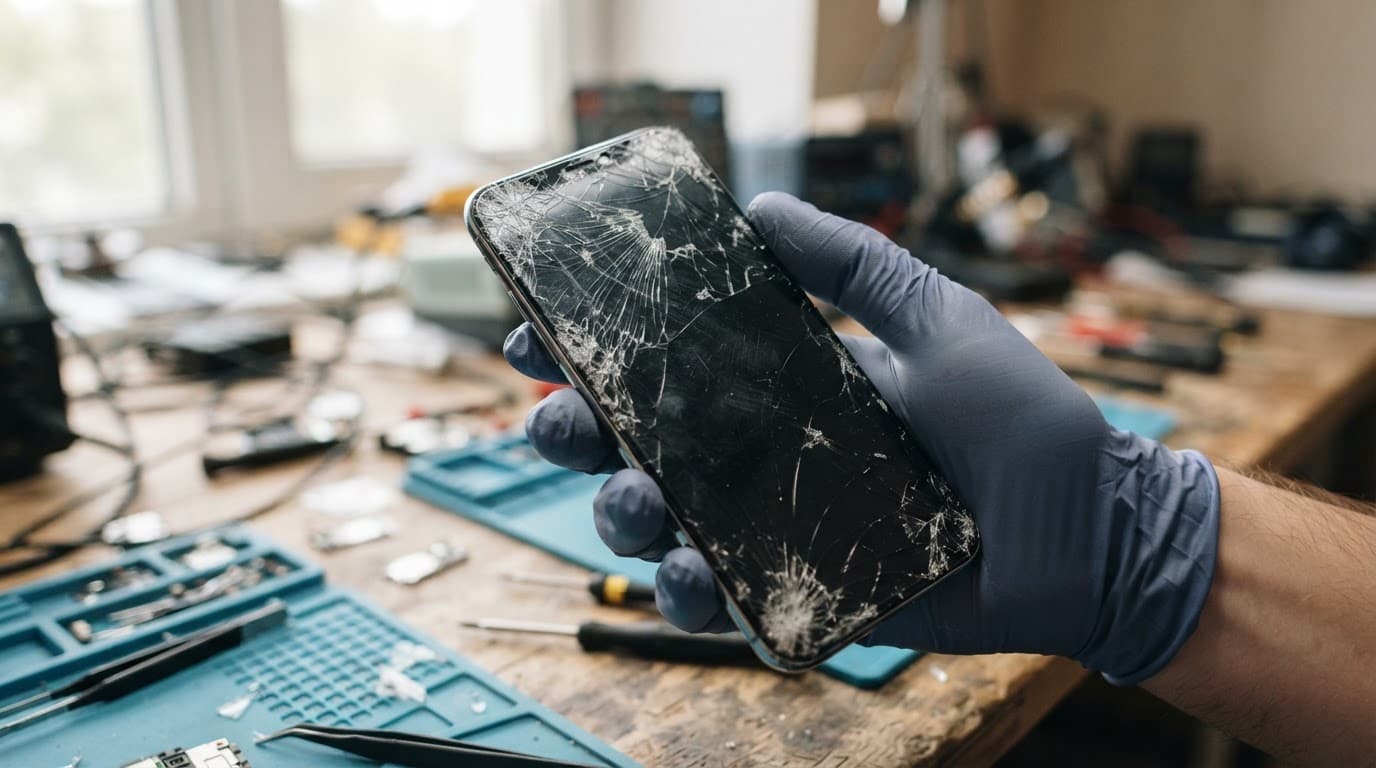
Damage hiding behind the broken glass
We often find faults that are not obvious during a quick visual inspection. An iPhone component fault after a drop may affect Face ID, the camera, charging or the battery connection. A Samsung component fault after a drop can involve the OLED display, side rail or USB-C port.
A Google Pixel component fault after a drop may affect the screen cable, buttons or battery connector. An iPad component fault needs a full diagnosis too, particularly when the casing has bent and the display has lifted from its frame.
These faults need more than a glass replacement. We test the whole device so you are not paying to fix one visible problem while another serious fault remains.
When the handset is unsafe to use
Stop using the phone and arrange an inspection if:
The battery looks swollen, the screen is lifting or the phone becomes hot.
You smell burning, see smoke or notice a hissing sound. Move away from it and call 999 if there is an immediate fire risk.
The frame has sharp metal edges or loose glass.
The phone repeatedly restarts, sparks near the charging port or refuses to charge after the impact.
Do not bend the frame back, clamp the phone or use a hairdryer. These actions can damage delicate cables and make battery problems worse.
How we diagnose a phone run over in the workshop
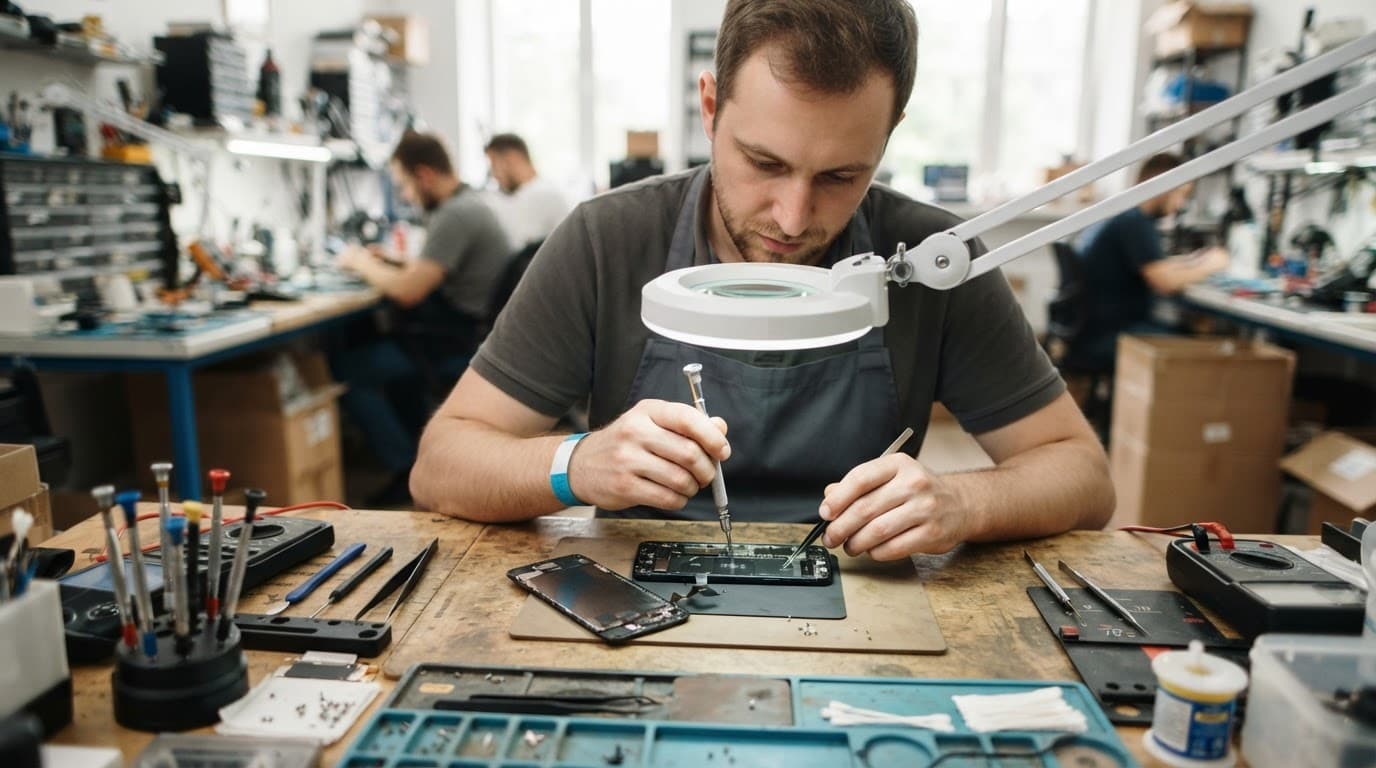
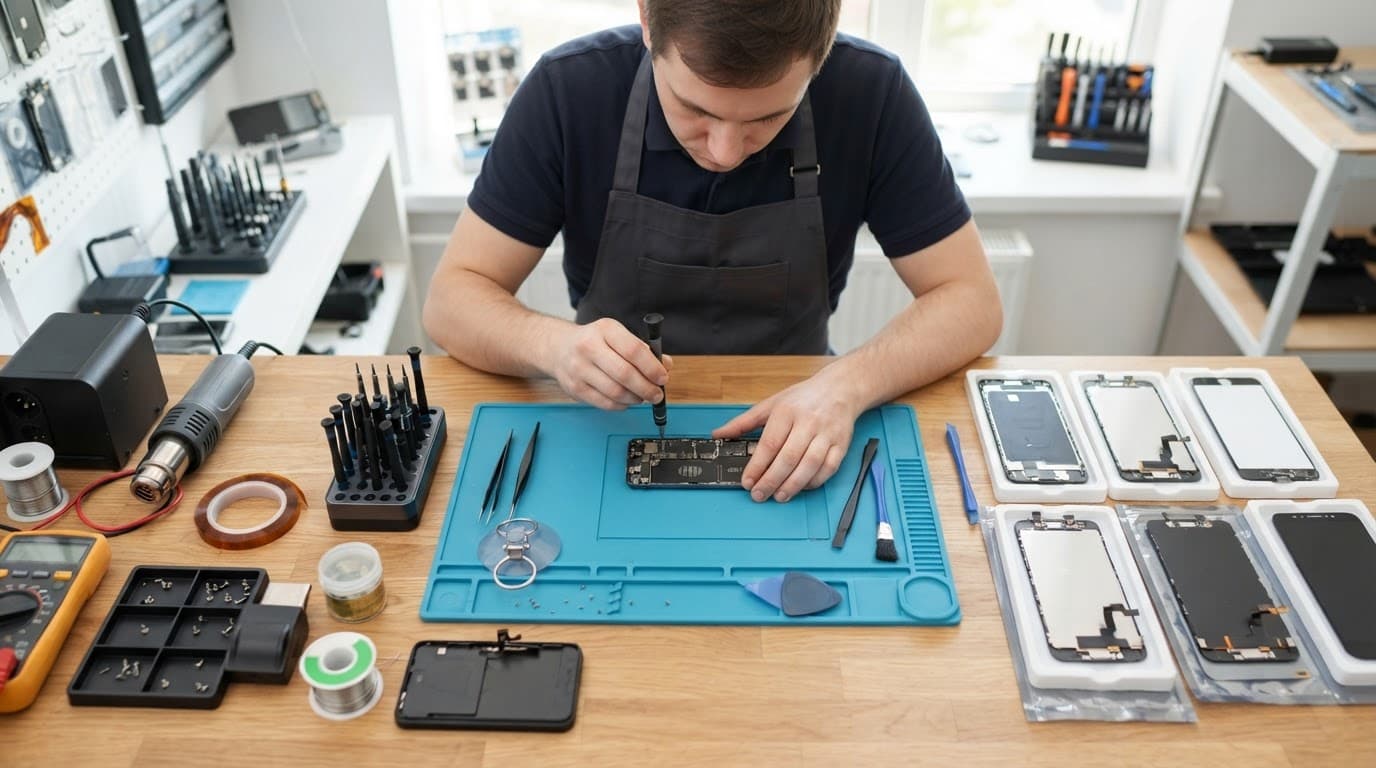
Our phone hardware troubleshooting in the UK starts with safety and a full inspection. We record the visible damage, check the frame for distortion and look for gaps around the display or rear cover.
Next, we test the handset with suitable equipment. That includes the screen, touch response, cameras, microphones, speakers, buttons, biometrics, wireless functions and charging. We also check for battery swelling, loose connectors and signs of liquid entering through the cracks.
For Pixel owners, Google’s official repair guidance covers hardware problems such as cracked screens, charging faults and phones that will not turn on. Independent diagnostics can still be useful when accidental impact has caused several faults at once.
Screen or display fault symptoms to watch
Common warning signs include black patches, coloured lines, flickering, dim areas, ghost touches and sections of the display that no longer respond. A cracked screen can look usable at first, then develop dead touch areas after further pressure.
When a device won’t turn on or won’t charge, diagnosis should come before ordering a screen. The display may be dead while the phone itself is powered, or the impact may have damaged the charging path instead.
We also check whether another phone can call the handset, whether it makes notification sounds and whether a computer recognises it. These checks help separate a display fault from a deeper power or board problem.
Protecting data before further testing
If the screen still works, back up photos, contacts and important files before sending the phone anywhere. Use iCloud, Google, Samsung Cloud or a computer, depending on the device.
Avoid factory resets when the handset has suffered physical damage. If it will not boot and the data is important, repeated charging attempts can make a battery fault worse. Specialist phone data recovery services may be an option when normal repair cannot restore access.
Repair or replacement: the UK cost check
A repair usually makes sense when the phone is reasonably recent, the frame is mostly straight and the damage is limited to one or two parts. Replacement becomes more sensible when the handset has a crushed chassis, heavy corrosion, a damaged main board and a poor battery at the same time.
Our common guide prices are:
Repair
Typical UK guide price
Screen replacement
£60 to £180
Battery replacement
£40 to £80
Charging port repair
£50 to £90
Water-damage assessment or treatment
£60 to £120
These are guide figures, not fixed quotes for a phone run over. A premium OLED screen, bent frame or extra internal damage can increase the cost. We confirm the fault and explain the options before chargeable work begins. An inspection fee may apply if no fault is found.
Warranty terms also matter. Under our terms, premium iPhone screens have a 12-month warranty, while standard iPhone screen cover can differ. Batteries and other components have their own stated warranty terms. Independent repair may also affect a remaining manufacturer’s warranty, so check that before proceeding. Our UK phone repair warranty information explains the main conditions.
What to do before sending the phone
Take these steps before booking a repair:
Back up the device if it is safe to switch on and the display responds.
Power it down, remove the case and take out the SIM card.
Note every symptom, including charging behaviour, unusual heat, missing touch response or camera problems.
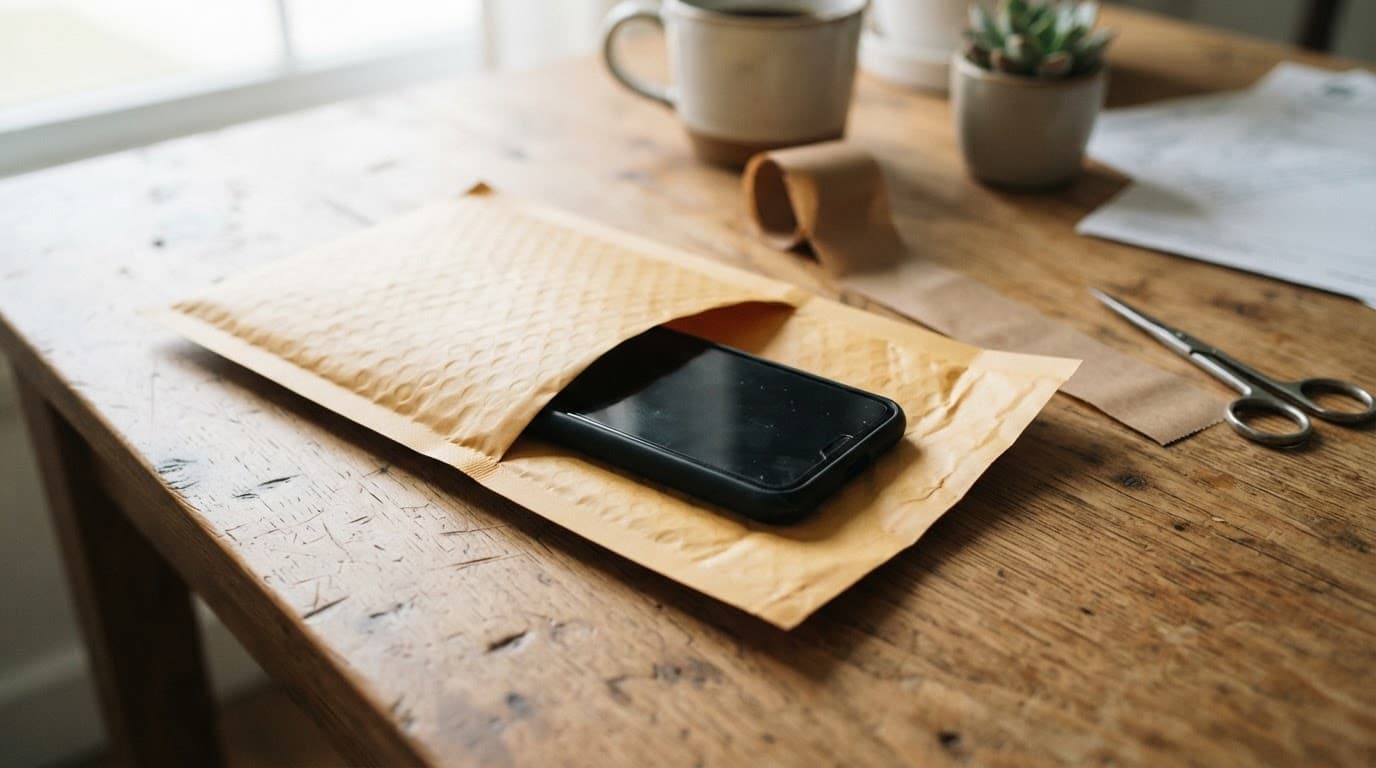
Pack the phone securely so it cannot move inside the box, then include the order details we request.
Customers in Harlow and Essex can arrange an appointment-only drop-in. For everyone else, our tracked postal phone repair service lets you book online and send the handset securely through Royal Mail. We aim to start work soon after it arrives, although timing depends on parts, workload and the damage found.
Conclusion: repair first, but do not gamble with safety
A phone run over is not automatically beyond repair. If the battery is safe, the frame is recoverable and the damage is limited, a screen or component repair may cost far less than replacing the handset.
The sensible route is a full diagnosis rather than a quick guess based on the cracked glass. Back up your data, stop using the device if it becomes hot or unstable, and ask for a clear quote before work begins.
James Waterston, Device Repair Specialist at Repair My Crack
A newly fitted screen may look ready straight away, but the phone screen adhesive still needs time to bond properly. Using the device too heavily too soon can leave the display sitting proud, create edge gaps, or weaken the seal.
The safe approach is simple: careful handling is usually fine once the screen has been fitted and held securely, but wait at least 24 hours before normal use. Liquid adhesives can need 24 to 48 hours for full strength. During that time, avoid pressure, moisture, tight pockets and heavy charging use.
The phone screen adhesive safe-use timeline
Repairers use different products. Some screens arrive with pre-cut adhesive strips, while others need a liquid adhesive around the frame. The product, temperature, frame condition and fitting pressure all affect the final bond.
Pre-cut strips can hold the display in place quickly, especially when the frame is clean and straight. However, a screen that looks flush is not necessarily fully cured. Liquid products begin setting within minutes, but many need much longer before they reach their strongest bond. This adhesive curing guide explains why the first day matters.
What to avoid during the first 24 hours
Keep the phone flat or handle it gently while the adhesive settles. We recommend avoiding:
Pressing hard around the edges or centre of the display.
Keeping the phone in a tight trouser pocket.
Charging it under a pillow or while using demanding apps.
Exposure to rain, steam, spills or a hot car.
Bending the handset or placing it under books, bags or other weight.
Don’t try to improve the fit by pushing the screen down yourself. Uneven pressure can damage the panel, disturb the cables or force adhesive into the sensor area. Apple also explains that water resistance is not permanent, so a repaired phone should never be treated as fully sealed against liquid.
When light use is reasonable
If the screen is secure, the phone is cool and no liquid adhesive has squeezed into the frame, brief light use may be acceptable after the initial set. We still advise waiting a full day before returning to normal work, gaming, travelling or exercise.
For phones repaired with liquid adhesive, a longer wait may be sensible. Ask the repairer exactly which product was used and whether the device should remain taped or clamped.
Screen and display fault symptoms after repair
A successful screen replacement should leave the display firmly seated and the handset working as expected. Check the phone carefully before removing any tape or protective film.
Common screen or display fault symptoms include:
Touch not responding in one area.
Flickering, coloured lines or black patches.
Uneven brightness or a yellow tint.
A screen that clicks, creaks or moves under gentle pressure.
A gap appearing along one edge.
Face ID, proximity sensors or under-display fingerprint recognition failing.
If a fault appears straight after repair, stop pressing the screen and contact the original repairer. Opening the phone elsewhere may affect the first repair warranty.
A drop can damage more than the glass
We recently had an iPhone 12 from Essex with shattered glass, intermittent charging and a small frame bend. The image still worked, so the owner assumed adhesive would solve everything. Testing showed a damaged display assembly and a worn charging port. We quoted for both faults rather than treating it as a simple glass job.
An iPhone component fault after a drop can affect the display, Face ID parts, battery connection or charging circuit. A Samsung component fault after a drop may involve the AMOLED panel, curved frame or fingerprint sensor. A Google Pixel component fault after a drop can also include the display cable, side buttons or rear housing.
Before relying on the repaired phone, run through a few basic checks. This is useful phone hardware troubleshooting in the UK, especially after a hard impact.
Unlock the phone and swipe across every part of the screen.
Check brightness, colour, cameras, speakers and the earpiece.
Test Wi-Fi, mobile signal, buttons and biometric unlocking.
Connect a known-good cable and check whether charging stays stable.
Make a short call and confirm the screen turns off near your face.
Inspect the edges for gaps, lifted corners or adhesive residue.
A device that won’t turn on or won’t charge needs diagnosis before anyone orders a screen. The cause could be the battery, port, power circuit or impact damage elsewhere.
An iPad component fault or diagnosis also needs a wider inspection because a bent aluminium frame can stop a replacement display sitting flat. Large screens are more vulnerable to pressure during fitting.
Stop using the phone if the screen lifts
A lifted corner is not a cosmetic nuisance. It can allow moisture inside and may point to a poor bond, a bent frame or battery swelling. Stop charging the device if the screen rises suddenly, the phone becomes hot, or the display starts separating.
Don’t straighten the frame at home. A repairer needs to check the battery, display cables and chassis before applying fresh phone screen adhesive. Samsung owners with fingerprint problems can also refer to our guide on Samsung fingerprint sensor repair after a screen replacement.
UK repair costs, warranty and sensible next steps
Repair prices vary by model, screen technology and extra damage. These are our usual guide ranges, not fixed quotes.
Repair
Typical guide price
Common warranty term
Screen replacement
£60 to £180
3 or 12 months, depending on screen
Battery replacement
£40 to £80
12 months
Charging port repair
£50 to £90
12 months
Water-damage assessment or treatment
£60 to £120
Separate terms apply
Premium OLED screens for newer iPhone and Samsung models can cost more. We confirm the fault and provide the repair cost before chargeable work begins where possible. An inspection fee may apply if testing finds no fault.
Repair My Crack offers express repairs with quality parts and accredited technicians. Customers in Essex can arrange an appointment-only drop-off in Harlow, while customers across the UK can use the postal service with tracked Royal Mail returns. We aim to start work soon after a device arrives, although parts, workload and additional damage affect timing.
Warranty cover normally applies to faults linked to the replacement part or workmanship. It does not usually cover a later drop, cracked glass, liquid damage or tampering with warranty seals. Check the exact term for the screen fitted, as premium iPhone screens and standard screens can have different cover.
Safe use starts with patience
A phone screen adhesive bond may look finished before it has reached full strength. Give the repaired device at least 24 hours without pressure or moisture, and allow longer when liquid adhesive was used.
If the screen lifts, shifts, flickers or loses touch response, stop using it and arrange an inspection. We can test the display and wider handset before recommending the right repair, whether you send it through our UK postal service or arrange a Harlow appointment.
James Waterston, Device Repair Specialist at Repair My Crack
A cracked mobile screen is annoying enough without being handed two vague choices: “original” or “compatible”. If you’re comparing original vs compatible phone screens, the cheaper option can look tempting, but the part grade affects colour, touch response, brightness, fit and long-term reliability.
The short answer is simple. An original or refurbished-original display usually gives the closest match to the screen your phone had when new. A good compatible screen can reduce the bill considerably, especially on an older model, but you need to know exactly what you’re buying. We inspect the whole device before chargeable work begins, because a smashed panel can hide frame, battery or charging damage.
Original vs compatible phone screens: the quick answer
An original screen comes from the phone manufacturer or uses the original display panel. In the independent repair market, “original” can mean a new genuine part, a screen removed from another phone, or a refurbished original panel with new glass. Those options aren’t identical, so the wording on a quote matters.
A compatible screen is made by a third-party manufacturer to fit a particular phone. Quality varies widely. Some premium compatible OLED displays look and feel close to the factory part, while basic LCD replacements can have obvious differences in black levels, brightness and touch response.
Choice
Main advantage
Main drawback
Usually suits
Genuine new screen
Closest factory match
Highest cost
New or premium phones
Refurbished original
Original panel at a lower price
Condition and availability vary
Flagship phones where quality matters
Premium compatible OLED
Good balance of price and performance
May differ in calibration or features
Recent phones on a budget
Basic compatible LCD
Lowest repair price
More visible differences on OLED phones
Older or lower-value devices
For a healthy recent phone with one damaged display, a quality compatible part often makes financial sense. However, an original panel is normally the safer choice when you rely on accurate colours, high refresh rates, strong outdoor brightness or an in-screen fingerprint reader.
Our phone screen repairs guide covers the wider repair process, including hidden damage and what to check before sending a device away.
What “original screen” really means
The word “original” sounds clear, but repairers use it in several ways. A manufacturer-authorised repair normally uses a genuine part supplied through the relevant service network. An independent repairer may fit a genuine screen removed from another handset, or a refurbished assembly built around an original display panel.
A refurbished original can be an excellent part. The display technology and panel may match the factory unit, while the outer glass has been replaced. The result can look very close to a new screen, although the part still needs proper inspection and testing.
We recommend asking these questions before accepting an “original” quote:
Is the screen a new genuine part or a refurbished original?
Is the complete display assembly included?
Will True Tone, fingerprint recognition or other model-specific features work?
Does the price include adhesive, fitting, testing and VAT?
What warranty applies to that exact part?
An original display usually offers the most predictable result. Colours tend to match the handset’s previous appearance, touch sensitivity should feel familiar, and the fit is designed around the original frame. On phones with curved glass or a laminated display, those details matter because even a small difference can affect how the screen sits.
The main downside is cost. Apple’s out-of-warranty screen prices for newer iPhones can reach roughly £389, depending on the model. Samsung and Google Pixel repairs also vary according to display size, panel type and parts availability. For an older handset, paying the full original-part price may not be sensible.
What a compatible screen includes
“Compatible” doesn’t mean automatically poor quality. It means the display was made by another manufacturer rather than the phone brand. The important question is the grade.
A basic replacement may use an LCD panel where the original phone used OLED. LCD screens need a backlight, so blacks can look grey and the assembly may be thicker. On an OLED phone, a compatible LCD can also change the viewing angles, brightness and battery behaviour.
OLED replacements usually sit closer to the original experience. Hard OLED panels use a rigid substrate and often cost less, but they can be less forgiving if the phone frame has a slight bend. Soft OLED panels use a more flexible construction and may provide a closer fit on models that originally had OLED. Neither option is automatically perfect, and the manufacturer, batch and testing process still matter.
The word “aftermarket” covers several grades rather than one standard product. A repair-community comparison of aftermarket screens shows why two repairs carrying the same label can produce different results. A separate guide comparing premium and aftermarket screens also separates the quality levels instead of treating every third-party panel as identical.
Good compatible displays can offer:
A much lower repair price.
Strong touch response and clear image quality.
OLED performance on models that need an OLED panel.
A sensible solution for an older phone.
A warranty that gives you a route back if the part develops a fault.
The risk comes when a quote only says “screen replacement” without stating the type. A very cheap price may reflect a basic LCD, limited brightness or no clear cover for later faults. We always ask which display grade is being fitted before comparing the cost.
Comparing colour, touch and everyday performance
The difference between original and compatible displays often becomes obvious during normal use rather than during a quick five-minute check.
Original panels usually provide the closest colour calibration. Whites should look natural, skin tones should remain consistent and dark areas should appear properly black on an OLED display. A compatible screen can still look excellent, but cheaper panels may appear cooler, warmer or less bright than the original.
Touch response matters just as much. A display can show a sharp image while missing taps, registering ghost touches or feeling slightly delayed. We test typing, swiping around the edges and dragging across the full panel. Edge response matters on larger phones, especially when using a case.
Brightness is another practical difference. A lower-grade compatible display may look acceptable indoors but become difficult to read outdoors. Auto-brightness and proximity sensors also need checking after a repair, because the front assembly can contain or sit beside delicate sensor components.
Samsung owners should ask about AMOLED quality and refresh rate. Many Galaxy phones use high-refresh-rate displays, and a cheaper replacement may not reproduce that smoothness. An in-screen fingerprint reader can also behave differently if the replacement panel, adhesive or calibration is unsuitable.
On iPhones, features such as True Tone and display-part messages depend on the model, the part and the repair process. Face ID components are particularly sensitive. A replacement screen cannot fix a damaged front sensor assembly, and careless handling can create a second fault.
A compatible screen is a reasonable choice when the phone has several years of use behind it, the price saving is meaningful and the repairer offers clear testing and warranty cover. An original or refurbished-original display is easier to justify on a recent Pro, Ultra or flagship handset that you plan to keep for years.
Screen or display fault symptoms that need checking
The common screen or display fault symptoms include cracked glass, dead touch areas, flickering, coloured lines, black patches and a display that stays dark even though the phone vibrates or rings.
A crack isn’t always the complete diagnosis. A drop can damage the touch layer while leaving the image intact. It can also bend the frame, loosen a connector or affect the battery and charging path. That is why we test the whole handset rather than replacing the visible panel without checking anything else.
Before booking, carry out these safe checks:
Back up photos, messages, contacts and authenticator apps while the screen still responds.
Remove the case and inspect the frame under good light.
Restart the phone, then test touch response across every corner.
Check brightness, cameras, speakers, microphones, buttons and charging.
Stop using the device if the screen is lifting, the phone becomes hot or the battery looks swollen.
Avoid pressing down on a lifting display. Don’t use a hairdryer, metal tool or clamp to remove a screen, and never try to straighten a bent phone by hand. Those actions can damage the battery or delicate flex cables.
Faults we see on different devices
An iPhone component fault after a drop may involve more than the display. A side impact can bend the rail, disturb the volume flex cable or leave Face ID unreliable. On an iPhone 12, we often see a cracked outer glass with a working image at first. Dead touch zones or black patches can appear later, which means the complete screen assembly needs replacing.
With a Samsung component fault after a drop, the curved edge, AMOLED panel and fingerprint reader need particular attention. A Galaxy may still power up while showing green lines, flickering or a dark section. A straight frame and an otherwise healthy phone usually make repair sensible, but a bent chassis can prevent a new panel from sitting safely.
A Google Pixel component fault after a drop can show up as a soft volume button, unreliable touch or a screen that works only intermittently. The phone may have no obvious crack. We check the side rail, display connector and internal components before blaming Android or a settings change. You can book a Google Pixel repair if the fault began after an impact.
For an iPad component fault or diagnosis, the larger laminated display makes the frame condition especially important. A corner impact can affect the glass, LCD, touch layer and housing together. If the iPad has a picture but ignores touch, a display assembly may be required rather than a glass-only repair. Our iPad repair service can assess the model and fault before work begins.
Good phone hardware troubleshooting in the UK starts with symptoms and testing, not guesswork. When a device won’t turn on or won’t charge, diagnosis should include the cable, port, battery, screen, connectors and power circuit. A black screen does not always mean a dead phone.
UK repair prices and the cost of each screen grade
Prices depend on the model, display technology, part grade and hidden damage. These are our general guide figures, not fixed quotes:
Repair
Typical UK guide price
Screen replacement
£60 to £180
Battery replacement
£40 to £80
Charging port repair
£50 to £90
Water-damage assessment or treatment
£60 to £120
Premium OLED screen on newer flagships
£200 to £350 or more
Older LCD phones usually sit at the lower end. Newer iPhone Pro, Samsung Ultra and other flagship models cost more because their OLED assemblies, high refresh rates and sensor arrangements are more expensive.
An original screen may cost substantially more than a compatible option. However, the cheapest compatible part isn’t always the cheapest repair in the long run if it needs replacing again or affects features you use every day. We compare the complete repair outcome, including the screen, adhesive, labour, testing and warranty.
If testing finds no fault, an inspection fee may apply under our standard charges. When we find additional damage, we contact you before carrying out chargeable work where possible. You should receive a revised choice rather than an unexpected bill.
A quote should tell you more than the word “screen”. Before booking, ask the repairer to confirm:
Whether the part is genuine, refurbished original, premium OLED, hard OLED or LCD.
How the replacement compares with the original for brightness, colour and refresh rate.
Whether touch, cameras, speakers, proximity sensors and fingerprint functions will be tested.
Whether the quoted price includes labour, adhesive, VAT and return postage.
How long the warranty lasts and whether it covers the part and fitting.
What happens if testing finds frame, battery, charging or liquid damage.
Check the phone’s overall condition as well. Repair usually makes sense when the handset has one clear fault, a healthy battery and a straight frame. Replacement may be more practical when the phone has a shattered display, heavy corrosion, poor battery life and charging problems at the same time.
Insurance can change the calculation. Compare the confirmed repair price with your policy excess and check whether using an independent repairer affects the cover. Manufacturer warranty terms can also change after an independent repair, so check those conditions before authorising work. Accidental damage is rarely covered by a normal manufacturer warranty.
How the postal repair service works
We serve customers in Essex and across the UK through our postal repair service. Customers can also arrange an appointment-only drop-off in Harlow. We provide tracked Royal Mail postage, tracked returns and aim to begin work as soon as a device arrives, although the total turnaround depends on delivery, parts and the fault found.
The usual process is straightforward:
Use the online Fix My Phone option and select the device and reported fault.
Back up your data, remove the SIM card and take off the case.
Power the device down if the screen is lifting, the phone is hot or the battery looks damaged.
Pack the handset securely so it cannot move inside the parcel.
Include the order number and any passcode requested for testing, following the booking instructions.
We inspect, quote where needed, repair and test the device before sending it back.
Our published terms distinguish between screen grades. Premium iPhone screens carry a 12-month warranty, while standard iPhone screens have a shorter warranty term. Batteries and other components are generally covered for 12 months, with separate terms for liquid damage and other specialist work. Accidental damage, liquid exposure after collection and tampered warranty seals can affect cover.
A Repair My Crack service may also affect a manufacturer’s warranty. If keeping that cover is your priority, contact the manufacturer first. The manufacturer may still exclude accidental damage, so compare the full cost and timescale before deciding.
Conclusion
The practical answer to original vs compatible phone screens depends on your phone, budget and expectations. A genuine or refurbished-original display gives the closest factory result, while a well-made compatible OLED can offer strong value when the part grade and warranty are clear.
Before accepting a cheap quote, check the display type, expected features, testing process and warranty. If the frame is bent, the battery is lifting or charging has become unreliable, ask for a full diagnosis rather than booking a screen blindly.
For a cracked screen in Essex or anywhere else in the UK, we can inspect the handset, explain the options and provide a clear price before chargeable work begins.
James Waterston, Device Repair Specialist at Repair My Crack
One drop onto a pavement can turn a perfectly usable iPhone 16e into an expensive-looking mess. The price of repairing your handset depends on the replacement part, damage beneath the glass and whether you use an independent workshop or Apple.
At Repair My Crack, we inspect the whole handset before chargeable work begins. This guide covers iPhone 16e screen replacement, what can affect the final bill and when professional help makes more sense than a DIY kit. A cracked display may hide a bent frame, faulty touch, charging problem or weakened battery.
Key Takeaways
Independent iPhone 16e screen replacement typically costs £65 to £170 for aftermarket options, while a genuine or refurbished Apple display may cost £170 to £280 or more.
The factory screen is OLED, so compare LCD, hard OLED, soft OLED and genuine Apple options carefully for contrast, fit, reliability and price.
A cracked display can hide damage to touch controls, the frame, proximity sensor, Face ID, charging system or logic board, so a full diagnosis should come before chargeable work.
Professional fitting is usually better value than DIY on a relatively new iPhone 16e, with many straightforward repairs taking around one to two hours when the correct part is in stock.
Before accepting a quote, confirm the exact screen grade, warranty and testing of touch, Face ID, True Tone, proximity sensor, charging and battery health.
iPhone 16e screen repair cost in the UK
The iPhone 16e launched in the UK at £599 for the 128GB model. That makes an iPhone 16e screen replacement far more sensible than replacing the whole phone when the rest of the device works properly.
An independent repair can vary in price because the iPhone 16e uses a 6.1-inch OLED display. The original technology affects an OLED screen replacement quote, as the screen, glass and touch layers are normally supplied as one complete display assembly.
One current UK listing advertises iPhone 16e work from £65, with genuine Apple parts available as an option. You can view its current iPhone 16e repair prices for another example of how part choices affect the bill.
These are sensible UK planning ranges, not guaranteed quotes. Spare parts availability, stock levels, part choice, labour, adhesive and testing can all affect the final repair price.
Replacement option
Typical UK guide price
What to expect
Budget LCD screen assembly
£65 to £95
Lowest price, but weaker contrast and viewing angles
Hard OLED assembly
£85 to £130
Better blacks than LCD, usually less flexible than soft OLED
Aftermarket soft OLED
£105 to £170
Closer to the original OLED experience and fit
Genuine or refurbished Apple display
£170 to £280+
Closest match to the original, with a higher price
Frame condition can also change the final bill, particularly if the housing is badly bent. A complete quote should include touch response and proximity sensor checks. Hidden damage to the logic board may alter the repair altogether.
Apple remains another route. Its official iPhone screen service information explains how to arrange a repair service and check the current cost. Apple pricing can be higher than workshop rates, particularly when accidental damage falls outside any cover.
For wider comparisons across older models, our UK iPhone screen repair pricing guide gives useful context. Newer OLED iPhones usually cost more to repair than older LCD models.
LCD, hard OLED or soft OLED: which part is right?
The factory iPhone 16e display is an OLED panel, marketed as Super Retina XDR. An OLED screen replacement using the same technology can preserve true blacks because individual pixels switch off.
Some suppliers offer a lower-cost aftermarket screen for the 16e, including LCD-based assemblies. An LCD screen uses a backlight, which can mean greyer blacks, lower contrast, different brightness and altered battery use. The display assembly combines the panel, glass and touch digitizer, so suppliers usually replace them together.
Hard OLED is closer to the original technology. Its less flexible backing can make it more vulnerable to pressure around the edges. Soft OLED uses a flexible substrate and generally offers a better fit, more consistent colour and a closer match to the factory screen.
Long-term reliability data for each aftermarket screen grade remains limited because the model launched in February 2025. We therefore assess the supplier, its spare parts, fit and testing process. Different OLED panels should not be treated as identical.
An original Apple display, or a carefully refurbished module using genuine Apple parts, is normally the closest visual match. It may still need software configuration after fitting, and its price may not suit every budget.
Before accepting a quote, ask:
Is the replacement an LCD, hard OLED, soft OLED or an original Apple module?
Does the price include adhesive, fitting and full testing?
Has the proximity sensor been tested after fitting?
Will the repairer check Face ID and True Tone?
What warranty cover applies to that exact screen grade?
Good fitting also matters, as poor alignment can affect the proximity sensor.
A cheap screen repair quote isn’t automatically poor value. It becomes risky when it includes an unverified part, unclear fitting work or limited cover.
Cracks can hide more than a damaged display
Common screen or display fault symptoms include black patches, flickering, coloured lines, dead touch areas, ghost touches and a completely dark display assembly. A phone can still ring or vibrate when the display has failed.
We recently saw this pattern on an iPhone 12. The front glass was shattered, but the image still appeared and most of the touchscreen worked. A few days later, dead touch areas developed near the impact point. The final repair needed a complete screen assembly, not cosmetic glass repair.
That is why a screen repair quote cannot be based on the crack pattern alone.
That is why we test:
Touch response across the whole panel.
Brightness, colour, lines and dark areas.
Face ID, earpiece function and proximity sensor.
Cameras, speakers, charging, battery health and the Action Button.
The frame for bends, gaps or pressure points.
Impact damage can also affect the logic board beneath the display. The same checks matter after a drop, even when the affected device or its internal parts differ. A tablet diagnosis starts with the same basic questions about power, display, charging, frame damage and liquid exposure.
If the device won’t turn on or charge, the diagnostic process must come before a replacement quote. A replacement display won’t solve a damaged charging circuit or logic board fault. It may instead need a charging port replacement. This is the practical side of phone fault diagnosis in the UK, rather than guessing from the crack pattern.
A replacement screen fixes a failed display. It cannot straighten a bent frame or repair damaged front biometric sensors.
Will Face ID stop working?
Replacing the screen does not normally remove biometric unlocking. The technician must carefully transfer or preserve the original front sensor and proximity sensor assembly.
Biometric unlocking can fail if the TrueDepth components were damaged in the drop, if a flex cable tears during removal or if the proximity sensor area is fitted incorrectly. In those cases, a new display alone won’t restore biometric unlocking.
True Tone may also need calibration, depending on the replacement and repair process. A reputable workshop should test it before returning the phone, rather than assuming everything is fine because the display lights up.
Is DIY iPhone 16e screen replacement worth it?
DIY repair kits are available, but a fix kit is not a simple glass swap. You need heat, opening tools, replacement adhesive, a steady work surface and enough experience to disconnect delicate cables without tearing them.
A damaged back panel is separate from the display, so it may need rear glass replacement rather than a new screen. The main risks include damage to the battery, proximity sensor, display cable or waterproofing seals. A small mistake can turn display fitting into a much larger repair. Heat applied in the wrong place can also damage the battery or surrounding components.
If you do attempt the repair, we recommend these preparations:
Back up the iPhone to iCloud or a computer before opening it.
Power it down fully and remove the case and SIM tray.
Work on a clean, well-lit bench, away from children and pets.
Keep screws organised because the wrong screw in the wrong hole can damage the logic board.
Test the display, touch, Face ID, True Tone, proximity sensor, battery health, cameras, charging and Action Button before sealing the phone.
For most people, professional fitting is usually better value on a relatively new iPhone 16e. Our complete iPhone screen repair guide covers the wider process and the questions to ask before handing over your phone.
Repair times, warranty and postal service
At an independent workshop, a straightforward iPhone 16e screen repair often takes one to two hours. This assumes the correct part is in stock. It’s not a guarantee, because workload, hidden damage or a logic board issue can affect timing or eligibility.
Our Harlow, Essex repairs are appointment-based. Customers across the UK can use our nationwide mail-in repair service with tracked Royal Mail postage. We aim to start work as soon as the phone arrives, often on the same day, then return it using tracked delivery.
Back up your data first, remove the SIM card and pack the phone inside a sturdy box with protective padding. If possible, check the proximity sensor before posting the phone. Include the order number and provide a passcode only when software testing requires it.
Repair My Crack offers a price promise and a clear repair price, with quality replacement parts fitted by accredited technicians. Testing before return includes the proximity sensor, Face ID and battery health. Premium iPhone screens carry a 12-month warranty, while standard iPhone screens carry a three-month term; other components generally carry 12 months under the published terms.
Accidental damage after collection and liquid damage are normally excluded. An independent repair may also affect the manufacturer’s cover, so check the manufacturer’s terms before choosing a repair route. If inspection finds no fault, an inspection fee may apply under standard charges. A battery replacement is quoted separately from screen work.
The sensible answer on iPhone 16e screen repair cost
For a healthy iPhone 16e with one damaged display, paying for a repair usually makes financial sense. Budget around £65 to £170 for independent replacement options, while a genuine or refurbished Apple display may cost £170 to £280 or more.
Choose the part grade carefully, check what the warranty covers and confirm Face ID, touch, charging and battery health are tested before the phone comes back to you. If the frame is straight and the board has no liquid damage, a new display can give the handset plenty more useful life.
When you’re ready, you can book an iPhone repair online or contact our team for a model-specific quote before chargeable work begins.
James Waterston, Device Repair Specialist at Repair My Crack
iPhone 16e screen repair FAQs
Will iOS show a non-genuine screen message?
It may. iOS can display a parts warning when it cannot verify a replacement display as an official Apple component. The warning doesn’t necessarily stop the display or touch controls working, but it may remain in the device settings.
Can an LCD screen replace the original OLED panel?
Some LCD-compatible assemblies are sold for the iPhone 16e, but they don’t match OLED contrast, black levels or viewing angles. Soft OLED is usually a better budget choice when available.
How long does a professional replacement take?
Many walk-in replacements take around one to two hours once the correct panel is available. Postal work takes longer because of delivery, although we aim to begin testing promptly after arrival.
Will the repair remove Face ID?
A careful display replacement should preserve biometric unlocking by transferring the original sensor assembly. It can still fail if the drop damaged the TrueDepth system or a cable during the work. The proximity sensor should also be tested afterwards.
Should the proximity sensor be tested after replacement?
Yes. It should respond during calls and switch the display off when covered.
What should a technician check before returning the phone?
They should check the proximity sensor, touch response, brightness, cameras and biometric unlocking. Testing these functions helps catch faults before collection or dispatch.
Could the repair affect the Action Button?
Not normally. It isn’t part of the display, but it should still be tested alongside the volume controls and mute function.
Is the cheapest option always best?
No. Compare the panel type, testing, adhesive, labour and support offered by the technician. A slightly higher quote for a properly tested soft OLED or premium panel can offer better value than fitting a poor-quality part twice.
When your mobile hits the floor, the first worry is often the display. Safety around a damaged display matters because broken glass can cause cuts, and the impact may have affected other components.
A cracked screen may be usable briefly if the fracture is small and stable, the glass feels smooth, and the frame is straight. Stop using the handset if you notice sharp edges, spreading fractures, a lifting display, unusual heat or charging faults.
Key Takeaways
A small, smooth and stable corner crack may be manageable briefly, but stop using the handset if the glass is sharp, the damage is spreading, the display is lifting, or the phone becomes hot.
Use clear packing tape as a temporary cover and avoid sliding your finger over damaged glass. Only fit a screen protector or case when the phone is flat, stable and free from loose glass or swelling.
Power down and don’t charge a handset showing heat, swelling, chemical smells, smoke, unusual battery drain or charging faults. Move away from a smoking or burning device and call 999 without handling it.
Back up your data and arrange a full inspection, as a drop can damage the battery, frame, connectors, cameras, charging port or internal components as well as the visible screen.
Compare the confirmed repair cost with the phone’s current value, remaining lifespan and any other faults, and check your mobile insurance before paying privately.
Is your handset safe to keep using after a crack?
A small hairline crack in a corner is usually a low-risk cosmetic issue when the glass feels smooth, the frame is straight and the display works normally. If touch sensitivity remains reliable and no fragments are coming away, you may be able to use the handset briefly while arranging a repair.
That changes when the crack reaches the edge, covers much of the display or forms spider web cracks. Several intersecting fractures put more pressure on the glass, and everyday tapping or a tight pocket can make the damage spread.
Use this quick guide to judge the situation:
What you notice
Likely risk
Sensible next step
One smooth hairline crack
Mostly cosmetic
Use a fitted screen protector and protective phone case only when the glass is flat and stable. Don’t force either over moving glass, a bent frame or a swollen handset; arrange repair when practical
Rough edge or loose glass
Finger cuts and further breakage
Stop touching the damaged area and cover it
Black patches, lines or dead touch areas
Display assembly damage
Back up your data and book an inspection
Heat, swelling or chemical smell
A swollen battery or electrical fault
Power down and don’t charge the handset
Crack followed by moisture exposure
Corrosion and internal damage
Switch it off and seek a proper diagnosis
A damaged display also weakens the phone’s original seal. Water resistance depends on adhesives, gaskets and an intact housing, so don’t rely on an IP rating after serious damage.
A handset can remain fully usable while hidden faults are developing. A reliable touch response and bright display don’t rule out a damaged battery, charging port or internal connector.
How broken glass can cut your finger
Modern phone displays usually have an outer glass layer, a digitizer layer with a touch sensor, and the actual display panel. A cracked screen can release tiny fragments along its fracture lines. Loose glass shards may feel like grit rather than large pieces, so they are easy to miss.
The risk increases if you slide your finger across a crack, wipe the display with a cloth, or put the phone in a pocket with keys. Fine splinters can catch on skin or clothing. This explanation of tiny glass fragments covers why a damaged display deserves more care than a simple scratch.
Until the repair, take these steps:
Turn the phone off if the display is badly shattered or touch controls behave unpredictably.
Avoid testing the crack with your fingertip. Hold the handset by its undamaged edges.
Apply clear packing tape over the damaged area as a temporary fix. Smooth it down without pressing hard.
Fit a quality screen protector only if the display is reasonably flat and no glass is moving underneath it.
Use a protective case with a raised lip, but don’t force a tight case over a bent or swollen phone.
If you cut your finger, wash the wound with clean water and apply firm pressure with a clean dressing. Contact NHS 111 or attend A&E if the cut is deep, won’t stop bleeding, contains embedded fragments or causes numbness. Don’t pick fragments out with bare fingers.
Warning signs that mean you should power down
The most serious risk after a drop isn’t always the glass. Lithium-ion batteries can suffer battery damage if an impact bends the housing, damages a cell or crushes a nearby connector. A damaged circuit can also create an electrical short, leading to unusual heat generation.
Heat alone doesn’t prove there’s a battery fault. However, a handset that becomes unusually hot after the display breaks shouldn’t go straight back into your pocket or onto charge.
Power it down as soon as you can if you notice:
The display or back is lifting away from the frame, suggesting a swollen battery.
The handset becomes hot while idle or during light use.
You smell chemicals, burning plastic or a sweet, solvent-like odour.
The battery drains suddenly, the handset restarts or shuts down without warning.
Charging only works at one angle, repeatedly stops or makes the connector hot.
You hear hissing, crackling or popping.
Smoke appears, or the device shows signs of swelling.
If the handset is safe to handle, unplug it and switch it off. Put it on a cool, non-flammable surface away from bedding, paper and other items that could catch fire. Don’t press a lifting display back into place, puncture the battery or continue charging it.
A smoking or burning device needs distance, not another troubleshooting attempt. Leave the area and call 999. Don’t handle a hot handset or one showing swelling.
Moisture is another reason to stop. Rain, a spilled drink or condensation can pass through a broken display edge and reach the touch circuitry, connectors and logic board. Moisture damage can lead to internal damage even when the handset still appears to work. A device that won’t turn on or won’t charge needs a full diagnosis before anyone orders a part.
What a drop can damage besides the glass
A broken display shows where the phone took the impact, but not every fault inside. The frame may have bent, a connector may have shifted, or the charging port may have taken another knock.
An iPhone component fault after a drop can affect the display, Face ID sensors, cameras, buttons or charging circuit. A Samsung component fault after a drop may involve the OLED panel, side frame or an internal flex cable. Samsung’s curved displays can be costly because the screen assembly often contains several bonded layers.
A Google Pixel component fault after a drop may appear as a loose connection, camera problem or intermittent charging. With an iPad, an iPad component fault or diagnosis may involve the digitiser, display connector or charging circuit. A tablet can look fine while its larger panel has lost touch response in one section.
For phone hardware troubleshooting in the UK, we start with basic checks:
Remove the case and inspect the frame for bends or pressure around the buttons.
Test the touch screen across the full panel, including areas without visible damage.
Record any change in touch sensitivity while testing different sections.
Check cameras, speakers, microphones, Face ID or fingerprint unlocking.
Try a known-good cable and charger, but stop if the phone heats up.
Save copies of photos, contacts and important files before further testing.
Common screen or display fault symptoms include flickering, coloured lines, dark patches, ghost touches or dead zones from a faulty touch sensor, uneven brightness and intermittent touch response.
We recently checked an iPhone 12 where the glass was shattered, but the picture looked normal. After further use, black patches and dead touch areas appeared. The complete display assembly needed replacing, rather than a cosmetic glass-only fix. That is why we check the frame, cameras, audio, biometrics and charging before chargeable work begins.
Repair or replacement: what makes financial sense?
A phone screen repair can make sense when the phone has a straight frame, healthy battery and one clear fault. A £150 repair on a recent phone worth around £400 second-hand is a different decision from the same repair on an older handset worth £180.
We compare the confirmed repair quote with the phone’s current used value, expected remaining life and other faults. Include the cost of tools and the risk of a DIY repair in your calculation. If the battery is weak and the charging port is damaged too, repairing only the glass may not be the best use of your money. Also check your mobile insurance before paying privately, particularly after accidental damage.
These are useful Repair My Crack guide prices, although the exact quote depends on the model, part and damage found:
Repair
Typical UK guide price
Screen replacement
£60 to £180
Battery replacement
£40 to £80
Charging port repair
£50 to £90
Water-damage assessment or treatment
£60 to £120
Premium iPhone and Samsung OLED screens can cost more than these figures. Ask which display grade the replacement screen uses, whether testing and adhesive are included, and whether warranty coverage includes the part and labour, with exclusions explained. The listed term varies by part, with premium iPhone screens having 12 months and standard iPhone screens having a shorter term. Accidental damage after collection and liquid damage are normally excluded.
For model-specific options, you can book an iPhone repair or Book a Samsung Repair. We offer express repairs with quality replacement parts, but timing depends on stock, workload and the condition of the device.
Getting a damaged phone repaired safely in the UK
Cloud services such as iCloud, Google One and Google Drive make it easy to backup data before repair. Save copies of photos and contacts, and check you can restore access to two-factor authentication elsewhere.
If the phone still works, remove your SIM if appropriate and photograph its condition before sending it. A technician may need your passcode to test functions after repair. We handle customer data carefully, but a current backup gives you peace of mind.
Avoid a DIY screen replacement unless you have the correct tools and experience. Opening a damaged handset as a DIY repair can release loose fragments, tear display cables or puncture a damaged battery. Guidance on safe screen work from SlashGear explains why this work can be riskier than it first appears.
A handset with a cracked screen, loose glass, heat, swelling or liquid exposure shouldn’t be posted until it has been assessed.
You can also use our phone screen repair service if the handset is safe to send. A reputable repair shop or professional phone repair service can advise on the safest option. We serve customers in Essex, offer appointment-only drop-off in Harlow and provide postal repairs across the UK. Pack the phone securely, include your order number and follow the booking instructions. We aim to start work soon after arrival, often on the same day, but confirm timing after inspection.
Frequently Asked Questions
Can I keep using a phone with a small crack?
You may be able to use it briefly if the crack is small and stable, the glass feels smooth, the frame is straight and all functions work normally. Arrange a repair promptly and stop using it if the fracture spreads or any glass becomes loose.
What should I do if the broken glass feels sharp?
Don’t test the crack with your fingertip or slide your finger across it. Switch the phone off if necessary, hold it by its undamaged edges and cover the area with clear packing tape without pressing hard.
How can I tell whether a cracked phone has battery damage?
Power down if the phone becomes unusually hot, the display or back lifts, the battery drains suddenly, charging becomes unreliable, or you smell chemicals or burning plastic. Don’t press a lifting display back into place or continue charging the handset.
Can I use a cracked phone in the rain?
No. A damaged display can weaken the phone’s original water resistance and allow moisture to reach internal connectors and circuitry. Switch it off after liquid exposure and arrange a proper diagnosis, even if it still appears to work.
Is it better to repair or replace a cracked phone?
Compare the confirmed repair quote with the phone’s current used value, expected remaining life and any faults affecting the battery, charging port or frame. Check your mobile insurance and ask which replacement part, testing and warranty are included before approving the work.
What to do next
A smooth corner fracture may be manageable briefly, especially inside a protective case.
Arrange prompt help if the edges are sharp, the damage is spreading, or moisture is present.
Stop using the handset if it becomes unusually hot or swollen.
Back up your files, stop charging a hot or swollen device, and arrange a full handset inspection. Don’t assume the visible fault is the only problem.
For a clear quote or advice about a handset that isn’t listed, get in touch.
James Waterston, Device Repair Specialist at Repair My Crack
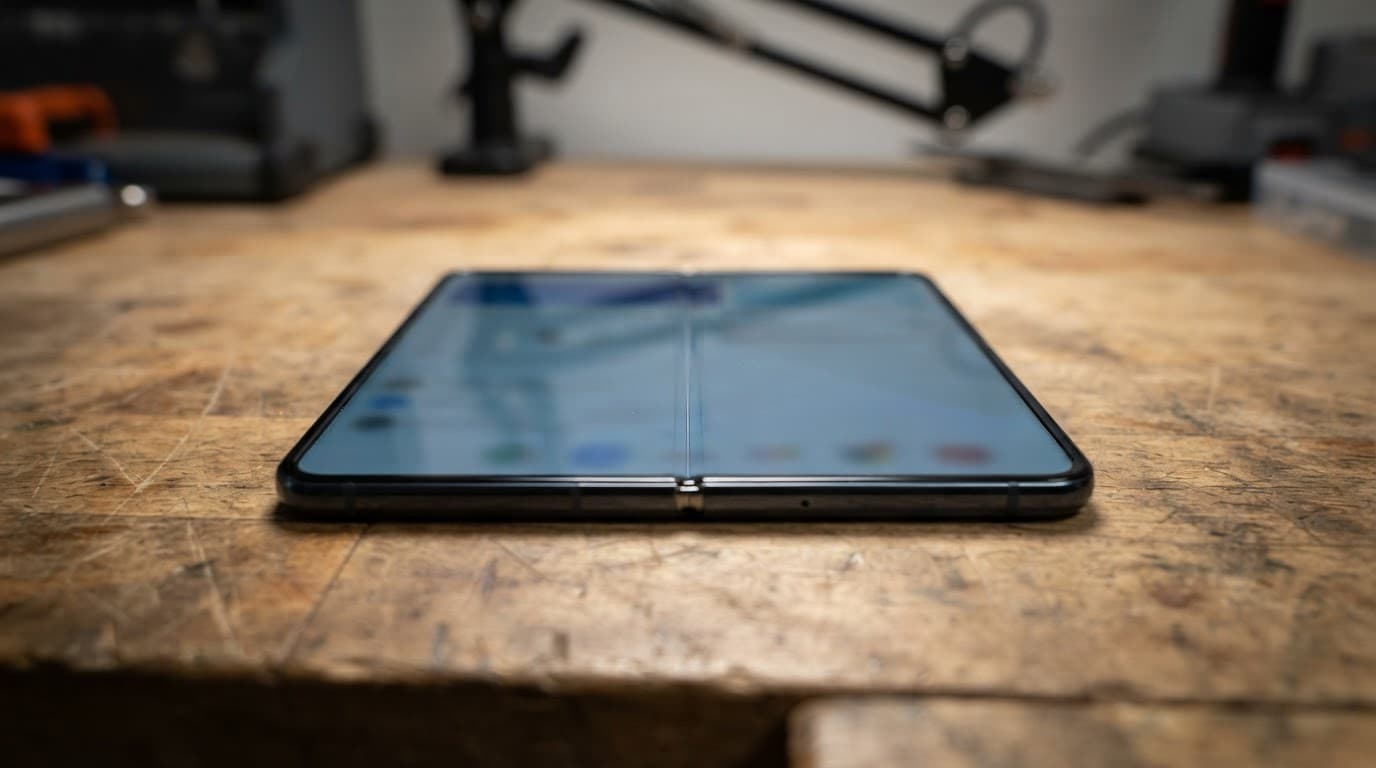
A Galaxy Fold can look fine when shut, then reveal a thin line, black patch or failed touch strip when you open it. Galaxy Fold inner screen cracks are frustrating because the visible mark may be the last part of a problem that began around the hinge.
In many cases, the inner display needs replacing. However, we always check the hinge and frame first, because fitting a new screen onto a Fold that does not open correctly can lead to another expensive fault.
The earlier you stop forcing the phone open, the better the chance of keeping the damage contained.
Why Galaxy Fold inner screen cracks often point to hinge damage
The Fold’s inner display is not ordinary phone glass. It is a flexible AMOLED panel with ultra-thin glass, layers of adhesive and a factory-fitted screen protector. It bends thousands of times over its life, so it relies on the hinge opening smoothly and evenly.
When the hinge is damaged, clogged or bent after a drop, it can put uneven pressure behind the display. The result may be a crack along the centre crease, a vertical line of dead pixels, coloured flashes or a black area that spreads after each fold.
We commonly see these causes:
A drop has dented the frame or hinge edge, even though the outer screen still looks tidy.
Dust, grit or pocket debris has entered the hinge and stops it opening fully.
The handset has been sat on or squeezed in a bag, which can twist the chassis.
The inner screen protector has lifted at the crease, then caught as the phone closes.
Repeated use while the hinge is stiff has stressed the panel and its flex cables.
A small crease mark does not always mean the OLED itself has cracked. Sometimes the screen protector is splitting or peeling. Still, do not pull the protector off, press it flat, or run a fingernail along the line. The protector has a job to do, and peeling it can turn a manageable issue into a full display failure.
If your Fold no longer opens flat, treat that as a hinge fault until a technician proves otherwise. Forcing the last few degrees can damage the inner screen in one movement.
A Galaxy Z Fold 6 teardown gives a useful view of how tightly the display, hinge and internal flex cables are packed together. This is not a DIY repair. One slip during opening can tear the OLED or damage the water-resistant seals.
Signs the inner display needs urgent attention
A damaged Fold screen does not always fail at once. It may start with a hairline crack near the crease, then develop a dark strip after a few days. That is why we recommend backing up the phone as soon as symptoms appear.
Look out for a line that changes colour, flickering when you unfold the phone, ghost touches, or an inner display that stays black while the cover screen works. A grinding noise, a popping sound or a hinge that stops short of flat are also important clues.
First, use the outer display to back up photos, messages and authenticator apps. Samsung Smart Switch or your preferred cloud backup can save a lot of stress if the inner panel stops responding later.
Next, avoid opening and closing the phone more than necessary. Do not test the crack by flexing it repeatedly. Keep it away from moisture and loose debris, especially if the screen protector has begun to lift.
We also suggest removing a tight case if it presses against the hinge. A case will not repair the fault, but it can make it easier to inspect whether the phone is sitting unevenly.
A restart can rule out a rare display glitch. Yet, software does not cause a visible crease crack, black ink-like patch or a hinge that feels physically wrong. In those cases, the phone needs a proper inspection rather than another settings reset.
What a Fold hinge and screen repair involves
A Fold repair is more involved than a standard front-glass replacement. On most models, the inner display comes as an assembly that must be fitted with the correct adhesive, alignment and pressure around the hinge area.
We begin by checking both displays, touch response, cameras, speakers, charging, fingerprint sensor and whether the hinge reaches its normal opening position. We also inspect the frame for distortion. A bent housing can keep pressing against the new display if it is not addressed.
A recent Galaxy Z Fold4 job arrived with a narrow black line running down the centre and a hinge that would not open fully. The outer screen was still usable, which had tempted the owner to carry on using it. During assessment, the hinge area showed resistance and the inner panel had started losing touch response on one side. We checked the mechanism and frame before replacing the affected display assembly, then tested the phone through repeated careful folds.
That wider inspection matters. A Fold can have a cracked inner screen and a separate hinge issue. Replacing only one part without checking the other is a false economy.
For Fold7 owners, Samsung’s Galaxy Z Premier Service includes support options such as doorstep repair in certain cases. If your device may still be within its manufacturer cover, contact Samsung before authorising independent work. Third-party repair can affect the manufacturer’s warranty.
Fold repair prices in the UK
The cost depends heavily on the exact model, the availability of the display assembly and whether the frame or hinge needs work too. Foldable parts cost more than conventional phone screens, and the repair takes more careful strip-down and testing.
As a guide, current published UK prices from EE list main-screen repairs at £490 for the Galaxy Z Fold6 and £530 for the Galaxy Z Fold7. Its table also lists £670 for a Z Fold4 main screen and £690 for a Z Fold5 main screen. You can compare those model-specific figures through EE’s local repair pricing.
Hinge work can add cost because the repairer may need to inspect or replace parts around the mechanism rather than simply fit a screen. We would rather confirm the damage before quoting than offer a cheap headline price that changes once the handset is open.
This is one area where a Fold differs sharply from routine Samsung repairs in the UK. It also needs a different approach from an iPhone screen repair in the UK, where the display assembly is usually far more direct to remove and replace.
When comparing quotes, ask whether the price includes:
The correct inner display assembly and adhesive.
Hinge and frame inspection after an impact.
Testing for touch, cameras, charging, speakers and fingerprint function.
Clear warranty terms for both the part and fitting.
The cheapest quote can become costly if it covers only the screen, while a stiff hinge remains untreated. At Repair My Crack, we explain the likely fault before chargeable work where possible, then contact you if testing reveals a different issue.
Sending a damaged Fold for repair
Customers looking for phone repairs in Essex can arrange an appointment-only drop-in at Harlow. If you live elsewhere, our mail-in phone repair service covers customers across the country with tracked Royal Mail postage.
Before sending a Fold, back it up and remove the SIM card if possible. Include your order number and a note explaining whether the crack appeared after a drop, whether the phone opens flat, and whether it has had water exposure. Those details help us focus the initial checks.
We may need your passcode or pattern to test the display and other functions fully after the repair. Your data should remain untouched, but a backup is still sensible before any postal phone repair UK service.
Our repair process is straightforward:
Book the repair online and package the device securely.
Send it using the tracked service provided.
We assess the inner screen, hinge, frame and key functions once it arrives.
We confirm any changed findings before additional chargeable work.
After repair, we test the handset and return it with tracking.
We handle plenty of ordinary jobs too, including cracked iPhone screen repair, battery replacements for iPhones across the UK, and general mobile phone repair across the UK. Foldables simply need more caution because the display and hinge work as one system.
When repair is worth it
Repair often makes sense if your Fold is a recent model, the cover screen and main board are healthy, and the fault is limited to the inner display or hinge. Keeping your apps, photos and familiar setup can also be worth a lot.
The calculation changes if the phone has several costly faults at once. Heavy frame damage, liquid corrosion, battery swelling and an inner display failure can push the price close to a replacement handset.
We check the whole device rather than treating every central crack as a screen-only job. If your Fold has charging trouble as well, for example, the impact may have affected more than the panel. That same practical approach applies whether you need a Fold assessment or an iPhone battery replacement in the UK.
Final thoughts
Galaxy Fold inner screen cracks should never be ignored when the hinge feels stiff, noisy or unable to open flat. Stop forcing the phone, back up your data and have the display, frame and hinge assessed together.
A well-fitted repair can give a good Fold years more use. However, the right repair starts with finding out why the inner screen cracked in the first place.
If your Fold is showing a crease crack or black line, book a repair online and we will check the fault properly before work begins.
– James Waterston, Device Repair Specialist at Repair My Crack
A cracked screen, a tired battery, or a phone that keeps dropping charge can push us straight into a familiar choice: buy refurbished, or try to sort the handset we already own. The refurbished phone vs repair decision sounds simple until we price it properly.
For most UK users, there isn’t one neat answer. If the phone has one clear fault and the rest of it is sound, repair often makes more sense. If the handset is older, has several problems, or needs parts that cost a small fortune, a refurbished model can be the calmer option.
Key Takeaways
A single fault usually points towards repair, especially on newer phones.
Older iPhones often work out cheaper to replace with refurbished stock than to fix.
DIY only makes sense for very basic checks unless we already know what we’re doing.
Premium models can be closer to repair territory than people expect.
Warranty matters on both sides, so we should read the small print before we spend.
Refurbished phone vs repair in 2026
The numbers have changed a lot over the last couple of years. Apple’s UK screen replacement pricing now sits around £150 to £389, depending on model. An iPhone 8 or SE can be near the bottom of that range, while an iPhone 15 Pro Max sits at the top. Refurbished prices also move around quickly, but current UK listings show older models can be very affordable.
Model
Typical Apple screen repair
Typical refurbished price
What it usually means
iPhone 13
£330
About £211
Refurbished is often cheaper
iPhone 14 Pro Max
£389
About £379
The gap is tiny
iPhone 15 Pro Max
£389
About £649
Repair is usually cheaper
iPhone 11
Varies by provider
About £128
Refurbished can be a bargain
That table tells the story. On an iPhone 13, a refurbished handset can beat a screen repair on price alone. On a 15 Pro Max, the repair starts to look like the better deal, especially if the rest of the phone is fine.
If the phone has one fault and the rest is healthy, repair usually wins. If it has a screen issue, a weak battery, and a bent frame, we start comparing the whole job against a refurbished replacement.
When repairing your own phone makes sense
If by “repair your own” we mean opening the handset and replacing parts, we only recommend that for people who already have repair experience. Phones are tightly packed, and one slip can turn a £60 screen issue into a much bigger bill.
Simple checks at home are still worth doing first:
Back up photos, messages, and anything else we care about.
Try a different cable and plug before blaming the port.
Check battery health in settings.
Remove the case and look for obvious swelling or bending.
Clear lint from the charging port with care, not force.
Once the phone needs tools, adhesive, heat, and delicate flex cables, the risk rises fast. A cracked screen on an iPhone might look like a tidy swap, but once the display comes off, hidden damage can show up. The same goes for batteries, especially if they have swollen or started lifting the screen.
If the fault is battery-related rather than a dead charger, our phone battery replacement UK service is often the cleaner fix. A worn battery can make a decent phone feel rubbish, but replacing it is usually far easier than starting over with a different handset.
For readers in Essex, phone repair Essex can be a same-day sort of job when the fault is clear. If we’re further afield, postal phone repair UK keeps things simple without a long trip to a shop.
What we see in the workshop every week
Last week we had an iPhone 12 in with a shattered display and no other obvious damage. That is classic cracked iphone screen repair territory. The phone still suited the owner, the battery was healthy, and the frame was straight, so a repair made better sense than a refurbished swap.
We also had a Galaxy S22 with charging trouble and a battery that had started acting up. That is where samsung phone repair UK work gets interesting, because the display, battery, and charging port can all be part of the same story. A single new part sometimes sorts it. Other times, the better answer is a full comparison with a refurbished replacement.
A recent example shows how close the maths can get. An iPhone 14 Pro Max with a damaged screen sat almost neck and neck with a refurbished one. The repair quote and the refurbished price were only a few pounds apart. In that situation, condition and battery health mattered more than headline price.
The same applies to iphone screen repair UK jobs across the board. A screen-only fault on a newer phone is often worth fixing. A screen fault plus a weak battery plus a bent edge is a different conversation.
How we decide without overpaying
When the choice feels messy, we usually work through it in the same order.
Price the fault first. We want an exact repair quote, not a guess.
Compare the same model. A refurbished iPhone 13 is not the same decision as a refurbished iPhone 15 Pro Max.
Add the hidden costs. Case, charger, time, data transfer, and setup all count.
Check the battery. If the battery is tired, a repair may need more than one part.
Look at how long you plan to keep it. If the phone suits us for another two years, repair often feels smarter.
That last point matters more than people think. A refurb can be brilliant if we want a clean reset and a fresh battery history. Repair can be better if we already know the phone, like the layout, and don’t want the faff of moving everything over.
For anyone comparing mobile phone repair UK options, the question is rarely “which is cheapest?” The better question is “which gives us the most useful phone for the least money and hassle?” Those are different things.
A few sensible rules before we choose
A repair usually makes more sense when:
the phone still powers on normally,
the frame is straight,
the screen is the main problem,
the battery is still decent,
and the model is one we still want to use.
A refurbished phone usually makes more sense when:
the handset has more than one fault,
the screen and battery both need attention,
the phone is already old,
or we want a fresh start with a warranty.
That warranty point is worth a proper look. Repair My Crack gives warranty cover on repairs, and refurbished phones usually come with one too. The detail changes from seller to seller, so we should always check what is covered and for how long.
Quick answers we hear all the time
Is it worth repairing a cracked iPhone screen?
If the rest of the phone is healthy, yes, it often is. Once touch, display, and frame are all affected, we need to compare repair against refurbishment properly.
Is a refurbished phone safer than fixing it ourselves?
Usually, yes. A refurbished handset has already been tested, cleaned, and checked. DIY only works well when we know the model and have the tools.
Does Samsung repair ever beat refurbished pricing?
It can, especially if the fault is limited to one part. On premium Galaxy models, a screen repair often still costs less than replacing the whole phone.
Conclusion
The refurbished route looks best when the phone has grown a few problems at once, or when an older model has reached the point where repair starts to feel wasteful. Repair looks better when the handset is still a good fit and the fault is clear.
That is the real refurbished phone vs repair decision in 2026. We are not choosing between good and bad, we are choosing between two sensible ways to spend the money.
If we’re stuck between the two, we can send the model and fault details, and we’ll help work out which side of the line it sits on. That usually saves us from paying for more than we need.
– James Waterston, Device Repair Specialist at Repair My Crack
A cracked Pixel screen is annoying. A dead Pixel screen is worse, because the phone may still hold photos, contacts, chats, and work files you cannot get to.
The good news is that we can often back up a broken Pixel if the phone still powers on, vibrates, or accepts input in another way. If the handset is completely unresponsive, the options narrow fast, so timing matters.
We usually tell people to act before they book the repair, because a few minutes of the right steps can save months of photos. If the screen is only half-working, that window is worth using.
Wake the Pixel first, then move straight to backup
Before we worry about cables, we need to find out whether the phone still has life in it. Google’s own Pixel troubleshooting guide covers the basic restart steps, and it is the right place to start if the handset has gone dark.
We normally begin with charge, then a forced restart, then a quick check of Google backup services. If the Pixel wakes up, even for a moment, we can usually save a lot.
Here is the order we would use at the counter:
Plug the Pixel into a charger for at least 10 minutes.
Force restart it, using the right button combo for the model.
Watch for any vibration, logo, charge symbol, or sound.
If the screen lights up at all, go straight to Google Photos, Google Drive, contacts, and device backup.
If the phone responds only part of the time, use that short window to copy the most important files first.
If the phone still vibrates or restarts, we usually have a route in. If it stays completely dead, cloud backups are the only easy path.
A black screen does not always mean the board has failed. The display may be the only dead part. The same sort of symptom appears in iFixit’s Pixel black-screen guide, which is useful when you are trying to tell a display fault from a full power fault.
Use a mouse or dock when touch has gone
If the screen shows an image but touch no longer works, we still have options. A USB-C adapter, a mouse, or a dock can give us control back long enough to unlock the phone and run a backup.
That sounds clunky, but it works more often than people expect. We see similar workarounds in community threads, including this Android backup discussion on Reddit, where people use a mouse or dock to get around a broken touch panel.
The simplest setup is usually this:
Tool
Best for
What we need
USB-C to USB-A adapter
Touch is dead, display still works
Adapter and mouse
USB-C dock with HDMI
Screen works poorly or is awkward to use
Dock, HDMI lead, monitor or TV
USB keyboard
Typing PINs or passwords
Keyboard and adapter
Trusted PC with ADB or scrcpy
The phone was already set up for USB debugging
Computer and USB cable
If the Pixel supports video-out through the USB-C port, a dock can make the job much easier. We can plug the phone into a monitor, use a mouse to unlock it, and then open Google Photos or Google Drive without fighting the cracked panel.
When the touchscreen is gone but the image is still visible, we would normally do three things in order:
Unlock the phone with a mouse or keyboard.
Back up photos, videos, contacts, and documents.
Check Google One backup settings before switching anything off.
Google Photos is often the biggest win because it protects the pictures people care about most. Contacts and calendar data are usually tied to the Google account, which helps too. If WhatsApp matters, we would back that up separately, because it is easy to forget in a rush.
When the Pixel looks dead, backup becomes a rescue job
A phone that will not light up at all is harder work. If it shows no sign of life after charging and a forced restart, we have to assume the backup route is limited.
At that point, two things matter most. First, whether the phone had cloud backup turned on before the fault. Second, whether the phone had ever trusted a PC for ADB or scrcpy access. If both answers are no, there may be no quick data route left.
That is where people often start weighing repair against replacement. We use the same common-sense approach across mobile phone repair UK jobs, whether it is iphone screen repair UK, cracked iphone screen repair, iphone battery replacement UK, or samsung phone repair UK work. The same logic applies to phone repair Essex customers and to anyone using our postal phone repair UK service. If one part has failed and the rest of the handset is healthy, repair usually makes sense. If several faults have piled up, replacement starts to look more sensible.
We link that judgement to the whole device, not just the screen. If you are trying to work out whether repair is worth it, our expert advice on fixing broken screens covers the same thinking we use on the bench. For a broader look at repair choices, our understanding phone repair options guide is helpful too.
A quick check list helps here:
If the Pixel still powers on, keep pushing backup first.
If only the screen is broken, use a mouse, keyboard, or dock.
If the phone has charge but no display, try cloud services before giving up.
If nothing responds, look for an existing Google backup.
If the phone trusted a PC before, ADB may still help.
A workshop example that saves time and panic
Last month we had a Pixel 6a from Essex with a smashed display and no touch response. The customer thought the phone was gone for good, but the handset still vibrated when it charged.
We connected a USB-C adapter, plugged in a mouse, and got the phone unlocked on a monitor. That gave us enough control to back up photos, contacts, and WhatsApp data before the screen repair started.
That is the best-case version of this problem. The customer kept the data, we repaired the handset, and there was no messy guesswork later. If the phone had been dropped into water or refused to boot, the story would have been very different.
The same approach applies to most repair work we see in the workshop. A bent frame, a weak battery, or a loose port can all make a phone look worse than it is. We also ask for the passcode when we need to test a repaired device properly, because we want to check everything before handing it back. Your data stays untouched during testing.
Back up first, repair second
A broken Pixel screen is stressful, but it is not always the end of the road. If the phone still wakes, we can usually get the data off with a charger, a mouse, a dock, or cloud backup. If it does not, we move quickly to the limited recovery options that are left.
Once the data is safe, the next decision is easier. If the screen, battery, or charging port needs work, our professional phone screen repair services are a straightforward next step, and we can also help with postal repairs across the UK.
If your Pixel has stopped cooperating, we would back it up first and worry about the rest later. That is the bit that saves people from losing photos they cannot replace.
A Samsung with a broken screen can still hold every photo, message, and contact you care about. So the first job is to back it up before the fault gets worse.
That is easier when the touchscreen still works, but it is often possible even when the display looks finished. The trick is to use the phone while it is still alive, or let a computer do the heavy lifting.
What we need to check first
Before we start tapping through menus, we need to work out how broken the phone really is. A cracked front glass is annoying. A dead display or frozen touch panel is a different story.
These quick checks tell us a lot:
Does the phone still power on, vibrate, or ring?
Can we see anything on the screen, even faintly?
Does touch still respond in any area?
Is the phone charging normally?
Was there any water exposure as well as the crack?
If the phone lights up and accepts a charger, the data is often still there. That is the point to act fast. A cracked panel can get worse with pressure, heat, or a knock in a pocket.
If the phone still turns on, do not wait a week and hope for the best. Back up first, repair later.
Samsung has built a few decent escape routes into its phones. The best one depends on what still works.
Samsung’s own support page on broken-screen data access is a handy reference, because it covers Smart Switch, Find My Mobile, and using a mouse, keyboard, or external display.
Here is the quick comparison.
Method
Best for
What we need
Works if touch is dead?
Smart Switch on a PC or Mac
Full backup to a computer
USB cable and Samsung Smart Switch
Often, yes
Find My Mobile
Cloud backup already set up
Samsung account and internet access
Yes, if we can sign in
OTG mouse or keyboard
Unlocking the phone
OTG adaptor and a mouse or keyboard
Often, yes
USB-C hub with HDMI monitor
Using the phone on a bigger screen
Hub, HDMI cable, monitor, mouse, keyboard
Yes, on supported models
SD card copy
Media stored on a memory card
SD card reader or laptop slot
Yes
The order matters. We usually try Smart Switch first, then Find My Mobile, then an external display or mouse setup. If the phone asks for a PIN after a restart and we cannot enter it, the options narrow fast.
Using Smart Switch, Find My Mobile, and an external display
Smart Switch is usually the cleanest option when the phone still wakes up. Install Samsung Smart Switch on a PC or Mac, connect the phone with a data-capable USB cable, and see whether the handset is detected.
If the screen is black but the phone still runs, a USB-C hub with HDMI can help. Samsung supports setups that use an external display, mouse, and keyboard, which can turn a broken phone into something we can still control for a few minutes.
A simple process looks like this:
Connect the phone to the computer with a known-good cable.
Open Smart Switch and look for the device.
If the phone is not seen, try a different USB port or cable.
If touch does not work, use an OTG mouse or an external display.
Start the backup as soon as the phone unlocks.
If the phone already synced with a Samsung account, Find My Mobile can be even quicker. Sign in on a browser, then look for the backup option. It will only help if that feature was turned on before the screen failed.
That is why a damaged screen is such a nuisance. We do not just lose visibility, we lose control.
If touch still works, use the time you have
A cracked screen that still responds is a gift. It may not feel like one, but it is. In that case, we should copy the important stuff before the touch panel gives up.
Start with the basics:
Back up photos and videos to Google Photos or a computer.
Sync contacts and calendar data to the Google account already on the phone.
Check WhatsApp backups separately, because those are easy to forget.
Copy voice notes, documents, and downloads if they matter.
Remove the SD card and copy it to a laptop if the phone uses one.
If the crack is spreading, keep the phone cool and dry. Do not press hard on the glass. Do not keep testing the same broken corner for the fun of it, because that is how small damage turns into a bigger bill.
A lot of people expect the phone to survive one more day. Then one more tap makes the display fail completely. We see that all the time.
When backup stops being possible, repair comes first
Sometimes the screen is so far gone that we cannot get into the menus at all. In that case, a repair may be the quickest route back to the data. Once the display works again, the backup usually becomes straightforward.
That does not mean every phone needs a full replacement. It depends on the fault. A routine screen issue is often worth fixing, while heavy liquid damage or several faults at once can push the phone into awkward territory.
At Repair My Crack, we handle mobile phone repair UK jobs every day, including iPhone screen repair UK, iphone battery replacement UK, phone repair Essex drop-ins, cracked iphone screen repair, samsung phone repair UK, and postal phone repair UK bookings. We also see plenty of devices where the screen fault is only part of the story, so we check the charging, battery, and data risk before we do anything else.
Typical repair prices are often in these rough bands:
Screen replacement, £60 to £180 depending on the model
Battery replacement, £40 to £80
Charging port repairs, £50 to £90
That is why we always say the same thing to customers, back up the phone first if you can. If you cannot, get the display sorted and then save the data straight away. For local customers, our phone screen repair guide is a good place to see how the repair side works.
We serve Essex and the wider UK, so if you are nowhere near Harlow, our postal route is often the easiest answer. Book online, send the phone securely with your order number, and we can aim to get it checked as soon as it arrives.
A real workshop example from Essex
Last week we had a Galaxy in from Essex with a smashed screen and no usable touch. The owner could see the lock screen, but that was about it. We connected it to a monitor, used a mouse through a USB-C hub, and got Smart Switch running within minutes.
The backup finished before the replacement screen even went in. That saved the photos, the contacts, and a lot of grief.
We also see the opposite version. A customer waits too long, the crack spreads, moisture gets in, and the display dies completely. By then, a simple backup becomes a repair job first. It is a bit of a faff, and it is never the cheaper path.
Quick questions we get all the time
Can we back up a Samsung if the screen is black?
Yes, sometimes. If the phone still powers on, Smart Switch, Find My Mobile, or an external display can still work.
What if the touchscreen does not respond at all?
An OTG mouse, keyboard, or HDMI setup may still let us unlock the phone. If not, a screen repair may be needed first.
Will the data be safe if we send the phone for repair?
Usually yes, because a screen repair should not touch the data. We still recommend backing up first whenever possible, just in case the phone has more than one fault.
Conclusion
A broken Samsung screen does not always mean the data is lost. If the phone still powers on, we usually have a route, even when the touch panel has given up.
The safest move is simple, back up first, then sort the screen. If the backup blocks you, a repair may be the quickest way to get your files back.
If you are stuck with a Samsung broken screen, we can help with the next step, whether that is a postal repair, a drop-in visit in Essex, or a quote before you send it in.
Mobile Screen Replacement Essex: The Complete Guide to Fast, Reliable Phone Repairs
In today’s fast-paced digital world, your smartphone is essential. It’s your camera, your communication hub, your navigation system, your workspace, and often your main connection to everything that matters. So when your phone screen cracks, flickers, or stops responding, it’s more than just an inconvenience—it can completely disrupt your daily life.
If you’re searching for Mobile Screen Replacement in Essex, you’re not alone. Screen damage is one of the most common smartphone issues, affecting millions of users every year. The good news? With the right repair service, your phone can be restored quickly, affordably, and professionally—often within the same day.
Why Mobile Screen Replacement Is So Important
A damaged phone screen isn’t just a cosmetic issue. While a small crack might seem harmless at first, it can lead to much bigger problems if left untreated.
Reduced Functionality
Modern smartphones rely heavily on touch-sensitive displays. Even a small crack can interfere with touch accuracy, making it difficult to type, scroll, or use apps effectively.
Risk of Further Damage
Cracks weaken the structural integrity of your screen. Over time, pressure, moisture, and dust can seep into the device, potentially damaging internal components.
Safety Concerns
Sharp edges from shattered glass can cause cuts or injuries.
Lower Resale Value
A damaged screen significantly reduces your phone’s resale value.
Display Issues
Cracks often lead to flickering, black spots, or discolouration.
This is why timely Mobile Screen Replacement is essential to protect your device and avoid more costly repairs.
Common Signs You Need a Screen Replacement
Not all damage is immediately obvious. Here are signs you may need Mobile Screen Replacement:
Cracked or shattered glass
Unresponsive touchscreen
Flickering display
Black spots or lines
Screen lifting from the frame
If you notice any of these issues, acting quickly can prevent further complications.
What Causes Phone Screen Damage?
Screen damage can happen to anyone, even with protection in place.
Common causes include:
Dropping your phone
Pressure from sitting on it
Extreme temperatures
Low-quality cases
Daily wear and tear
Regardless of the cause, a professional Mobile Screen Replacement service can restore your device effectively.
DIY vs Professional Screen Replacement
While DIY repairs might seem cheaper, they often lead to bigger problems.
DIY Risks
Internal damage
Poor-quality parts
No warranty
Higher long-term costs
Professional Benefits
Skilled technicians
Reliable parts
Specialist tools
Guaranteed results
Choosing expert Mobile Screen Replacement ensures your phone is repaired safely and correctly.
How the Screen Replacement Process Works
Here’s what to expect during a professional Mobile Screen Replacement:
Diagnosis
Technicians assess your phone to confirm the issue.
Disassembly
The device is carefully opened using specialised tools.
Screen Installation
A new, high-quality screen is fitted.
Testing
All functions are tested thoroughly.
Completion
Your phone is reassembled and ready to use.
Most repairs are completed the same day, minimising disruption.
Types of Screens Used in Smartphones
Understanding screen types helps you make informed repair decisions.
LCD – Affordable and common in older devices
OLED – Brighter, more efficient displays
AMOLED – Premium quality with superior performance
A reliable Mobile Screen Replacement service will match your device with the correct screen type.
Why Choose a Local Essex Repair Service?
Local repair services offer several advantages:
Fast turnaround times
Face-to-face support
No shipping risks
Transparent pricing
Choosing a nearby provider for Mobile Screen Replacement ensures convenience and peace of mind.
Cost of Mobile Screen Replacement in Essex
The cost of Mobile Screen Replacement depends on:
Phone model
Screen type
Extent of damage
In most cases, repairing your screen is far more cost-effective than replacing your phone entirely.
How Long Does Screen Replacement Take?
Repair times vary, but most Mobile Screen Replacement services offer:
30 minutes to 2 hours for standard repairs
Same-day service for most devices
Always check with your provider for accurate timing.
Tips to Prevent Future Screen Damage
After your repair, protect your phone with these tips:
Use a tempered glass protector
Invest in a durable case
Avoid carrying your phone with sharp objects
Handle your device carefully
Preventative care reduces the need for future Mobile Screen Replacement.
Environmental Benefits of Repairing Your Phone
Choosing Mobile Screen Replacement over replacement helps:
Reduce electronic waste
Lower environmental impact
Extend your device’s lifespan
Repairing your phone is both cost-effective and eco-friendly.
Their team ensures fast, reliable service for a wide range of devices.
Final Thoughts
A damaged screen can quickly become a bigger issue if ignored. Acting early with professional Mobile Screen Replacement can save you time, money, and stress.
With expert repair services available in Essex, restoring your phone has never been easier. Don’t wait for the damage to worsen—get your device repaired and back to full functionality today.
This website uses cookies to improve your experience while you navigate through the website. Out of these, the cookies that are categorized as necessary are stored on your browser as they are essential for the working of basic functionalities of the website. We also use third-party cookies that help us analyze and understand how you use this website. These cookies will be stored in your browser only with your consent. You also have the option to opt-out of these cookies. But opting out of some of these cookies may affect your browsing experience.
Necessary cookies are absolutely essential for the website to function properly. These cookies ensure basic functionalities and security features of the website, anonymously.
Cookie
Duration
Description
cookielawinfo-checkbox-analytics
11 months
This cookie is set by GDPR Cookie Consent plugin. The cookie is used to store the user consent for the cookies in the category "Analytics".
cookielawinfo-checkbox-functional
11 months
The cookie is set by GDPR cookie consent to record the user consent for the cookies in the category "Functional".
cookielawinfo-checkbox-necessary
11 months
This cookie is set by GDPR Cookie Consent plugin. The cookies is used to store the user consent for the cookies in the category "Necessary".
cookielawinfo-checkbox-others
11 months
This cookie is set by GDPR Cookie Consent plugin. The cookie is used to store the user consent for the cookies in the category "Other.
cookielawinfo-checkbox-performance
11 months
This cookie is set by GDPR Cookie Consent plugin. The cookie is used to store the user consent for the cookies in the category "Performance".
viewed_cookie_policy
11 months
The cookie is set by the GDPR Cookie Consent plugin and is used to store whether or not user has consented to the use of cookies. It does not store any personal data.
Functional cookies help to perform certain functionalities like sharing the content of the website on social media platforms, collect feedbacks, and other third-party features.
Performance cookies are used to understand and analyze the key performance indexes of the website which helps in delivering a better user experience for the visitors.
Analytical cookies are used to understand how visitors interact with the website. These cookies help provide information on metrics the number of visitors, bounce rate, traffic source, etc.
Advertisement cookies are used to provide visitors with relevant ads and marketing campaigns. These cookies track visitors across websites and collect information to provide customized ads.